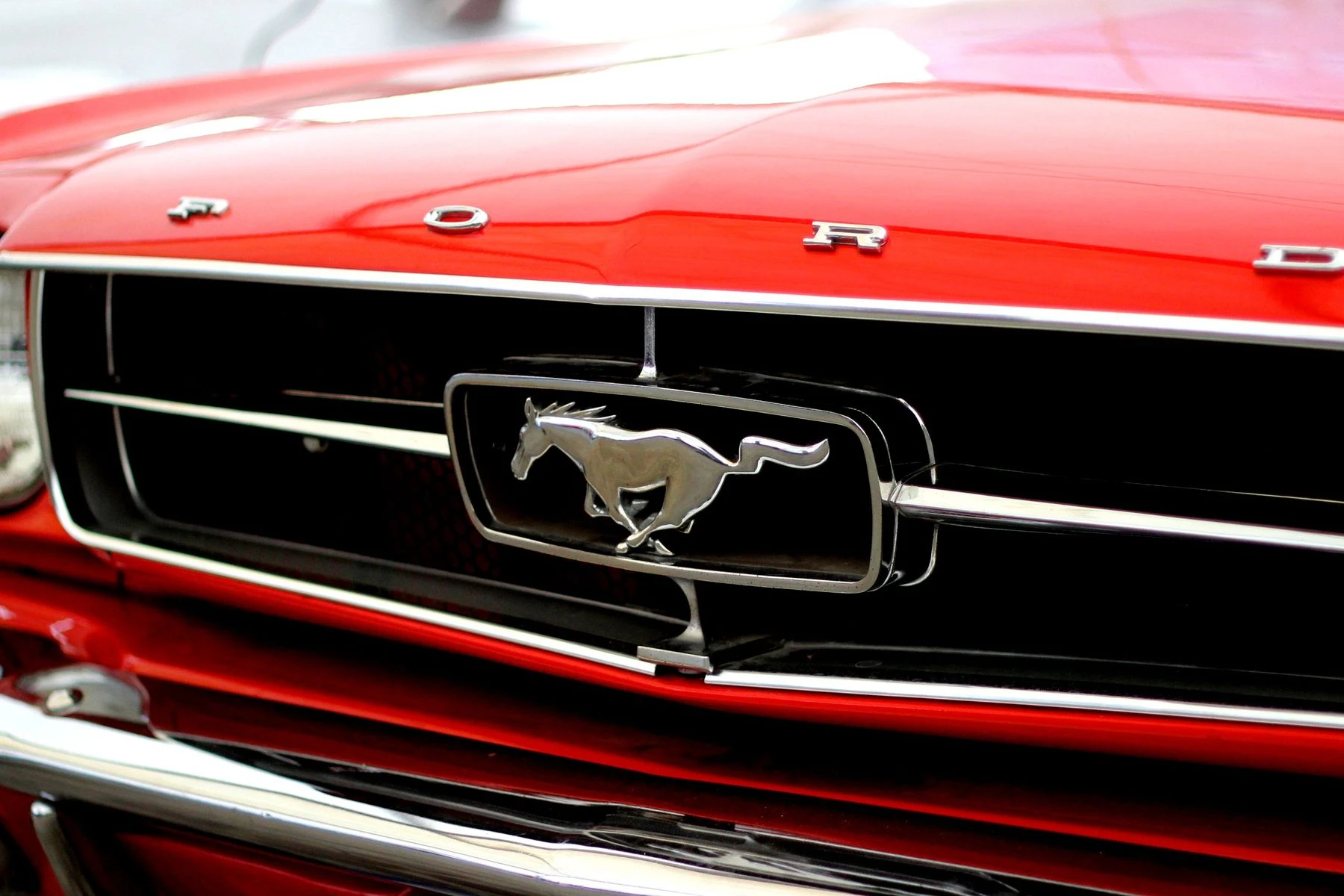
The Ford Mustang Mach-E has 22 recall campaigns on file with NHTSA for the 2021–2025 model years, more than most EVs its age, but the number hides a simple shape. One defect, the high-voltage battery junction box in 2021–2022 cars, produced four of those campaigns and most of the stranded-owner stories. A second software fault, door latches that can lock people out when the 12-volt battery runs low, touched every year through 2025. Almost everything else is a one-off. This page lays out the recalls and complaint counts by model year from NHTSA records, what owners actually report, and what to check before buying a used one.
Complaints and Recalls by Year
Complaint counts are unique NHTSA filings as of October 2026, not sales-adjusted; Mach-E volume was fairly flat from 2021 through 2024, so the decline below is real.
| Model year | NHTSA complaints | Recall campaigns naming the year | Defining issue |
|---|---|---|---|
| 2021 | 348 | 13 | Junction box power loss; assembly recalls on subframe, glass and seat belts |
| 2022 | 120 | 8 | Junction box on extended-range cars; right-rear half shaft |
| 2023 | 122 | 6 | Door-latch lockout; wiper motor; BECM software on repaired cars; pinion shaft |
| 2024 | 51 | 5 | Door-latch lockout; park module software |
| 2025 | 10 | 7 | Park rod, lighting modules, park module software |
| 2026 | too new | 2 | Park module and lighting module software |
All 22 Recalls
| NHTSA number, date | Model years | Issue | Remedy |
|---|---|---|---|
| 21V-140, Mar 2021 | 2021 | Front subframe bolts not tightened | Inspect and torque |
| 21V-711, 21V-712, Sep 2021 | 2021 | Windshield and panoramic roof glass not properly bonded | Reinstall windshield; add adhesive to roof |
| 21V-979, Dec 2021 | 2021–2022 | Rear seat belt buckles not properly attached | Repair attachments |
| 22V-333, May 2022 | 2021 AWD | Powertrain control software could miss an error: unintended acceleration or power loss | Software, OTA or dealer |
| 22V-412, Jun 2022 | 2021–2022 | High-voltage battery junction box contactors overheat; loss of drive power | Software only |
| 22V-646, Aug 2022 | 2022 | Right-rear half shaft can break | Inspect serial, replace |
| 23V-687, Oct 2023 | 2021–2022 extended range | Same contactors; software remedy proved insufficient | Junction box replaced |
| 24V-594, Sep 2024 | 2023–2024 | Front wiper motor may fail | Inspect, replace motor |
| 24V-777, Oct 2024 | 2021 | ABS over-the-air update could cut brake assist, ABS and stability control | ABS recalibration |
| 25V-130, Jan 2025 | 2021–2022 | 22V-412 software applied incorrectly | Software redone |
| 25V-315, May 2025 | 2021–2023 | Rearview camera image freezes or disappears | APIM software, phased |
| 25V-394, Jun 2025 | 2025 | Park rod may not engage; rollaway | Park rod assembly replaced |
| 25V-404, Jun 2025 | 2021–2025 | Electronic latches can stay locked with a low 12-volt battery, trapping occupants; 197,432 vehicles | PCM and SOBDMC software |
| 25V-441, Jun 2025 | 2022 extended range | Junction box expansion of 23V-687 | Junction box replaced |
| 25V-513, Aug 2025 | 2021 | 24V-777 repaired incorrectly | ABS software redone |
| 25V-519, Sep 2025 | 2025 | LED driver modules with a burnt diode; headlights and signals can fail | Inspect, replace modules |
| 25V-863, Dec 2025 | 2024–2026 | Integrated park module may not lock in park | Software, OTA or dealer |
| 25V-885, Dec 2025 | 2025–2026 | Light driver control module failure; no headlights or signals | Software, OTA or dealer |
| 26V-417, Jun 2026 | 2021–2023 | Rear differential pinion shaft may fracture; power loss or rollaway | Repair or replace differential; interim letters July 2026 |
| 26V-487, Jul 2026 | 2023–2025 | Rear quarter window trim may detach | Inspect, replace assemblies; interim letters Sept 2026 |
| 26V-582, Sep 2026 | 2023–2025 with a replacement BECM | Battery control module software can misreport charge: power loss or fire risk | Software; interim letters Sept 2026 |
2021–2022: The Junction Box Years
The high-voltage battery junction box, HVBJB, carries the contactors that connect the pack to the car. On 2021–2022 cars they could overheat under repeated fast charging or hard acceleration, open, and leave the driver with a Stop Safely Now message and no propulsion. Ford’s first answer in June 2022 was software that limited current (22V-412, about 49,000 cars). By October 2023 the fix had failed often enough, with NHTSA documenting more than a hundred post-remedy failures, that Ford began replacing the junction box on extended-range cars (23V-687), expanded that work in June 2025 (25V-441), and in between recalled cars where the software had been installed wrong (25V-130). Four campaigns, one part. A 2021–2022 extended-range car without a replaced junction box on its record is the one thing to avoid in the Mach-E market.
Around it sit the first-year assembly recalls: subframe bolts, windshield and roof glass bonding, rear seat belt buckles, bad half shafts on some 2022 cars, and a powertrain software recall on 2021 all-wheel-drive cars. Two problems arrived later. An ABS over-the-air update in 2024 could disable brake assist and stability control on 2021 cars and took two attempts to fix (24V-777, 25V-513). And in June 2026 Ford recalled 2021–2023 cars because the rear differential pinion shaft can fracture, cutting power or letting a parked car roll; the remedy was still at interim-letter stage in October 2026.
2023–2026: Smaller but Not Clean
2023 brought a cheaper LFP standard-range pack and a different fault profile. Complaints held at 122, but the campaigns were peripheral: a wiper motor shared with the Maverick, the rearview camera software that hit most of Ford’s lineup, and the door-latch recall of June 2025, which covers every Mach-E from 2021 through 2025 after owners reported being locked out, and children locked in, when the 12-volt battery sagged below about 8.4 volts. The fix is software; 2021–2023 cars got it in a second wave in autumn 2025.
Two 2026 campaigns reach back into these years. Cars that received a new battery energy control module during an earlier repair can misreport state of charge, with power loss or, in the worst case, a battery fire as the stated risk (26V-582, September 2026, 2023–2025 cars). And rear quarter window trim can detach on 2023–2025 cars (26V-487). Neither had a final remedy as of October 2026.
2024 is the quiet year: 51 complaints, a revised rear drive unit that lifted range and charging speed, and no campaign of its own beyond the park module software; the rest are shared with neighboring years. 2025 added three new-fault campaigns, park rod, LED driver modules and the lighting control module, all caught early and all small; complaints stood at 10. The 2026 model year carries the two software campaigns and nothing else so far.
What Owners Report
Electrical problems lead the complaint file at 163 of 654 entries, followed by powertrain (59), forward-collision warnings (50), the propulsion system (50) and brakes (48). Read against the recalls, the stories group into five patterns:
- Loss of power with Stop Safely Now or Powertrain Malfunction warnings, overwhelmingly 2021–2022 cars and overwhelmingly the junction box, including cars that had the software remedy.
- 12-volt battery failures: a car that will not wake, doors that will not unlock, a tow for a $200 part. Early cars drained the 12-volt in days when parked; later software improved it, and the 2025 latch recall addresses the dangerous consequence rather than the cause.
- Phantom braking and false collision warnings, the third-largest category, concentrated in 2021–2023 cars. NHTSA has not opened a Mach-E-specific investigation into it.
- Infotainment freezes and black screens on 2021–2022 SYNC systems, largely cured by updates.
- BlueCruise crashes: NHTSA opened a preliminary evaluation in April 2024 after fatal collisions with stationary vehicles at night and upgraded it to an engineering analysis in January 2025. It covers Mach-Es with BlueCruise alongside other Ford and Lincoln models.
Injuries in the complaint file total 17 across all years, with two fire reports. Against roughly 200,000 cars sold these are low absolute numbers; what makes the Mach-E record notable is repetition, the same defect needing a second and third campaign.
Used Mach-E: What to Check
- On a 2021–2022 extended-range car, demand the service record showing the junction box replaced under 23V-687 or 25V-441, not just the 22V-412 software. Without it, pass or price in the risk of being stranded until the dealer gets to it.
- On any 2021–2025 car, confirm the door-latch software (25V-404) is done. Then test it: lock the car, walk away, come back; and know where the interior manual release is.
- On a 2021–2023 car, check whether 26V-417 (pinion shaft) has a remedy yet and whether this VIN is included. Listen for driveline whine or clunk on and off throttle.
- On a 2023–2025 car, ask whether the battery energy control module was ever replaced. If so, 26V-582 applies and the software fix was still pending at this writing.
- Check the 12-volt battery date and voltage. Most Mach-E lockout and no-start stories start here; a fresh AGM battery is cheap insurance.
- Run the VIN at NHTSA and in FordPass, and treat “no open recalls” as the start, not the end: this car has had three recalls for repairs done wrong, and the lookup cannot tell you whether the earlier work was correct.
- Prefer 2024 or later if the budget allows: half the complaints of 2023, no junction box exposure, the revised drive unit. How it stacks up against a Model Y on money is in our five-year cost comparison.
What Changed Since Last Update
- Oct 2026: page created. Recall list current through 26V-582 (September 2026); three campaigns (26V-417, 26V-487, 26V-582) awaited final remedies.
FAQ
Which Mach-E years should I avoid?
2021 and 2022, unless the car is standard-range or the junction box has been replaced under recall. They hold 468 of the Mach-E’s 654 NHTSA complaints and all four junction box campaigns. 2023 is acceptable with its recalls done; 2024 and 2025 have the cleanest records.
Is the junction box problem fixed?
Hardware replacement under 23V-687 and 25V-441 addresses it on extended-range 2021–2022 cars; Ford did not replace the box on standard-range cars, which it treats as resolved by software. Complaints after replacement are rare in the NHTSA file, which is the best available evidence that the replacement works.
What is the door-latch recall about?
When the 12-volt battery drops below roughly 8.4 volts, the electronic latches can stay locked after the front doors close, trapping someone who cannot reach the interior manual release, including children in the back. It covers 197,432 cars from 2021 to 2025; the remedy is a software update, free at any Ford dealer.
Does the Mach-E have an open NHTSA investigation?
One that includes it: NHTSA’s engineering analysis of BlueCruise, opened in January 2025, which applies only to cars with the hands-free system. We found no defect investigation specific to the Mach-E itself in October 2026.
Sources
- VIN Check Engine — All 22 Mach-E recall campaigns and complaints by model year, NHTSA data, October 2026
- Cars.com — 2021 Mach-E recalls, NHTSA data
- Cars.com — 2022 Mach-E recalls
- Consumer Reports — Recall 25V-404: 197,432 cars, door latches and the 12-volt battery
- Consumer Reports — 2024 Mach-E reliability and recall notices
- The Weekly Driver — 2021–2025 Mach-E NHTSA record: complaints by system, fire and crash reports
- Rerev — Mach-E model years ranked; junction box post-remedy failures
- Recall Explained — Mach-E recalls and complaints by model year
- Recharged — 2026 Mach-E recall list
- Auto Reliability Index — 2023 Mach-E complaint rate and year comparison