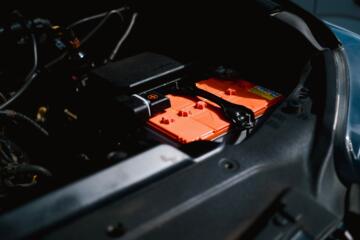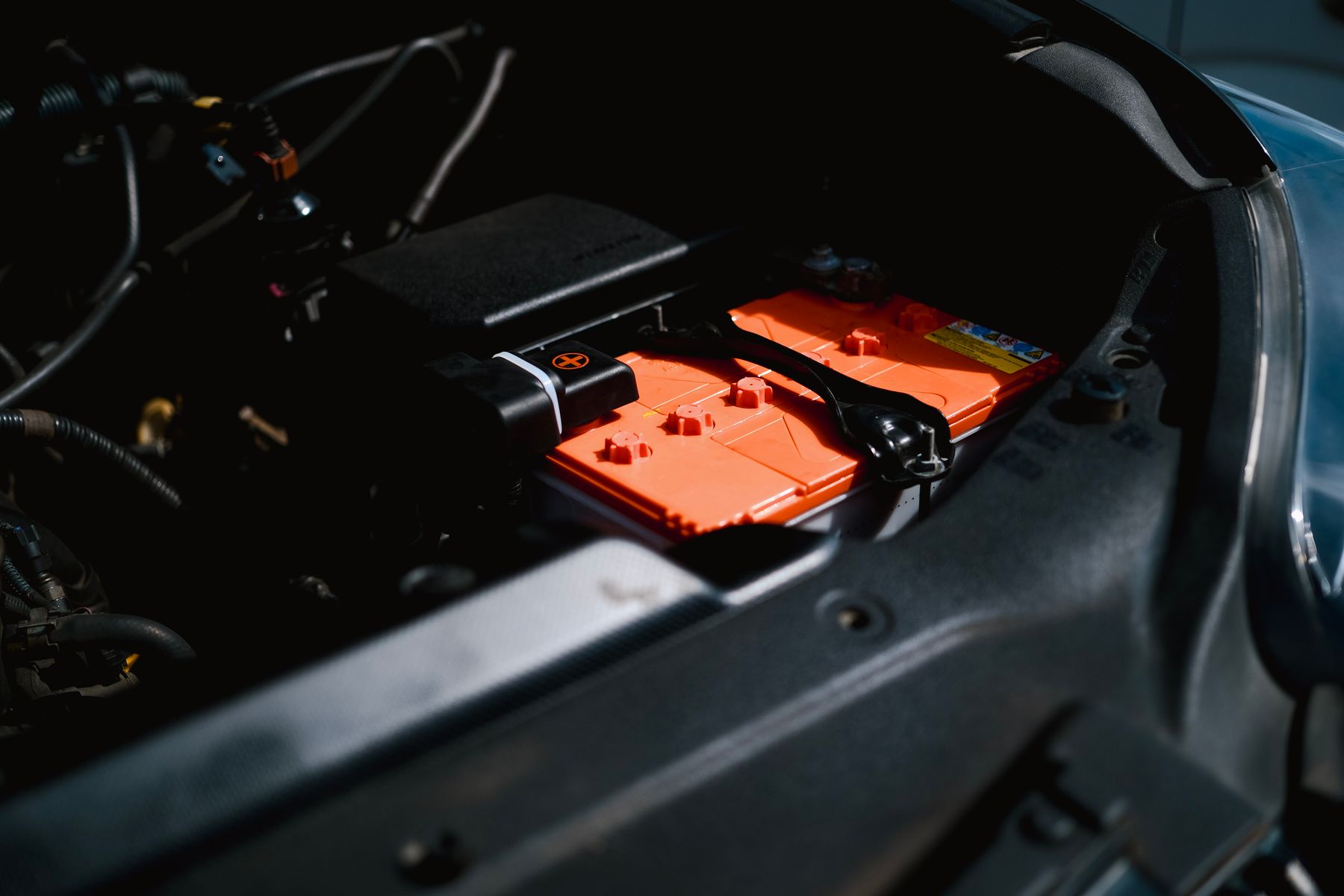
On a used EV the battery is the engine, the transmission and most of the resale value in one box, and no listing tells you how much of it is left. The seller’s range screen does not either: it is a guess based on recent driving, not a measurement. What you want is state of health, the pack’s current capacity as a percentage of new, and in 2026 you can get it for almost every brand in under an hour with a $30 adapter, a phone app, or a free report. This page explains what the number means, how to pull it brand by brand, and what to do on the test drive so you do not buy someone else’s degraded pack.
What Battery Health Means
State of health (SOH) compares the energy the pack can hold today with what it held when new. A pack rated 77 kWh that now holds 70 is at 91 percent. Every manufacturer warranty uses this number: coverage runs eight to ten years and 100,000 to 120,000 miles, and the pack is replaced or repaired only if it falls below 70 percent in that window. Fleet data put normal loss at roughly 1.8 percent a year on average, lower for liquid-cooled packs built after 2019; Tesla’s own fleet figures show about 12 to 15 percent loss at 200,000 miles. A five-year-old EV in the high 80s or low 90s is ordinary; one in the 70s at 50,000 miles is a question.
Two things SOH is not. It is not the range estimate on the dash, which rises and falls with how the last 20 miles were driven. And it is not the whole battery story: a pack can show 95 percent SOH and still carry one weak module, which is why a cell-voltage spread matters as much as the headline number.
Four Ways to Measure It
| Method | What you get | Cost and time | Limits |
|---|---|---|---|
| Built-in screen or app | A percentage or a pass/fail, where the brand offers one | Free, minutes | Only some brands (Tesla, some Korean and European models); the car grades its own homework |
| OBD-II adapter and a model-specific app | SOH from the battery computer, cell voltages, temperatures, sometimes kWh capacity | $20–$40 adapter, $0–$30 app, two minutes | Adapter must suit the car (Tesla needs a harness); some brands lock the data |
| Third-party report | Normalized health score built from the car’s own telematics | Recurrent: free monthly reports for owners in the US, $19–$49 standalone; dealers often include one | Needs the owner’s connected account; a score, not a raw measurement |
| Dealer diagnostic | Official SOH printout from the factory tool | Usually one diagnostic hour, $100–$250 | The only result a warranty claim will accept |
Add a fifth check that costs nothing: charge the car to 100 percent and compare the displayed range with the original EPA rating. A 2020 Bolt rated at 259 miles that shows 230 full is roughly 89 percent, give or take the estimator’s mood. It is a sanity check, not a measurement, but it catches the worst cases.
Brand by Brand
| Brand | In the car or app | OBD route | Official |
|---|---|---|---|
| Tesla | Battery Health screen in the Service menu on supported cars shows energy retention versus new; the full Battery Health Test runs 12–48 hours on an AC charger and produces the figure Tesla uses for warranty. The manual notes not every car has the feature | Scan My Tesla with a Tesla-specific harness: nominal full-pack kWh, cell data | Service Mode report; Recurrent connects to the Tesla account free of charge |
| Hyundai, Kia, Genesis | Bluelink and Kia Connect show charge and alerts, not SOH | Car Scanner or EVNotify with a Bluetooth adapter reads the BMS SOH figure, cell deterioration and temperatures. The reported SOH is coarse and can sit at 100% for years; the cell-voltage spread and cumulative charge counters tell you more | Dealer diagnostic; the ICCU record matters as much as the pack on 2022–2024 cars |
| Chevrolet Bolt | Nothing in the app; the energy screen shows range at full | Torque Pro with Bolt-specific PIDs reads battery capacity in kWh (60 on 2017–2019 originals, 66 on 2020–2022 and on replaced modules) | Dealer capacity test; the recall record decides whether the pack is original |
| Nissan Leaf | Capacity bars on the dash, 12 when new; the first bar drops around 85% SOH | LeafSpy Pro: exact SOH, Ahr, Hx, cell balance, temperature. The standard check for a car with no liquid cooling, where degradation runs highest | Dealer report rarely adds anything to LeafSpy |
| Ford Mach-E, F-150 Lightning | No SOH figure in FordPass on US cars | FORScan with a compatible adapter reads the battery state-of-health parameter from the BMS | Dealer battery capacity test; Recurrent supports Ford through the connected account |
| Volkswagen ID.4 | Nothing owner-facing | Car Scanner or OBDeleven with the ID profile reads SOH and cell data | Dealer ODIS printout; Recurrent supports VW |
| Rivian | Nothing in the app | The gateway blocks consumer OBD tools | Ask Rivian Service for a battery health report; it is the only route |
| BMW, Mercedes-Benz, Audi, Porsche | No SOH on screen for the owner | Car Scanner reads SOH on several BMW and VW-group models; Porsche and Mercedes are closed | Dealer scan. Each brand sells a formal battery certificate, more common in Europe than the US; ask whether a CPO car came with one |
Two model-specific traps. Hyundai and Kia packs deliver a reliable SOH reading only under certain conditions; one owner guide notes the EV6 and Niro EV need a steady slow charge around 70 percent state of charge before the BMS updates the figure, so a quick scan in a parking lot may repeat last month’s number. And Tesla’s in-app route through Service, Battery and Charging, Range was removed in 2024 on many accounts; the in-car screen and the Service Mode test are the current paths.
Reading the Numbers
- 95–100% SOH: new or nearly so. Some battery computers report slightly above 100 on a fresh pack; that is calibration, not magic.
- 88–95%: normal for three to six years of use. Price it as a healthy car.
- 80–88%: acceptable on a high-mileage or older car; on a car under 50,000 miles, ask how it was charged and parked.
- Below 80%: walk unless the price reflects it and the warranty still has years to run; a claim only pays below 70.
- Cell spread: at rest, the difference between the highest and lowest cell should be a few hundredths of a volt. A single cell sitting well below the rest is a module problem that SOH will not show.
- LFP packs: a Mach-E Standard Range or 2022–2024 Model 3 RWD that has never been charged to 100 percent will show a wandering range figure and sometimes a pessimistic SOH. Charge it full once before judging; see our LFP guide.
The Test-Drive Protocol
- Paperwork first. Battery warranty start date and transfer terms, recall completions, and any battery module or pack replacement, which resets the clock on some brands (GM’s Bolt replacement packs carry their own 8-year warranty) and not others.
- Plug in before you drive. Read SOH, cell spread and pack temperature with the car on and warm. Screenshot everything.
- Ask for a full charge the night before. Note the displayed range at 100 percent against the EPA figure for that exact trim.
- Do one DC fast-charge session if you can. A healthy pack reaches close to its rated peak when warm and between 20 and 50 percent. A car that caps far below spec may have a derated pack, a BMS fault, or on Hyundai and Kia an ICCU problem that is not a battery problem at all.
- Watch the 12-volt system. Dead 12-volt batteries and the warnings they trigger are the most common EV fault and have nothing to do with the main pack; do not let a seller blur the two.
- Get the dealer printout for anything over about $25,000. One diagnostic hour is cheap next to a pack, and it is the only number a warranty department will argue with.
Beyond the Pack
The battery is the expensive part, but it is rarely the part that strands a used EV. On 2022–2024 Hyundai Ioniq 5, Ioniq 6 and Kia EV6 it is the ICCU charging unit; on 2021–2022 Mustang Mach-E the high-voltage junction box; on 2017–2022 Bolts the question of whether the recall replaced the modules or only installed monitoring software. Each has its own page on this site, and each check belongs on the same visit as the SOH scan. A pack at 94 percent in a car with an open recall is not a bargain yet.
FAQ
What is a good battery health percentage for a used EV?
Above 90 percent is good at any age; 85 to 90 is normal for a car five or more years old. Below 80 deserves a price cut and a look at the remaining warranty, which only pays out under 70.
Can I check EV battery health without a dealer?
Yes, on most brands. A Bluetooth OBD-II adapter and the right app (LeafSpy for Nissan, Car Scanner for Hyundai, Kia and VW, Scan My Tesla with a harness for Tesla, FORScan for Ford) reads the battery computer in minutes. Rivian, Porsche and Mercedes are the exceptions.
How accurate is Tesla’s battery health test?
It is the figure Tesla itself uses for warranty decisions, which makes it the most authoritative number available for that car. It takes 12 to 48 hours on an AC charger, and the manual notes not every car has the feature; the in-car Battery Health screen is the quicker version.
Does fast charging ruin a battery?
Habitual fast charging accelerates wear measurably but modestly on liquid-cooled packs; fleet studies find the gap small next to heat, time and sitting at high charge. A car with a fast-charging history and a healthy SOH reading is a car with a healthy battery.
Is a Recurrent report as good as an OBD scan?
It answers a different question. Recurrent compares a car’s telematics against thousands of the same model and produces a score; the OBD scan reads the battery computer directly. Use the report to spot outliers and the scan to confirm before money changes hands.
Sources
- Recurrent — Checking Tesla battery health: in-car test, Service Mode, free owner reports
- I Need Appi — EV battery health check: Tesla manual notes on the Battery Health Test, test duration, Kia EV6 SOH conditions
- iEVChina — SOH testing tools compared: Car Scanner, Recurrent pricing, Geotab 2026 fleet study
- Recharged — How to check EV battery health: apps by brand
- Recharged — Used EV battery checklist and OBD app table
- Autoriderz — Tesla battery health screen, full test, removal of the in-app method
- Energy Solutions — Used EV buying guide 2026: tools and brand routes
- CarCheck US — Dashboard range test method and OBD options
- VoltChek — Built-in battery displays by brand; adapter requirements