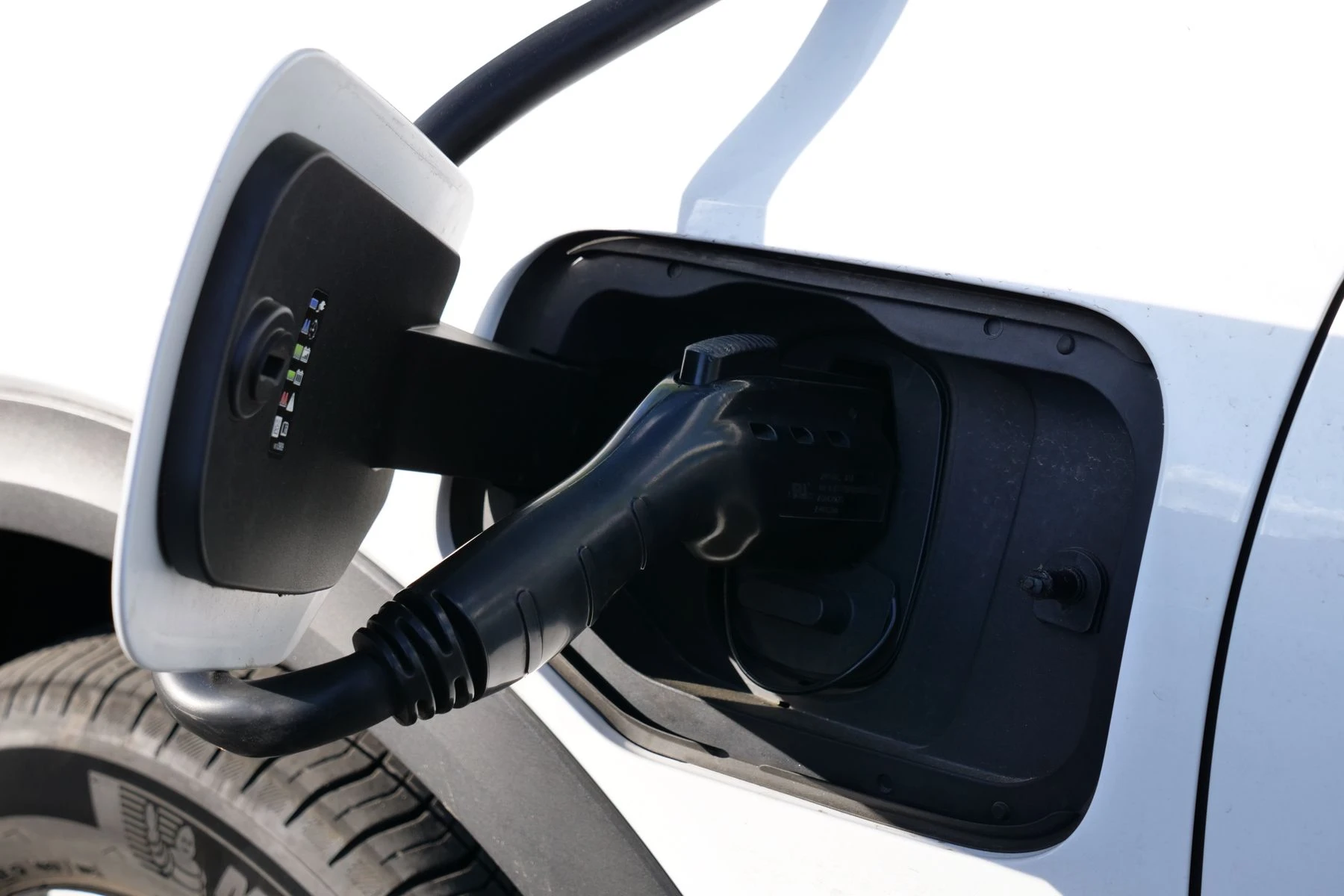
Most people buying their first EV overbuy the charger and underbudget the wiring. The box on the wall is the cheap part, $400 to $700 for a good one; the circuit feeding it is where a $1,000 job becomes a $4,000 job, and a 48-amp unit is often paying for speed the car cannot use. This page works out how much charging a household actually needs, what the car’s onboard charger allows, what installations cost in 2026 by scenario, and the choices, plug-in or hardwired, smart or simple, NACS or J1772, that matter for the next ten years. Costs come from installer-network data and 2026 price lists; the electrical rules from the current National Electrical Code.
How Much Charging You Really Need
Start from miles, not from the charger’s brochure. An EV uses 3 to 4 miles per kWh; divide your daily driving by that and you have the energy to put back each night. Then compare it with what each charging level delivers in the hours the car sits at home.
| Daily driving | Energy to replace | Level 1, 120 V, 1.4 kW | Level 2, 32 A, 7.7 kW | Level 2, 48 A, 11.5 kW |
|---|---|---|---|---|
| 30 miles | About 9 kWh | 7 hours | 1.2 hours | 50 minutes |
| 50 miles | About 15 kWh | 11 hours | 2 hours | 1.3 hours |
| 80 miles | About 23 kWh | 17 hours, more than a night | 3 hours | 2 hours |
| Two EVs, 100 miles combined | About 30 kWh | Not practical | 4 hours | 2.6 hours |
The American median is around 35 miles a day. For that driver a 32-amp circuit refills the car in under two hours, and even a 120-volt outlet does it overnight, which is why a surprising number of owners never install anything. The 48-amp case is real but narrow: two EVs on one charger, a daily commute near 100 miles, a pickup with a 130 kWh pack, or a utility rate with a short off-peak window that forces all the charging into four or five hours.
Amps, Circuits and the Car’s Limit
Two numbers cap the speed. The charger’s amperage sets what the wall can deliver; the car’s onboard charger sets what it can accept, and a 48-amp unit on a 7.2 kW car charges at 7.2 kW. Code requires a circuit rated at 125 percent of the continuous load, so a 32-amp charger needs a 40-amp breaker and 8-gauge copper, a 40-amp charger a 50-amp breaker, and a 48-amp charger a 60-amp breaker with 6-gauge copper, hardwired.
| Onboard charger | Cars | Charger amps that use it fully | Miles added per hour |
|---|---|---|---|
| 7.2 kW | Chevrolet Bolt 2017–2021, Nissan Leaf and Ariya, older base Model 3 | 32 A on a 40 A breaker; more buys nothing | 22–29 |
| 9.6–10.5 kW | Early Mustang Mach-E, several 2021–2023 models | 40 A on a 50 A breaker | 29–38 |
| 10.9–11.5 kW | Tesla Model 3 and Y, Ioniq 5 and 6, EV6 and EV9, ID.4, Equinox EV, Bolt 2022 on, Rivian, Prologue | 48 A on a 60 A breaker, hardwired | 33–46 |
| 19.2 kW | Silverado EV, Sierra EV, Hummer EV, Escalade IQ, Lucid Air; optional on some Equinox EV and Porsche trims | 80 A on a 100 A breaker; rarely worth the panel it needs | 58–77 |
Buy the amperage the car can use and the panel can give. The step from 32 to 48 amps costs $50 to $150 in hardware and $100 to $200 in heavier wire and breaker, which is cheap if the car accepts it and the panel has the headroom, and pointless otherwise.
What It Costs in 2026
Qmerit, which runs the largest certified installer network in North America, puts a 2026 Level 2 installation between $749 and $2,500 with a typical job near $1,700 including hardware; Angi’s 2026 national average is about $1,180. The spread comes almost entirely from distance and the panel.
| Scenario | Hardware | Labor, materials, permit | Typical total |
|---|---|---|---|
| Existing NEMA 14-50 outlet, plug-in charger | $300–$650 | $0 | $300–$650 |
| New 14-50 outlet within 25 feet of the panel | $300–$650 | $350–$850 including the GFCI breaker | $650–$1,500 |
| Hardwired 48 A, short run | $400–$700 | $550–$1,250 | $950–$1,900 |
| Hardwired, 50–100 foot run or detached garage | $400–$700 | $1,500–$3,000, at $10–$25 per foot of circuit | $2,000–$3,800 |
| Any of the above plus a 100-to-200-amp panel upgrade | — | Add $1,500–$4,000, more if the utility service changes | $3,000–$6,000 |
Permits run $50 to $250 and are required almost everywhere; an unpermitted circuit is the kind of thing that surfaces at a home sale or an insurance claim. Get two quotes, send photos of the panel and the parking spot with the first email, and ask each electrician to price 32-amp and 48-amp versions separately. The federal credit that returned 30 percent of this cost ended for installations after June 30, 2026, but utility rebates of $200 to $2,500 and a few state programs remain; our incentives page lists them.
Plug-In Outlet or Hardwired
A NEMA 14-50 outlet with a plug-in charger is the flexible choice: the unit moves with you, and a car’s own mobile connector can use the same outlet. It comes with three catches. The current code requires a GFCI breaker on that outlet, $150 to $250 more, and GFCI breakers and charger electronics are known to trip each other at 2 a.m. A 14-50 outlet is limited to 40 amps of continuous charging. And the $12 outlet at the hardware store is not built for 40 amps for eight hours a night for years; several documented charger fires began at a cheap receptacle. If you go plug-in, specify an industrial-grade outlet, Hubbell or Bryant, at $50 to $100.
Hardwiring skips the GFCI breaker, allows 48 amps, is required for outdoor installations in most jurisdictions, and usually costs no more once the outlet’s breaker and receptacle are priced in. For a charger that will stay on that wall for a decade, it is the better default.
Choosing the Unit
- Connector. Buy for the cars you will own, not the one you have. The Tesla Universal Wall Connector ($550–$600) carries a NACS plug with a built-in J1772 adapter; the ChargePoint Home Flex ($550–$700) and Emporia ($400–$450) sell in either connector; the standard Tesla Wall Connector ($420–$475) is NACS only. A J1772 unit works on a NACS car through the adapter most carmakers include.
- Smart or simple. Scheduling, energy tracking and utility programs run through the app. Most cars can schedule their own charging, so a simple unit loses little, but utility rebates and demand-response payments usually require a connected, Energy Star listed charger, and that alone can pay the difference.
- Cable. Twenty to twenty-five feet reaches either side of a two-car garage; measure to the car’s port, not to the bumper. Cold-rated cable matters in northern states.
- Weather rating. Outdoor units need a NEMA 4 or equivalent enclosure and a hardwired circuit.
- Load management. If a second EV is likely, pick a unit that can share one circuit with a twin later: Tesla, Emporia and Wallbox all do it.
When the Panel Is Full
A 100-amp service with electric heat, range and dryer may have no room for a 40-amp circuit, and the reflexive answer, a $1,500 to $4,000 panel upgrade, is not the only one. A load-managing charger paired with a panel monitor throttles itself when the house is busy and runs at full speed overnight, for $750 to $2,000 installed. A circuit-sharing device lets the charger use the dryer’s 240-volt line when the dryer is off. Some utilities now offer a meter-collar adapter that taps power ahead of the panel. And simply installing a 24-amp circuit, 5.8 kW, still delivers 20 miles an hour, enough for the median driver. Ask the electrician to run a load calculation before quoting the upgrade; many homes have more margin than the breaker count suggests.
Renters, Condos and Level 1
A standard 120-volt outlet delivers about 1.4 kW, 40 to 50 miles over a 12-hour night, which covers the median commute. It is about 10 percent less efficient than Level 2 and useless for a long day, but it costs nothing and needs no permission beyond a dedicated outlet. Renters with a 240-volt dryer outlet in reach can use a portable Level 2 cord at 24 to 32 amps; Ford, GM and Rivian include a dual-voltage cord, Tesla and Hyundai sell theirs separately. At least nine states, including California, Colorado, Florida, Hawaii, Illinois, Maryland, New Jersey, New York and Oregon, have right-to-charge laws that limit a landlord’s or HOA’s ability to refuse an installation at the resident’s expense; the paperwork is the hard part, not the wiring.
FAQ
How much does it cost to install a Level 2 charger at home in 2026?
Typically $1,000 to $2,500 all in: $400 to $700 for the charger and $500 to $1,500 for a licensed installation within about 25 feet of a panel that has capacity. Long runs add $10 to $25 a foot; a panel upgrade adds $1,500 to $4,000.
Do I need a 48-amp charger?
Only if the car accepts 48 amps and you drive more than about 80 miles a day, charge two EVs, or have a short off-peak window. A 32-amp charger refills the median commute in under two hours. On a 7.2 kW car, the extra amperage does nothing.
Is a NEMA 14-50 outlet or a hardwired charger better?
Hardwired, for a permanent installation: no GFCI breaker to trip, 48 amps available, outdoor-rated, and similar cost once the breaker and a proper outlet are included. Plug-in makes sense for renters and for people who will move the unit.
Can I use a regular wall outlet to charge an EV?
Yes, with the car’s included cord: about 1.4 kW, 40 to 50 miles overnight. It works for drivers under about 40 miles a day. Use a dedicated outlet on its own breaker and avoid extension cords.
Do I need a permit?
Almost everywhere, yes, for any new 240-volt circuit. It costs $50 to $250, the electrician usually handles it, and skipping it can surface at a home sale or an insurance claim.
Sources
- Qmerit — Level 2 installation cost guide, 2026: $749–$2,500 range, $1,700 typical, panel upgrade costs
- EV Charger Lab — 2026 installation prices line by line: Angi national average, cost per foot, scenario table
- ChargeCostLab — Charger prices mid-2026, NEC circuit sizing, Energy Star efficiency note
- IB Electric — 32 A vs 48 A wiring costs; 2023 NEC GFCI requirement for 14-50 outlets
- Joule — Level 2 charger hardware prices by brand, 2026
- UseCalcPro — Installation cost by scenario; GFCI breaker cost and outlet fire risk
- Hammer — NEC 625.42 continuous-load rule and panel upgrade thresholds
- TaxGPT — Termination of the §30C charger credit after June 30, 2026