EV Power Unit Economics
In the traditional internal combustion engine (ICE) world, a "total loss" occurs when repair costs exceed roughly 70% to 80% of the car’s actual cash value (ACV). However, for electric vehicles, this math is fundamentally skewed by the battery pack, which can account for 30% to 50% of the total vehicle cost. If a structural component of the battery housing is dented or a single internal cell module registers a fault after an airbag deployment, insurers often default to a total loss because they lack the diagnostic tools to guarantee future safety.
Consider a 2022 mid-range electric sedan with an ACV of $35,000. If a minor undercarriage strike leads to a quote for a full battery replacement—often priced at $15,000 to $22,000 including labor—the vehicle immediately teeters on the edge of being written off. Data from Reuters and LexisNexis Risk Solutions suggests that EVs are totaled at a lower damage severity than gas cars, primarily because the industry is still struggling to standardize "partial" battery repairs.
Insurance Adjustment Gaps
The primary grievance for EV owners is the "all or nothing" approach taken by many legacy insurers like GEICO or State Farm. Because high-voltage systems are perceived as volatile, many adjusters fear the liability of a "repaired" battery failing or catching fire months later. This leads to premature scrappage of vehicles that are otherwise structurally sound.
Lack of Granular Diagnostics
Many manufacturers, particularly those using "cell-to-pack" or structural battery designs, do not provide independent repair shops with the software keys needed to reset a battery management system (BMS) after a collision. Without a "green light" from the software, the car remains in a "pyro-fuse blown" state, rendering it a brick. This lack of transparency forces the insurer’s hand.
The Salvage Value Paradox
Interestingly, the high salvage value of EV batteries actually encourages insurers to total the car. A damaged EV might still have $10,000 worth of reusable lithium-ion cells inside. If the insurer totals the car, they can recoup a significant portion of the payout by selling the wreckage to companies like JB Straubel’s Redwood Materials, which specializes in battery recycling and second-life applications.
Replacement Part Lead Times
Wait times for replacement packs from OEMs can stretch into months. For an insurer, paying for a rental car for 90 days while waiting for a $20,000 battery often makes less financial sense than simply cutting a check for the vehicle's total value and closing the file.
Strategic EV Solutions
To prevent an unnecessary total loss, owners must be proactive the moment a claim is filed. The goal is to move the conversation away from "full replacement" toward "component-level repair."
Demand a Third-Party Battery Health Report
Do not rely solely on the insurance adjuster’s visual inspection. Utilize specialized diagnostic services like Aviloo or Recurrent. These companies provide independent State of Health (SoH) certificates. If you can prove that the impact did not penetrate the internal cooling ribbons or compromise cell chemistry, you have a legal basis to contest a total loss decision based on "assumed" damage.
Seek Out Certified Aluminum and EV Repair Networks
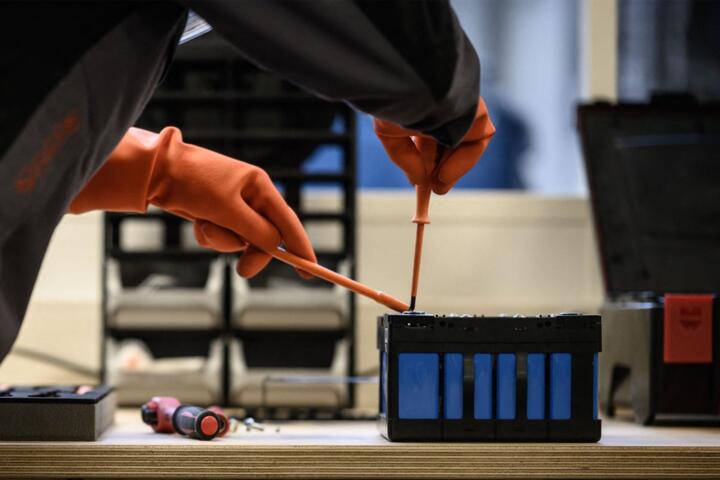
Standard body shops often shy away from EV battery work due to the specialized "de-powering" protocols required. Ensure your vehicle is sent to a shop certified by the Inter-Industry Conference on Auto Collision Repair (I-CAR) specifically for Electric Vehicle Specialist (EVS) roles. These shops are more likely to have the tools to replace individual modules rather than the entire pack, potentially dropping a $20,000 estimate down to $4,000.
Leverage "Right to Repair" Provisions
In certain jurisdictions, you can insist that the insurer uses refurbished or "like-kind-and-quality" (LKQ) battery modules. While many OEMs discourage this, companies like Gruber Motor Company have demonstrated that localized repairs on high-voltage systems are not only possible but safe when performed by electrical engineers rather than general mechanics.
Update Your Policy to "New Car Replacement"
Given the rapid depreciation of some EV models, standard ACV coverage is often insufficient. Switching to a "New Car Replacement" or "Gap Insurance" rider ensures that if your battery triggers a total loss, you aren't left with a $10,000 shortfall between your loan balance and the insurance payout.
Real-World Case Studies
Case A: The Undercarriage Scrape
A owner of a popular California-made electric SUV hit a piece of road debris. The dealer quoted $21,000 for a full pack replacement because the outer casing had a 2-inch scratch. The insurance company initially moved to total the $45,000 vehicle. The owner engaged an independent forensic engineer who used a borescope to prove the damage was purely cosmetic to the armor plate. The repair was downgraded to a $1,200 plate reinforcement, saving the car from the scrap heap.
Case B: Fleet Management Optimization
A delivery company operating a fleet of electric vans faced rising premiums due to frequent "minor" write-offs. They partnered with a specialized EV telematics provider to monitor real-time G-force impacts on battery housings. By providing insurers with data showing the impact force was below the threshold for cell deformation, they reduced their "total loss" rate by 22% over 18 months, significantly lowering their loss ratio and subsequent premiums.
Total Loss Checklist
When facing a claim involving an EV battery, use this step-by-step checklist to evaluate your position:
- Visual Inspection: Is the battery penthouse or cooling manifold leaking fluid? (If yes, repair is unlikely).
- Diagnostic Codes: Does the OBD-II scan show "Isolation Fault" or "Internal Short"?
- Market Value Check: Compare the current trade-in value on Kelley Blue Book against a quoted $18,000 battery replacement.
- State Thresholds: Check if your state (e.g., Florida at 80% vs. Texas at 100%) has a statutory limit for total loss.
- Recertification: Ask the shop if they can provide a post-repair "Battery Safety Certificate" to ensure future insurability.
Common Mistakes to Avoid
Many owners mistakenly assume that a "blown" battery after a crash means the car is dead. In reality, most EVs have a "pyrotechnic fuse" that triggers during an accident to disconnect the high-voltage system for first responder safety. This fuse is often external to the main battery cells and can be replaced for a few hundred dollars. Do not let an adjuster cite a "non-starting" EV as proof of a dead battery.
Another error is failing to document the "State of Charge" (SoC) at the time of the accident. If an EV is towed to a storage lot and sits for three months at 0% charge because it wasn't plugged in, the battery will "brick" due to parasitic drain. This secondary damage is often not covered by the initial accident claim, leading to a total loss that was entirely preventable through proper storage.
FAQ
Why is it so expensive to repair a dented EV battery?
Batteries are pressurized environments with complex thermal management systems. Even a small dent can compromise the spacing between cells, leading to a "thermal runaway" risk. Manufacturers currently prefer total replacement to avoid the massive liability of a potential fire.
Can I buy my "totaled" EV back from the insurance company?
Yes, you can often "retain the salvage." However, be warned: obtaining a "rebuilt title" for an EV is significantly harder than for a gas car, as many inspectors are not yet trained to certify high-voltage safety.
Does Tesla's insurance handle total losses differently?
Vertical integration allows some manufacturers to offer proprietary insurance. They may be more willing to repair batteries because they have access to the internal software and remanufactured parts that third-party shops lack.
Will solid-state batteries change these thresholds?
Potentially. Solid-state technology is less prone to fire from physical deformation. If the volatility decreases, insurers may lower the "risk premium" and be more open to localized repairs.
How does the "Threshold" vary by car age?
For a 1-year-old EV, the threshold is high because the ACV is high. For a 5-year-old EV, where the battery is still worth $15,000 but the car is only worth $20,000, almost any battery-related repair will result in a total loss.
Author’s Insight
I have spent years tracking the intersection of automotive tech and risk management, and the current state of EV "totaling" is arguably the biggest hurdle to mass adoption. My advice is simple: never accept the first "Total Loss" offer on an EV. Most adjusters are using software designed for a 1998 Toyota Camry. By bringing in your own data—specifically a battery health scan—you can often prove the car is worth more than their "book value" suggests, shifting the threshold in your favor.
Summary
Understanding total loss thresholds for electric vehicles requires a shift from mechanical thinking to chemical and electronic evaluation. While the high cost of battery packs makes EVs more susceptible to being written off, the rise of independent diagnostics and specialized repair networks is beginning to balance the scales. To protect your investment, focus on certified repairers, maintain independent health records of your battery, and ensure your insurance policy accounts for the unique valuation of high-voltage components. Taking these steps ensures that a minor road mishap doesn't result in the unnecessary loss of your vehicle.