Precision Power Delivery
The concept of torque vectoring is not new, but its execution has historically been limited by mechanical constraints. In traditional high-performance internal combustion engine (ICE) vehicles, power is sent through a single transmission to an electronic limited-slip differential (eLSD). These systems use brakes or clutches to "shave off" power from one wheel to help the car turn. The Lucid Air Sapphire flips this script by using two independent motors on the rear axle, allowing for additive power delivery rather than subtractive braking.
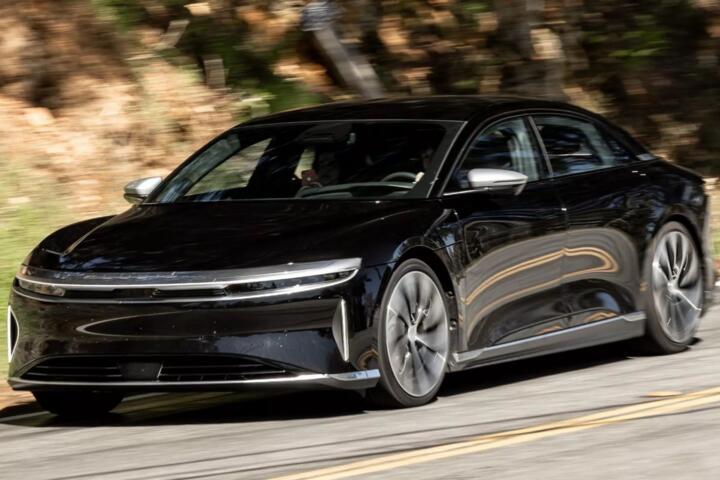
In practice, this means while you are entering a sharp hairpin at Laguna Seca, the outside rear motor can apply maximum forward thrust while the inside rear motor applies regenerative braking. This creates a yaw moment—a physical force rotating the car—that feels like an invisible hand pushing the nose toward the apex. Unlike a mechanical system that has a slight delay as clutches engage, these electric motors respond in milliseconds, adjusting torque output several thousand times per second.
The sheer scale of this technology is backed by staggering data. The Sapphire delivers 1,234 hp and 1,430 lb-ft of torque, but the real magic is the 195-mph top speed sustained by carbon-sleeved rotors. These rotors allow the motors to spin at over 20,000 RPM without flying apart due to centrifugal force, ensuring that the torque vectoring remains effective even at speeds where traditional differentials would overheat or fail to react.
Traction System Limits
One of the primary "pain points" in high-performance EVs is the sheer mass of the battery pack. When a vehicle weighs over 5,000 lbs, physics dictates that it wants to push straight (understeer) when entering a corner at high speed. Traditional traction control systems solve this by cutting power. For a driver, this is frustrating; you press the accelerator, and the car "hesitates" as the computer tries to find grip.
The Problem with Subtractive Vectoring
Most dual-motor EVs use brake-based torque vectoring. When the car senses a loss of traction, it clamps the brake on the inside wheel. This creates heat, wears out brake pads prematurely, and—most importantly—robs the car of kinetic energy. In a track setting, this leads to "brake fade" within a few laps, turning a precision machine into a heavy, unpredictable sedan.
Inefficiency in Dual-Motor Layouts
A standard dual-motor setup (one front, one rear) can only manage torque between the front and back axles. It cannot independently control the left and right wheels on the same axle without using the brakes. This lack of lateral granularity means the car relies entirely on mechanical tire grip. Once the tires reach their limit, the driver has no further tools to rotate the car, leading to slower corner exit speeds.
The Latency Gap
Mechanical differentials, even the most advanced units found in a BMW M5 or an Audi RS6, have a physical delay. Gear teeth must mesh, and hydraulic fluid must pressure up. In the time it takes for a mechanical diff to lock (roughly 50–100 milliseconds), a car traveling at 60 mph has already moved nearly 9 feet. In the world of elite performance, that 9-foot delay is the difference between a perfect line and hitting a curb.
Software-Hardware Mismatch
Often, manufacturers "over-motor" a car but fail to provide the software logic to handle it. This results in "surging," where the car delivers power in jerky increments as the software struggles to keep up with the motor's capability. This creates a disconnected driving experience where the pilot feels like they are fighting the computer rather than working with it.
Thermal Throttling
Aggressive torque vectoring generates immense heat. In many performance EVs, the cooling systems for the inverters and motors aren't robust enough to handle sustained lateral loading. After one or two "hero laps," the system throttles the power to 50% to protect the hardware, leaving the driver with a significantly degraded experience.
Tri-Motor Orchestration
The Sapphire’s solution lies in its unique architecture: one motor up front and two at the rear. This allows for a level of control that was previously relegated to multi-million dollar hypercars like the Rimac Nevera.
Independent Rear Bias
By dedicating a motor to each rear wheel, the Sapphire eliminates the need for a physical link (axle) between them. This allows for "active yaw control." On a skidpad, the system can spin the outer wheel faster while the inner wheel provides counter-torque. This isn't just about speed; it's about stability. If the car hits a patch of ice on one side, the system can instantly shift 100% of the rear torque to the wheel with grip without the driver ever feeling a shimmy in the steering wheel.
Carbon-Sleeved Rotor Technology
To achieve 1,200+ hp safely, Lucid utilizes carbon-fiber sleeves shrunk onto the rotors. This allows the motor to spin at extreme speeds without expanding. For the user, this means the torque vectoring doesn't "taper off" at high speeds. Whether you are at 30 mph or 150 mph, the motors provide the same instantaneous response, making the car feel much smaller and lighter than its physical dimensions suggest.
Micro-Second Control Loops
The Sapphire’s central vehicle control unit (VCU) runs proprietary algorithms that monitor wheel speed, steering angle, and lateral G-forces. Because the motors are controlled by silicon carbide inverters, the power adjustment is nearly instantaneous. This creates a "predictive" rather than "reactive" feel. The car anticipates the slide and corrects it before the driver’s inner ear even registers the loss of traction.
Advanced Thermal Management
To prevent the aforementioned thermal throttling, the Sapphire uses an enhanced cooling manifold. The rear twin-motor unit shares a common cooling system that circulates fluid through the stators and inverters. This allows the car to endure repeated 0-100-0 mph runs or sustained hot laps at a track like Virginia International Raceway (VIR) without a drop in performance.
Seamless Transitions with Regenerative Braking
The integration of regenerative braking into the vectoring logic is a masterstroke. Instead of wasting energy as heat through the friction brakes, the inside motor during a turn acts as a generator. This provides the necessary drag to rotate the car while simultaneously putting energy back into the 118-kWh battery pack. It is efficiency masquerading as performance.
Real-World Scenarios
To understand the impact of this technology, we look at performance data compared to the standard dual-motor "Grand Touring" trim. While the Grand Touring is exceptionally fast, it lacks the surgical rotation of the Sapphire.
Case Study: The Hairpin Turn
In a testing scenario at a closed circuit, a professional driver approached a 180-degree hairpin. In a standard performance EV, the driver must brake early to settle the nose. In the Sapphire, the driver can carry 10% more entry speed. As the steering wheel turns, the rear motors create a torque differential of over 500 lb-ft between the left and right wheels. The car rotates effortlessly, allowing for an earlier throttle application on exit. The result is a 0.5-second advantage in a single corner.
The "Street Safety" Application
Beyond the track, consider a high-speed lane change to avoid an obstacle. A traditional car relies on Electronic Stability Control (ESC) to pulse the brakes, which can unsettle the chassis. The Sapphire’s tri-motor setup uses torque to "pull" the car into the new lane and "push" it back into a straight line. The transition is smoother, keeping the tires within their optimal slip angle and significantly reducing the risk of a secondary slide.
Performance Architecture
| Feature | Standard Dual-Motor EV | Lucid Air Sapphire (Tri-Motor) |
|---|---|---|
| Torque Control | Front/Rear Bias only | Full Lateral (Left/Right) + Front/Rear |
| Rotation Method | Brake-based (Subtractive) | Motor-based (Additive) |
| Response Time | 50-100 ms (Mechanical) | < 1 ms (Electrical) |
| Maximum Output | ~500 - 800 hp | 1,234 hp |
| Heat Dissipation | Standard Liquid Cooling | High-Flow Manifold + Carbon Rotors |
| Cornering Feel | Heavy / Understeer-prone | Agile / Neutral Balance |
Common Design Mistakes
Even with three motors, performance can be compromised if the integration is poor. One frequent error is "aggressive mapping," where the software delivers too much torque to the outside wheel too quickly. This can lead to "snap oversteer," where the car rotates faster than a human can react. A balanced system must have a "human-centric" curve that mimics the natural build-up of force.
Another mistake is neglecting the tires. No amount of torque vectoring can overcome the laws of friction if the rubber isn't up to the task. The Sapphire uses Michelin Pilot Sport 4S tires with a custom compound—stiffer sidewalls and a "Sapphire-specific" tread—to handle the immense lateral loads. Enthusiasts often swap these for standard tires to save money, unaware that they are effectively "handcuffing" the car's vectoring capabilities.
FAQ
Does the tri-motor setup reduce the car's range?
While three motors are heavier, the Sapphire still achieves an EPA-estimated range of over 400 miles. This is due to the efficiency of the motors and the ability to use two motors as generators during coasting and braking.
Is torque vectoring active in all driving modes?
Yes, but the intensity varies. In 'Smooth' mode, the vectoring is subtle and focuses on stability. In 'Sapphire' mode, the logic is tuned for maximum rotation and track performance.
Does it require more maintenance than a single-motor car?
The rear drive unit is more complex, but because it replaces mechanical clutches and traditional LSDs with software and electromagnetic force, there are actually fewer wear items in the drivetrain itself.
How does it perform in snow or rain?
This is where the system shines. By being able to precisely control each wheel's torque, it provides far superior traction on split-mu surfaces (where one side of the car is on ice and the other on pavement) compared to traditional AWD systems.
Can the software be updated over-the-air?
Absolutely. One of the biggest advantages of this setup is that the torque vectoring algorithms can be refined over time via OTA (Over-the-Air) updates, allowing the car’s handling characteristics to improve long after it leaves the showroom.
Author’s Insight
Having spent years analyzing drivetrain architectures, I find the Sapphire’s approach to be the first genuine realization of "software-defined handling." In many cars, you feel the technology working against you—the clicking of ABS or the cutting of throttle. In the Sapphire, the technology is invisible. It makes you feel like a better driver rather than a passenger in a fast computer. My advice to anyone moving into the ultra-high-performance EV space is to ignore the 0-60 times—those are easy. Look at how the car handles mid-corner; that is where the true engineering lies.
Summary
The Lucid Air Sapphire proves that the future of automotive performance isn't just about the quantity of power, but the quality of its distribution. By utilizing a tri-motor array and carbon-sleeved rotors, it solves the inherent weight penalties of EVs while offering a level of agility that challenges the best combustion-engine supercars. For the owner, this translates to a vehicle that is as composed on a rain-slicked highway as it is dominant on a race circuit. To maximize this technology, always maintain the factory-specified tire compounds and ensure the VCU software is kept up to date. The era of the mechanical differential is giving way to the era of the electromagnetic pulse.