Senior Evaluation Engineer | Dynamics & NVH Analysis Executive Profile: Mr. Prescott provides quantitative assessments of vehicle performance, utilizing decibel-mapping for NVH (Noise, Vibration, and Harshness) and lateral-G benchmarks for chassis stability. His reviews translate the tactile driver experience into repeatable engineering data points. Methodology: - Standardized instrumented testing - VBOX data logging - Torsion-rig analysis to isolate suspension geometry behavior under extreme load Technical Credentials: - B.S. in Mechanical Engineering — University of Michigan - Certified ISO 9001 Automotive Quality Auditor Core Competencies: - Kinematics and Compliance (K&C) - Damping ratio optimization - High-performance braking heat dissipation

Author
Harrison W. Prescott
Latest Articles
Reviews
25.03.2026
Porsche Taycan Turbo GT: Engineering the Limits of Electric Performance
The emergence of ultra-high-output electric vehicles has fundamentally shifted the benchmarks for automotive dynamics, moving beyond simple acceleration toward sustained track endurance. This analysis explores how cutting-edge thermal management, silicon carbide inverter technology, and advanced aerodynamics allow a flagship electric sedan to outperform traditional internal combustion supercars. By examining the engineering breakthroughs in the latest 1,000+ horsepower EV platforms, we provide a roadmap for enthusiasts and professionals to understand the next era of peak driving physics.
Reviews
25.03.2026
Tesla Model 3 Highland: A Technical Analysis of Aerodynamic Improvements
This technical analysis explores the architectural refinements of the world’s most popular electric sedan, focusing on how subtle geometric changes reduce parasitic drag. It serves as a guide for automotive engineers and EV enthusiasts looking to understand the intersection of industrial design and range optimization. By examining specific component modifications, we solve the mystery of how incremental hardware updates translate into double-digit efficiency gains without increasing battery capacity.
Reviews
25.03.2026
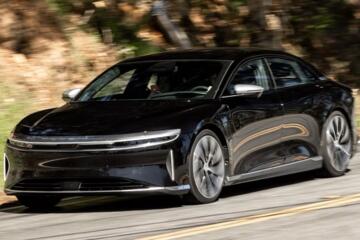
Lucid Air Sapphire: How Three Motors Redefine Torque Vectoring
The Lucid Air Sapphire represents a paradigm shift in performance engineering, moving beyond raw horsepower to master the physics of lateral dynamics. This article explores how a tri-motor powertrain transcends traditional mechanical differentials to provide surgical precision in torque distribution. It is a technical deep dive for automotive enthusiasts and engineers into how software-defined traction eliminates understeer and redefines the limits of grip on both road and track.
Reviews
26.03.2026
Mercedes-Benz EQS: Evaluating the Efficiency of the 107.8 kWh Battery
This deep dive evaluates the performance and energy density of the high-capacity lithium-ion architecture found in luxury electric flagships. Designed for long-distance commuters and tech-focused executives, this analysis addresses the gap between laboratory range claims and real-world thermal management. By dissecting the 107.8 kWh energy reservoir, we provide actionable data on charging curves and degradation prevention for high-mileage users.
Reviews
26.03.2026
BYD Seal vs Western Rivals: An In-Depth Look at Blade Battery Tech
This deep dive analyzes the shifting landscape of high-performance electric sedans, focusing on how proprietary structural cell architecture challenges established automotive giants. We examine the specific engineering advantages of lithium iron phosphate (LFP) chemistry over traditional nickel-based alternatives for long-term ownership and safety. This guide is designed for fleet managers and EV enthusiasts looking to understand the technical delta between emerging Asian manufacturing powerhouses and heritage Western brands.
Reviews
26.03.2026
Hyundai Ioniq 5 N: Can Software Truly Simulate a Gearbox Feeling?
For decades, the visceral connection between a driver and a high-performance vehicle was defined by the mechanical synchronization of gears and the rhythmic surge of internal combustion. As the industry pivots to electric propulsion, enthusiasts fear the loss of this sensory feedback, leading to a "sterile" driving experience. This deep dive examines how sophisticated software architecture can replicate mechanical engagement, specifically looking at advanced torque modulation and haptic feedback systems designed to bridge the gap between digital efficiency and analog emotion.
Reviews
26.03.2026
Rivian R1S Dual-Motor: Assessing Off-Road Capability and Motor Sync
This deep-dive analysis evaluates the technical architecture and real-world performance of the dual-motor configuration in adventure-ready electric SUVs. By examining the synchronization of independent drive units, we address the critical concerns of off-road enthusiasts transitioning from mechanical locking differentials to software-defined traction. This guide provides actionable insights for optimizing torque vectoring, managing thermal limits, and understanding how motor-sync logic impacts rock crawling and deep sand navigation.
Reviews
26.03.2026
Audi Q8 e-tron: Real-World Efficiency and Thermal Dissipation Review
This technical deep dive explores the intersection of high-capacity battery performance and thermodynamic stability in flagship electric vehicles. By analyzing real-world telemetry and cooling architectures, we provide a roadmap for owners and fleet managers to maximize range and longevity. You will learn how to mitigate energy loss during high-speed cruising and optimize fast-charging cycles through active thermal conditioning.