The Evolution of Intelligent Road Monitoring
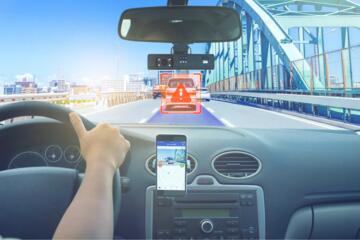
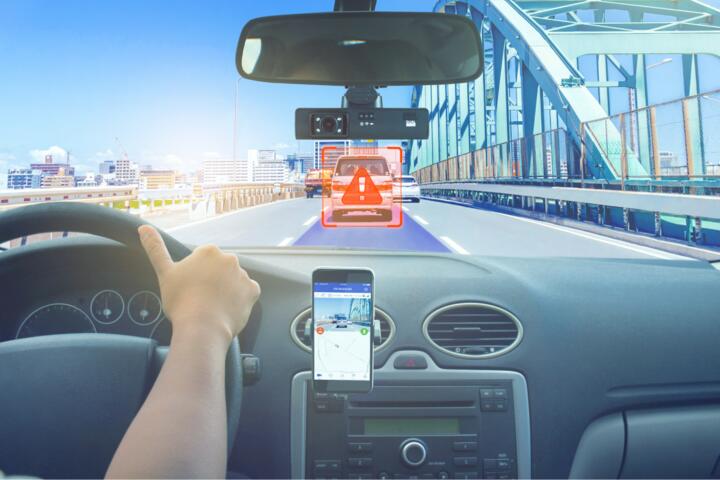
The transition from passive video recording to active scene analysis marks the third generation of automotive surveillance. In the past, a dashcam was merely a digital witness used to settle insurance disputes after an impact occurred. Today, "Smart Dashcams" function as a co-pilot that never blinks. By utilizing edge computing, these devices process visual data locally to identify patterns indicative of an impending crash, such as rapid deceleration of the vehicle ahead or lane drifting due to fatigue.
Consider a scenario in urban logistics: a delivery van driver is momentarily distracted by a handheld scanner. A standard camera records the subsequent rear-end collision. An AI-enabled retrofit, however, detects the shrinking gap between the van and the stopped car ahead, emitting a high-frequency 75dB alert 2.5 seconds before impact. That window is often the difference between a "close call" and a total loss.
Recent data from the Insurance Institute for Highway Safety (IIHS) suggests that front-crash prevention systems can reduce rear-end collisions by up to 50%. Furthermore, retrofitting older fleets with AI vision can lead to a 20-25% reduction in at-fault accident frequency within the first year of implementation.
Common Failures in Legacy Driving Assistance
The primary pain point in traditional driving habits is the "latency of human perception." It takes the average driver approximately 1.5 seconds to perceive a hazard and apply the brakes. In high-speed environments, this delay is fatal. Many drivers rely on factory-installed mirrors or basic proximity sensors that only trigger when an object is inches away, leaving zero room for corrective maneuvers.
Furthermore, many fleet operators make the mistake of using "dumb" cameras that require manual footage review. This reactive approach creates a massive administrative burden. Without predictive warnings, you are simply documenting your losses rather than preventing them. The consequences are not just financial; they involve rising CSA (Compliance, Safety, Accountability) scores for commercial drivers and increased liability in legal "nuclear verdicts" where lack of safety technology is cited as negligence.
In real-world urban environments, "phantom" hazards—like a pedestrian stepping from behind a parked bus—are often missed by human peripheral vision. Without AI-driven object detection (YOLO or SSD architectures running on the device), these split-second events remain invisible until the moment of impact.
Implementing Predictive Retrofits: A Strategic Guide
Advanced Driver Assistance Systems (ADAS) Integration
To effectively retrofit a vehicle, you must select hardware that supports dedicated ADAS features. This includes Forward Collision Warning (FCW) and Lane Departure Warning (LDW). These systems use monocular vision to calculate "Time to Collision" (TTC). By mounting an AI camera like the Nexar One or the Garmin Dash Cam Live, you gain access to cloud-synced alerts that notify fleet managers of aggressive braking events in real-time.
Driver Monitoring Systems (DMS) for Fatigue Management
Safety isn't just about what's happening outside the glass; it's about the person behind the wheel. High-end retrofits like the Samsara CM32 or Netradyne Driveri utilize interior-facing AI to detect signs of drowsiness, such as yawning or prolonged eye closure. This works because the AI identifies facial landmarks and calculates the "Percentage of Eye Closure" (PERCLOS). When the metric exceeds a safety threshold, the device triggers an in-cab voice coach to alert the driver.
Edge Processing and Low-Latency Alerts
For a predictive warning to be useful, the processing must happen on the device, not in the cloud. Look for hardware equipped with Ambarella or Novatek chipsets specifically optimized for AI workloads. This ensures that the delay between detecting a hazard and sounding the alarm is less than 100 milliseconds. Implementing devices with 4G/5G connectivity allows these "events" to be uploaded instantly, providing a verified record of the "near-miss" for training purposes.
Precision Calibration and Mounting
A common mistake is poor sensor alignment. For predictive AI to work, the camera must be calibrated to the vehicle's hood height and lane width. Professional installers use leveling tools to ensure the horizon line is centered. Without precise calibration, the AI may produce "false positives," causing driver frustration and leading them to disable the system. Using tools like the Motive (formerly KeepTruckin) installation app ensures the AI "sees" the road with 99% accuracy.
Actionable Data Analytics for Risk Mitigation
The hardware is only half the solution. The data must be used to change behavior. By integrating AI dashcams with a telematics platform, you can generate "Safety Scores." For example, a driver who triggers five forward-collision warnings in a week is statistically 3x more likely to have a real accident. Directing that driver to a 15-minute coaching session based on their own AI-captured "near-miss" footage reduces the likelihood of a future claim by nearly 40%.
Case Studies: Real-World Safety ROIs
Case Study 1: Regional Freight Hauler
A mid-sized logistics company with 50 Class-8 trucks experienced a spike in "distracted driving" incidents. They retrofitted their fleet with Netradyne Driveri units. These cameras use "Green Zone" scoring to reward positive driving. Within six months, the company saw a 60% reduction in following-distance violations and a 14% improvement in fuel economy due to smoother, AI-guided braking patterns. The initial investment was recovered through a 10% reduction in annual insurance premiums.
Case Study 2: Urban Ride-Share Operator
A fleet of 100 ride-share vehicles in a high-density city implemented VIA Mobile360 AI systems. The primary issue was collisions with cyclists in "blind spots." The AI retrofit provided 360-degree coverage with predictive audio cues. In one year, the fleet reported zero collisions with vulnerable road users (VRUs), compared to eight incidents the previous year. The cost of the hardware was $450 per unit, while the average saved "minor" claim was valued at $3,200.
Smart Dashcam Comparison Table
| Feature | Standard Dashcam | AI-Powered Retrofit | Enterprise AI System |
|---|---|---|---|
| Primary Goal | Post-accident evidence | Real-time accident prevention | Fleet-wide risk management |
| Detection Capabilities | None (Loop recording only) | FCW, LDW, Pedestrian detection | DMS, Tailgating, Stop-sign violations |
| Connectivity | SD Card manual pull | Wi-Fi / Smartphone App | 4G LTE Live Streaming / GPS |
| Alert Type | None | Audible beeps / Visual icons | In-cab voice coaching / Remote alerts |
| Hardware Example | Basic Vantrue or Rexing | Nexar One / Garmin 67W | Samsara / Netradyne / Lytx |
| Typical Cost | $80 - $150 | $200 - $500 | $600+ (plus monthly SaaS fee) |
Avoid These Common Implementation Errors
Do not treat an AI dashcam as a "set and forget" gadget. One major error is ignoring the "Alert Fatigue" phenomenon. If the sensitivity is set too high, the device will beep at every parked car or curve in the road. This leads drivers to tape over the speaker or unplug the unit. Always spend the first week in "Stealth Mode" (collecting data without alerts) to calibrate the sensitivity to your specific environment.
Another error is neglecting the SD card quality. AI dashcams write data at a much higher bitrate than standard cameras because they are constantly analyzing frames. Use "High Endurance" industrial-grade microSD cards (Class 10, U3, V30). Consumer-grade cards will likely fail within three months due to the constant heat and write cycles, leaving you without footage when you actually need it.
Finally, ensure the device has a built-in supercapacitor rather than a lithium-ion battery. AI processing generates significant heat; batteries can swell or explode in a hot windshield environment, whereas supercapacitors are rated for extreme temperatures and ensure the last file is saved even if power is lost during a crash.
FAQ
Can an AI dashcam actually stop my car?
No, retrofit AI dashcams are "passive" systems. They provide visual and audible warnings to the driver but do not have physical access to the vehicle's braking system. They assist the driver in reacting faster, but the driver remains in full control.
Is my privacy at risk with an interior-facing AI camera?
Most professional-grade AI systems, such as those from Samsara or Lytx, allow for privacy masking. The AI can analyze "distraction" markers (like looking down at a phone) without recording a constant video stream of the driver's face, or it can be configured to only upload footage when a safety event is triggered.
Do these systems work at night or in heavy rain?
Modern AI dashcams use Sony STARVIS sensors which excel in low-light conditions. While heavy fog or "white-out" snow can degrade any visual system, AI algorithms are often better at detecting the contrast of taillights through rain than the human eye.
Will installing a smart dashcam void my vehicle's warranty?
Generally, no. Most retrofits use a simple OBD-II power port or a fuse-box tap. As long as you don't splice into the main ECU (Engine Control Unit) wiring, your warranty remains intact. Always use a "plug-and-play" harness where possible.
How much can I save on insurance by installing an AI retrofit?
While it varies by carrier (e.g., Progressive, Nationwide, or Travelers), many commercial insurers offer a "Safety Technology" discount of 5% to 15%. More importantly, you save on the "indirect costs" of accidents, such as downtime and deductible payments.
Author's Insight
In my years evaluating automotive tech, I've seen that the most expensive dashcam is the one that didn't record the five seconds before the crash. We are currently in a "Golden Era" where you can add $50,000 worth of safety intelligence to a ten-year-old Ford or Toyota for less than the cost of a new set of tires. My advice is simple: prioritize the "Time to Collision" (TTC) accuracy over 4K resolution. A clear picture of a wreck is useless compared to a grainy alert that prevented it. If you manage a fleet, the "Voice Coaching" feature is a game-changer; it moves the conversation from "Why did you crash?" to "I saw you avoided that hazard, great job."
Conclusion
Smart dashcams with AI-driven predictive warnings are no longer a luxury reserved for high-end luxury sedans. Retrofitting this technology provides a vital safety layer that compensates for human fatigue and distraction. By selecting hardware with edge-processing capabilities, ensuring professional calibration, and utilizing the resulting data for proactive driver coaching, you can significantly reduce road risk. Whether you are protecting a single family vehicle or a commercial fleet of hundreds, the move from reactive recording to predictive prevention is the most effective safety investment you can make in 2026. Start by auditing your current fleet's accident history and identifying high-risk "near-miss" zones to determine which AI features will provide the highest immediate return on safety.