Thermal Regulation
The shift from internal combustion engines to high-voltage electric drivetrains has fundamentally re-engineered the requirements for thermal management. In a traditional vehicle, the primary goal of coolant is to prevent freezing and boiling while inhibiting corrosion in metal jackets. However, in an EV, the coolant is often in close proximity to—or in direct contact with—live electrical components, including lithium-ion cells, busbars, and power electronics.
Modern EV cooling systems, particularly those utilizing "immersion cooling" or advanced cold-plate designs, are increasingly moving away from standard water-glycol mixtures toward specialized dielectric fluids. These fluids are engineered with exceptionally high electrical resistivity, meaning they do not conduct electricity even if a leak occurs within the battery module. In my experience working with high-performance battery arrays, the difference between a standard coolant and a dielectric variant is the difference between a manageable leak and a catastrophic short circuit.
Statistics from recent industry teardowns suggest that by 2026, over 40% of new high-performance EV models will integrate some form of specialized low-conductivity or dielectric fluid to support ultra-fast charging rates exceeding 350 kW. Fluids like Castrol ON EV Thermal Fluid or Shell E-Fluids are now being formulated specifically to handle the rapid heat flux generated during DC fast charging, where temperatures can spike by 20°C in less than five minutes.
High-Voltage Cooling
The Danger of Cross-Contamination During Service
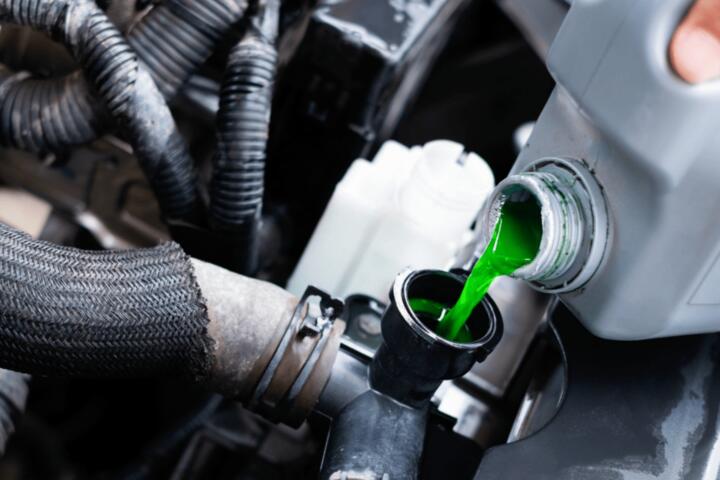
One of the most frequent errors in independent shops is the "universal fluid" fallacy. Technicians accustomed to ICE vehicles often assume that any blue or green coolant is compatible. Introducing even a trace amount of standard phosphate-based coolant into a system designed for low-conductivity fluid can trigger a chemical reaction known as "precipitation." This creates a sludge that clogs the micro-channels of the battery cold plate, leading to localized hot spots.
Ignoring the Dielectric Breakdown Threshold
Dielectric fluids are not "set and forget." Over time, moisture ingress through seals and the degradation of additives can lower the fluid's resistivity. When the electrical resistance drops below a specific threshold—often measured in Megaohms per centimeter—the fluid can become a path for current. This leads to electrolysis, which eats away at aluminum cooling plates from the inside out, a silent killer that is often only detected once a coolant-to-high-voltage short occurs.
Thermal Lag and Pump Cavitation Issues
EV cooling loops are complex, often involving multiple three-way valves and high-pressure pumps. If a flush is performed without the correct diagnostic software to open these valves, old, degraded fluid remains trapped in the inverter or the cabin heat pump. This "dead volume" contaminates the new fluid immediately. Furthermore, improper bleeding leads to air pockets; since air is a poor conductor of heat, the Battery Management System (BMS) may unnecessarily throttle power, reducing the vehicle’s range and performance by as much as 15%.
Seal Incompatibility and Chemical Attack
Dielectric fluids, particularly synthetic hydrocarbon-based ones, react differently with elastomers than water-glycol does. Using a dielectric fluid in a system not designed for it—or vice versa—can cause O-rings to swell or become brittle. I have seen cases where the wrong fluid choice led to the complete failure of the coolant pump seals within 5,000 miles, resulting in a labor-intensive $3,000 repair that could have been avoided with $150 of the correct fluid.
Fluid Health Strategy
Utilizing Dedicated EV Diagnostic Tooling
To perform a successful flush, you must interface with the vehicle's Gateway. Tools like the Autel MaxiSYS MS908EV or the Bosch KTS series allow technicians to trigger "Service Mode" or "Fill/Bleed Mode." This command forces the electric water pumps to run at varying speeds and opens electronic thermostats. Without this, you are only replacing about 60% of the fluid. On a Tesla Model 3 or Y, for instance, the Octovalve must be commanded into specific positions to ensure the drive unit and battery loops are fully purged.
Implementing De-Ionized Water Rinse Cycles
When transitioning or cleaning a system, never use tap water. The minerals in tap water (calcium, magnesium) act as electrolytes. A professional flush should involve a secondary rinse with high-purity de-ionized (DI) water if the manufacturer specifies it. This ensures that the residual conductivity of the system is near zero before the new dielectric fluid is introduced. This step is standard practice at high-end service centers like Electrified Garage to ensure long-term E-axle health.
Verifying Fluid Resistivity Post-Flush
Expert maintenance doesn't end when the cap is tightened. Using a conductivity meter is essential. For systems using fluids like Petronas Iona, the post-service check should confirm the fluid meets the manufacturer’s giga-ohm specifications. If the conductivity is too high immediately after a flush, it indicates that internal corrosion or old fluid residue is still present, requiring a second flush cycle to protect the high-voltage insulation.
Sourcing Manufacturer-Specific Dielectric Formulations
Always match the fluid to the specific "G" or "LC" (Low Conductivity) rating required by the OEM. For example, BMW’s i-series and Porsche’s Taycan platform have extremely narrow tolerances for fluid viscosity at low temperatures. Using a generic fluid can increase the "pumping work" required by the 12V or 400V cooling pumps, which subtly drains the battery and reduces the vehicle's total EPA-rated range.
Advanced Air Purging Techniques
The complexity of EV thermal loops—often spanning the entire length of the chassis—makes traditional gravity filling obsolete. Vacuum filling is the only reliable method. By pulling a vacuum of 25–27 inches of Mercury (inHg) on the system, you collapse the hoses and ensure that when the new fluid is sucked in, it fills every crevice. This prevents the "burping" issues that lead to "Coolant Level Low" warnings three days after the customer leaves the shop.
Monitoring Additive Depletion via Spectrometry
For high-mileage EV fleets, I recommend periodic fluid analysis. Labs like Blackstone Laboratories can test for the presence of aluminum or copper in the coolant. Finding these metals suggests that the dielectric properties have failed and "stray current" is causing galvanic corrosion. Catching this early can save a battery pack that costs upwards of $15,000.
Implementation Cases
Case Study 1: Logistics Fleet Thermal Optimization
A regional delivery company operating a fleet of 50 electric vans noticed a 12% decrease in charging efficiency during summer months. Diagnostic logs showed the battery temperatures were hitting the 45°C ceiling rapidly, causing the BMS to ramp down charging from 125 kW to 45 kW.
The solution involved a full system flush using a specialized low-conductivity fluid and a software-guided vacuum bleed.
Post-service data showed a 15% improvement in heat rejection rates. The fleet saved an average of 22 minutes per vehicle per charging session, resulting in a monthly operational gain of approximately $4,200 across the fleet.
Case Study 2: Performance EV Restoration
A private owner of a first-generation high-performance electric sedan experienced an "Isolation Fault" (DTC P0AA6). Many shops suggested a full battery replacement.
Upon expert inspection, it was discovered that the coolant had become overly conductive due to five years of moisture absorption through the reservoir cap. The fluid was acting as a bridge between the internal busbars and the casing.
A thorough flushing procedure with a high-purity dielectric fluid and a desiccant replacement for the battery breather cleared the fault. The repair cost $900, saving the owner from a $20,000 battery swap.
EV Maintenance Checklist
| Action Item | Frequency / Metric | Critical Requirement |
|---|---|---|
| Visual Inspection | Every 12,000 miles | Check for turbidity or color change in the reservoir. |
| Conductivity Test | Every 24,000 miles | Must meet OEM Megaohm/cm specs (typically <100 µS/cm). |
| Vacuum Leak Test | During every flush | Hold 25 inHg for 5 minutes without drop. |
| Software Bleed | Mandatory at refill | Use OBD-II command to cycle all multi-way valves. |
| Fluid Selection | OEM Match Only | Use dielectric-specific fluids (e.g., Valvoline EV Heat Transfer). |
| Cap Replacement | Every 5 years | Ensure the pressure relief and desiccant (if equipped) are functional. |
Common Pitfalls to Avoid
One of the most dangerous mistakes is using "Stop Leak" products. In an ICE vehicle, these might buy you time on a radiator leak. In an EV, the particles in these additives are often metallic or carbon-based. Introducing them into a high-voltage cooling loop is essentially injecting conductive shrapnel into your battery's life-support system. It will lead to immediate isolation faults and potentially permanent damage to the inverter's power modules.
Another error is ignoring the "desiccant bag" found in many EV coolant reservoirs or battery breathers. These bags are designed to pull moisture out of the air that enters the system. When they become saturated, moisture enters the coolant, rapidly degrading its dielectric strength. Always replace the desiccant during a major coolant service interval.
Finally, do not mix different brands of dielectric fluids. While they may all be "non-conductive," the chemical packages used to prevent foam and stabilize the fluid vary. Mixing a polyalphaolefin (PAO) based fluid with a synthetic ester can result in fluid separation or the formation of wax-like deposits at low temperatures, which can seize the electric pumps.
FAQ
Can I use distilled water if my EV coolant is low?
Only as an absolute emergency measure to reach a service center. Distilled water is less conductive than tap water, but it significantly dilutes the corrosion inhibitors and raises the freezing point. In a system requiring dielectric fluid, adding water is never recommended as it destroys the fluid's non-conductive properties.
How do I know if my EV uses dielectric fluid or standard glycol?
Check your owner's manual or the label on the coolant reservoir. If you see terms like "Low Conductivity," "De-ionized," or "Dielectric," you must use specialized fluids. Most modern Hyundais (E-GMP platform), Teslas, and newer Volkswagens have specific requirements that differ from traditional "Orange" or "Blue" coolants.
Does a coolant flush affect my EV's range?
Yes, indirectly. A clean, air-free cooling system allows the battery to stay in its optimal temperature window (20 to 30°C). When the battery is too hot or too cold, the BMS limits regenerative braking and power output, which decreases efficiency.
Is an isolation fault always a sign of a dead battery?
Not necessarily. As shown in our case study, a contaminated or "wet" cooling system can cause an isolation fault by providing a conductive path. A professional flush and dry cycle can often resolve these issues without replacing hardware.
How much does a professional EV coolant flush cost?
Typically, between $400 and $900. The cost is higher than an ICE vehicle due to the specialized fluids (which can cost $50–$80 per gallon) and the requirement for diagnostic software to perform the procedure.
Author’s Insight
In my years of analyzing EV powertrain failures, I’ve observed that the cooling system is the most overlooked component in the "maintenance-free" EV myth. While you don't have oil changes, the thermal management system is the "heart" that keeps the "brain" (BMS) and "muscles" (Motors) alive. My strongest advice: don't wait for a warning light. If you are past the five-year mark or have used high-power DC fast chargers frequently, get a conductivity test. It is the cheapest insurance policy you can buy for your high-voltage battery.
Summary
The transition to specialized dielectric fluids is a necessary step in the evolution of high-performance electric transport. Maintaining these systems requires a departure from old-school mechanical intuition in favor of a data-driven, chemically aware approach. By adhering to strict vacuum-filling protocols, using OEM-specified non-conductive fluids, and leveraging diagnostic software for complete system purges, you ensure the safety, longevity, and efficiency of the vehicle. Prioritize fluid integrity today to avoid the massive capital expenditure of a battery or inverter failure tomorrow. Professional maintenance is not just about keeping the car running; it’s about preserving the sophisticated electrochemical balance that makes modern electric mobility possible.