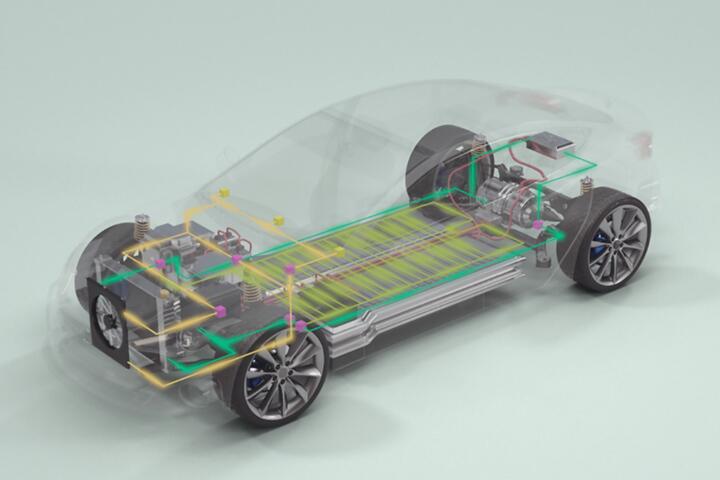
Thermal Regulation Overview
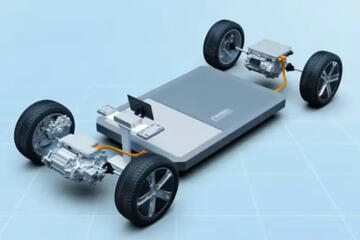
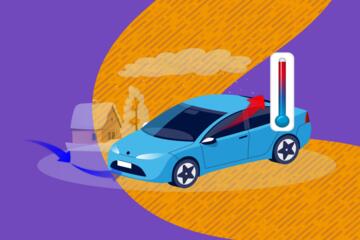
In the era of internal combustion, thermal management was largely about shedding waste heat. In modern electric vehicles (EVs), heat is a precious resource that must be moved, stored, and repurposed. An Integrated Thermal Management System (ITMS) serves as the "circulatory system" of the car, connecting the battery pack, the electric motors, the power electronics, and the cabin HVAC through a complex network of valves, pumps, and heat exchangers.
Practical applications show that a vehicle without a unified system wastes up to 40% of its potential range in sub-zero temperatures simply by using resistive heaters. By contrast, systems that scavenge heat from the inverter and motor can reduce this energy drain significantly. For instance, the transition from discrete heating elements to integrated heat pump systems in high-end electric sedans has been shown to improve winter driving range by 15% to 25% depending on ambient conditions.
Data from real-world testing indicates that maintaining a lithium-ion battery between 15°C and 35°C is the "sweet spot" for performance. Deviating from this range can increase internal resistance by 3-5 times in cold weather or accelerate chemical degradation by 20% annually in extreme heat.
Thermal Engineering Pain
The primary mistake manufacturers and aftermarket modifiers make is treating the cabin and the powertrain as separate silos. When the air conditioning operates independently of the battery cooling loop, the car misses opportunities for energy recovery. This lack of integration leads to "range anxiety," as the vehicle must expend battery capacity on both propulsion and climate control simultaneously without any synergy.
Ignoring thermal pre-conditioning is another significant failure. Drivers who do not pre-heat their battery while plugged into a Level 2 charger (like a ChargePoint or Wallbox unit) face "cold-gate" at DC fast-charging stations. A cold battery cannot accept high current, leading to charging speeds as low as 30 kW when the station is capable of 250 kW. This not only wastes time but increases the total cost of ownership through higher charging fees and reduced battery cycle life.
In high-performance scenarios, inadequate cooling of the power electronics (SiC inverters) can lead to thermal throttling. When the junction temperature of a MOSFET exceeds safe limits, the system limits power output, resulting in a sudden loss of acceleration—a dangerous situation during overtaking maneuvers.
Efficient Solutions
Implementation of Multi-Way Octovalve Technology
To maximize efficiency, engineers should adopt multi-port proportional valves, similar to the "Octovalve" concept. This component acts as a central hub that can reroute coolant in dozens of different configurations. It allows the system to take heat from the drive unit and dump it into the battery to warm it up, or take excess heat from the battery to warm the cabin via a heat pump.
This works because it minimizes the number of redundant pumps and hoses, reducing weight and fluid volume. In practice, using a 5-way or 8-way valve simplifies the cooling architecture while allowing for "thermal storage" modes where the battery is used as a heat sink during the day to provide warmth at night.
Adoption of R744 (CO2) Refrigerant Systems
Traditional refrigerants like R1234yf lose efficiency rapidly below -10°C. Shifting to R744 (Carbon Dioxide) allows heat pumps to operate effectively down to -30°C. This is a game-changer for vehicles operating in Nordic or Canadian climates. R744 systems operate at much higher pressures, requiring robust components from suppliers like Denso or Hanon Systems, but the result is a massive reduction in the need for energy-intensive PTC (Positive Temperature Coefficient) heaters.
Active Battery Immersion Cooling
While most current EVs use cold plates, the next frontier is immersion cooling. In this setup, battery cells are submerged in a dielectric fluid (such as those developed by Castrol ON or M&I Materials). This provides 10 times the heat transfer surface area compared to traditional plates. This technology is essential for "megawatt charging" (MCS) where thermal loads are immense.
Predictive Thermal Logic via Navigation
Integrating the thermal management software with the vehicle’s GPS is a low-cost, high-impact software solution. When a driver enters a destination at a Tesla Supercharger or an Electrify America station, the car should automatically start "pre-conditioning" the battery. By the time the vehicle arrives, the internal chemistry is at the optimal 40°C-55°C required for maximum intake, cutting a 45-minute charge down to 18 minutes.
Waste Heat Recovery from Power Electronics
Power electronics (inverters and DC-DC converters) generate significant low-grade heat. Using a dedicated liquid-to-liquid heat exchanger, this energy can be diverted to the cabin’s floor heaters. This reduces the load on the primary HVAC compressor by approximately 500W to 1.5kW, which translates to an extra 3-5 miles of range for every hour of driving.
Smart Glass and Infrared Reflective Coatings
Thermal management isn't just about moving heat; it's about preventing unwanted gain. Using IR-reflective glass (like Saint-Gobain Sekurit) reduces the cabin's solar heat gain by up to 60%. This significantly lowers the duty cycle of the AC compressor during summer months, preserving battery life and improving passenger comfort without active energy consumption.
Phase Change Materials (PCM) for Peak Shaving
Integrating PCMs into the battery pack casing helps absorb sudden spikes in temperature during rapid acceleration or regenerative braking. These materials melt at a specific temperature (e.g., 35°C), absorbing latent heat without a rise in temperature. This "thermal buffer" prevents the cooling pumps from needing to ramp up to 100% instantly, smoothing out the energy demand.
Sector-Specific Cases
Case 1: Cold Weather Performance Optimization
A European delivery fleet noticed a 35% drop in range during winter months for their light commercial vehicles. The problem was identified as an over-reliance on resistive cabin heating. By retrofitting an integrated heat pump and updating the firmware to prioritize motor-waste-heat scavenging, the fleet saw a 18% recovery in usable range. The ROI was achieved in 14 months through reduced charging frequency and improved driver uptime.
Case 2: High-Speed Charging Efficiency
A premium EV manufacturer struggled with inconsistent charging speeds at 350kW Ionity stations. Sensors showed battery "hot spots" that triggered safety derating. They implemented a revised coolant flow strategy using a parallel-flow manifold and introduced "active pre-conditioning" linked to the navigation system. The result was a 22% reduction in average charging time and a more uniform temperature gradient across the 100kWh pack.
TMS Checklist
| Feature | Low Integration (Legacy) | High Integration (Modern) |
|---|---|---|
| Heating Method | Dedicated PTC Heater | Heat Pump + Waste Heat Recovery |
| Coolant Loop | Separated (Cabin/Battery/Motor) | Unified with Multi-way Valves |
| Refrigerant | R134a or R1234yf | R1234yf or R744 (CO2) |
| Control Logic | Reactive (Fixed Setpoints) | Predictive (GPS & AI-linked) |
| Battery Cooling | Air or Single-side Cold Plate | Dual-side Plate or Immersion |
| Range Impact | High (-30% in Winter) | Low (-10% to -15% in Winter) |
Common Mistakes
One of the most frequent errors is the "Oversized Compressor" trap. Engineers often spec a high-capacity compressor to ensure fast cabin cooling, but this leads to frequent cycling and inefficiency during steady-state driving. A better approach is using a variable-speed scroll compressor that can "whisper" at low RPMs for maintenance while having the headroom for rapid pull-down.
Another mistake is neglecting the thermal mass of the coolant itself. Using a high-volume coolant system adds weight and takes longer to heat up. Modern systems use "segmented loops" that can isolate small amounts of fluid for rapid heating when the car starts, then open up the full loop as the drive progresses.
Finally, many systems fail to account for "thermal crosstalk" where the heat from the motor accidentally warms the battery during a summer highway cruise when the battery is already struggling to stay cool. Proper insulation between the drive unit and the battery tray is a simple mechanical fix often overlooked in favor of complex software.
FAQ
How much range does a heat pump actually save?
In moderate cold (0°C to 5°C), a heat pump can save 15-20% of the total vehicle range compared to a resistive PTC heater. In extreme cold (-20°C), the gains are smaller, typically around 5-8%, as the system often supplements with resistive heat.
Does DC fast charging damage the battery if it’s not pre-conditioned?
It doesn't cause immediate "failure," but it causes lithium plating—a process where lithium ions coat the anode instead of intercalating into it. Over time, this permanently reduces battery capacity and can lead to internal shorts.
Is CO2 (R744) better than R1234yf?
Yes, for heating in cold climates. CO2 is more efficient as a heat pump refrigerant at low temperatures and is environmentally friendly (GWP of 1). However, it requires much higher operating pressures (up to 120 bar), which increases component cost.
What is the "Octovalve"?
It is a proprietary multi-port valve that directs coolant between the motors, battery, and radiators. While popularized by leading US EV manufacturers, the industry is moving toward similar "thermal manifolds" to reduce complexity and weight.
Can I upgrade my older EV to an integrated system?
Generally, no. These systems are deeply integrated into the vehicle's chassis, plumbing, and software architecture. Aftermarket improvements are usually limited to better thermal insulation or software updates for pre-conditioning.
Author’s Insight
From my years observing the shift from mechanical to thermal-electric engineering, I’ve realized that the most "invisible" part of an EV is actually its most critical for long-term satisfaction. I always tell fleet operators: don't just look at the battery size (kWh), look at the thermal management. A 70kWh pack with a high-efficiency integrated heat pump will often outperform an 80kWh pack with a basic PTC heater in real-world, year-round conditions. My advice is to prioritize vehicles that use predictive thermal logic—it’s the smartest "free" range you can get.
Summary
The evolution of electric vehicles is no longer just about battery chemistry; it is about the mastery of thermal energy. Integrated Thermal Management Systems represent a massive leap in efficiency by treating every watt of heat as an asset rather than a byproduct. By implementing multi-way valves, R744 refrigerants, and predictive software, manufacturers can significantly reduce range anxiety and enhance battery longevity. For the end-user, understanding the importance of pre-conditioning and the presence of a heat pump is vital when selecting a vehicle that will perform reliably in all seasons. Focus on integration, and the efficiency will follow.