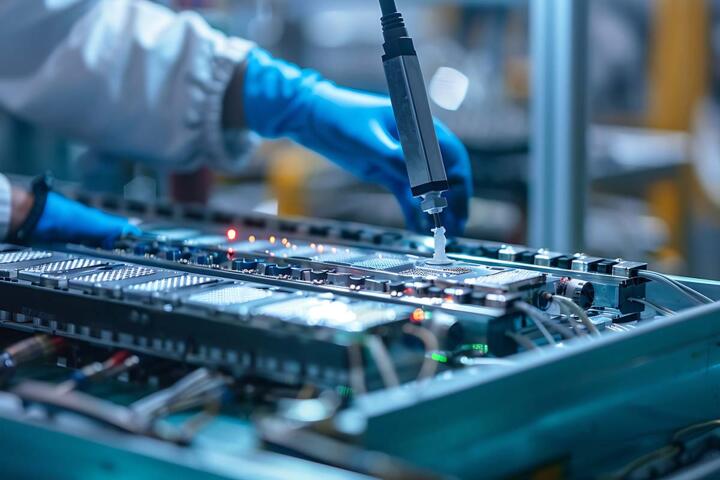
Evolution of Ion Flow
Sodium-ion technology is not a new concept, but it has recently moved from university labs to the gigafactory floor due to breakthroughs in hard carbon anodes and Prussian Blue analogues. While lithium-ion (Li-ion) relies on an element that makes up only 0.002% of the Earth's crust, sodium is the sixth most abundant element, found in salt deposits and oceans everywhere.
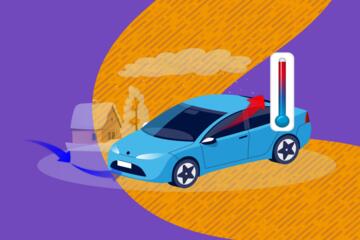
In practice, companies like CATL and Faradion are proving that these batteries can operate in extreme temperatures where traditional cells fail. For example, sodium-ion batteries can retain 90% of their capacity at -20°C, a feat nearly impossible for standard LFP (Lithium Iron Phosphate) chemistries without heavy insulation and active heating.
Market data from 2024 suggests that while energy density remains lower—roughly 140–160 Wh/kg compared to LFP's 180–200 Wh/kg—the cost per kilowatt-hour is projected to drop 30% below lithium as production scales. This makes them the primary candidate for micro-mobility and massive grid-level reservoirs.
Critical Barriers
The primary mistake manufacturers make is treating sodium-ion as a "drop-in" replacement without acknowledging its distinct physical properties. Sodium ions are larger and heavier than lithium ions, which leads to structural stress on the cathode during cycling. If the host material isn't engineered for this volume change, the battery life degrades prematurely.
Ignoring the volumetric energy density gap is another common pitfall. A sodium battery pack for a long-range vehicle would be too heavy and bulky, compromising efficiency. This has led to failed prototypes where companies tried to force the chemistry into high-performance EVs, resulting in poor range-to-weight ratios.
The consequences of these miscalculations are financial and operational. Businesses investing in sodium without a specific use case—like cold-weather storage—often find the initial integration costs outweigh the material savings. Real-world failures often stem from using standard BMS (Battery Management Systems) that aren't calibrated for the unique voltage curves of salt-based cells.
Strategic Implementation
Prioritize Stationary Storage
For grid storage, weight doesn't matter, but cost-per-cycle does. Use sodium cells for 24-hour load shifting where the primary goal is fire safety and low CAPEX. Systems like those from Tiamat Energy demonstrate that high power density (fast charging/discharging) is a core strength here.
Optimize for Cold Climates
Sodium-ion chemistry remains stable and conductive in freezing conditions. In regions like Scandinavia or Canada, replacing LFP with sodium for outdoor power backups eliminates the need for energy-draining thermal management systems, saving up to 15% in parasitic energy losses.
Adopt Hard Carbon Anodes
The industry is moving toward hard carbon derived from biomass. This isn't just about sustainability; it's about performance. High-quality hard carbon provides the necessary interlayer spacing to accommodate the larger sodium ions, extending cycle life beyond 3,000–4,000 cycles at 80% Depth of Discharge.
Utilize Existing Infrastructure
One of the biggest wins is that sodium-ion cells can be manufactured on existing lithium-ion production lines with minimal retooling. Brands like HiNa Battery are leveraging this to scale rapidly without building new factories from scratch, reducing time-to-market by 24 months.
Focus on Zero-Volt Safety
Unlike lithium, sodium cells can be discharged to 0V for shipping. This removes the "hazardous goods" designation during transport, significantly lowering logistics costs and eliminating the risk of thermal runaway during warehouse storage or transoceanic shipping.
Real-World Deployment
Case Study: Urban Micro-Mobility
A Chinese electric two-wheeler manufacturer replaced Lead-Acid and LFP batteries with HiNa's sodium cells. The problem was high replacement rates due to winter performance drops. By switching, they maintained 93% of range in winter and lowered the total cost of ownership by 20% over three years. Total units deployed exceeded 50,000 in the first quarter.
Case Study: Utility-Scale Backup
A renewable energy project in Australia integrated a 100MW sodium-ion storage system to buffer wind power. They chose sodium over LFP due to the risk of fire in high-heat environments. Result: The system operated with zero fire incidents and achieved a 40% reduction in raw material procurement costs compared to a neighboring lithium-based project.
Comparing Chemistries
| Feature | Sodium-Ion (Na-ion) | Lithium (LFP) | Lead-Acid |
|---|---|---|---|
| Energy Density | 140–160 Wh/kg | 180–210 Wh/kg | 35–50 Wh/kg |
| Raw Material Cost | Very Low (Sodium) | High (Lithium/Cobalt) | Moderate (Lead) |
| Operating Temp | -40°C to +60°C | -20°C to +50°C | -10°C to +45°C |
| Safety Profile | High (Non-flammable) | Moderate (Thermal Runaway) | Low (Toxic/Corrosive) |
| Fast Charging | 80% in 15 mins | 80% in 30-45 mins | 8–12 hours |
Common Integration Errors
One frequent error is underestimating the importance of aluminum current collectors. Sodium doesn't alloy with aluminum at low potentials, unlike lithium which requires expensive copper collectors. Using copper in a sodium battery is a waste of money and increases weight, yet legacy designs often carry this over.
Another mistake is ignoring the discharge curve. Sodium-ion batteries have a sloping voltage profile, whereas LFP stays very flat. If your electronics are designed for a flat voltage, they will shut down early or fail to accurately report "state of charge," leading to unexpected power loss in the field.
Finally, many developers fail to source "battery-grade" sodium salts. Impurities like water or calcium in the sodium carbonate can cause internal gas buildup. Always use high-purity precursors from specialized suppliers like Solvay or BASF to ensure cell longevity and prevent swelling.
FAQ
Is sodium-ion better than lithium-ion?
It depends on the application. It is better for cost, safety, and cold weather, but worse for high-end electric vehicles requiring maximum range due to lower energy density.
Can I use my existing charger for sodium batteries?
Usually no. Sodium-ion has a different voltage window (typically 2.0V to 4.0V) compared to Li-ion. You must use a charger with a specific BMS profile calibrated for sodium chemistry.
How long do sodium-ion batteries last?
Modern sodium cells can reach 3,000 to 5,000 cycles. While slightly less than premium LFP cells (which can hit 6,000+), they far outlast lead-acid and are sufficient for most 10-year storage projects.
Are sodium batteries environmentally friendly?
Yes, they are significantly greener. They eliminate the need for cobalt and lithium mining, which are energy-intensive and often involve ethical concerns. Sodium extraction is far more sustainable.
When will sodium-ion cars be available?
Small-scale production has already begun. Brands like Yiwei (JAC) have released compact EVs using sodium-ion packs. Expect mass-market availability for city cars and scooters by 2026–2027.
Author’s Insight
Having tracked battery advancements for over a decade, I see sodium-ion not as a "lithium killer" but as a necessary release valve for the industry. My experience suggests that the real winner here isn't the EV market, but the domestic solar backup market. I recommend that developers focus on 48V home storage systems where the weight of the battery is irrelevant compared to the peace of mind that comes from a non-flammable, low-cost salt battery. The shift is inevitable because the math of lithium scarcity simply doesn't add up for the whole world to go green at once.
Summary
Sodium-ion technology is a viable, safe, and cost-effective alternative for stationary storage and short-range transportation. While it won't power long-haul flights or luxury performance cars, its ability to function in extreme cold and its reliance on abundant materials makes it the backbone of a resilient energy grid. To maximize this technology, focus on applications where safety and cost per cycle are the primary metrics. Invest in hardware that supports wide voltage ranges and transition your supply chain toward these salt-based cells to hedge against future lithium price spikes.