Understanding the Role of Fluids in Electric Drive Units
In a traditional vehicle, transmission fluid primarily handles gear lubrication and hydraulic pressure. In an EV, the fluid in the Electric Drive Unit (EDU) takes on a dual role: lubrication and high-efficiency cooling. These units often spin at speeds exceeding 15,000–18,000 RPM, creating immense friction and heat within the reduction gears and bearings.
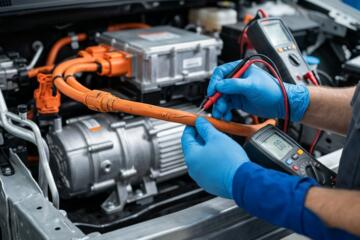
Modern EDUs, such as those found in the Tesla Model 3 or the Hyundai Ioniq 6, use integrated systems where the fluid may come into direct contact with the motor windings (direct cooling). This requires the fluid to have specific dielectric properties—meaning it must insulate electrical components while simultaneously whisking heat away. Unlike traditional ATF, these fluids are formulated with lower viscosity to reduce "churning losses," which directly improves the vehicle's driving range.
Real-world data shows that a 5% increase in fluid viscosity due to oxidation can lead to a measurable 1–2% drop in total vehicle efficiency. Furthermore, early teardowns of high-mileage electric delivery vans have shown significant copper corrosion when the fluid's protective additives were depleted, proving that "fill-for-life" is often a marketing term rather than a mechanical reality.
The Hidden Costs of Neglect
The "Fill-for-Life" Myth
Many manufacturers claim their EDU fluid is a "lifetime fill." However, in engineering terms, "lifetime" often refers only to the warranty period (e.g., 8 years or 100,000 miles). For owners intending to keep a vehicle for 15 years or those operating in "severe conditions"—such as frequent towing, mountain driving, or high-ambient temperatures—this label is misleading.
Thermal Degradation and Oxidation
Even without combustion byproducts, EDU fluid undergoes thermal cycling. Every time you utilize "Ludicrous" or "Boost" modes, the localized temperature at the gear teeth can spike momentarily. Over time, this breaks down the molecular structure of the synthetic base oils. Once oxidation begins, the fluid becomes acidic, which can attack the lacquer coating on the motor's copper windings, leading to a short circuit that costs upwards of $6,000 to $10,000 to repair.
Conductivity Shifts
The most dangerous issue in an EV is the change in the fluid's dielectric constant. As the fluid accumulates microscopic wear particles from the reduction gears, its ability to insulate electricity decreases. If the fluid becomes too conductive, "stray currents" can jump through the fluid, causing pitting in the ceramic or steel bearings—a phenomenon known as electrical erosion.
Precision Maintenance: When and How to Act
Monitoring Fluid Color and Clarity
While EV fluid doesn't turn "black" like engine oil, it does darken. A shift from a clear amber or blue to a cloudy brown indicates that the antioxidant additives are exhausted. Expert technicians at specialized EV shops, like electrified garages in the US or specialized EU centers, use fluid analysis kits (like those from Blackstone Labs) to check for parts-per-million (PPM) of copper and iron.
Adhering to Severe Weather Protocols
If you live in regions with extreme heat (e.g., Arizona) or extreme cold (e.g., Norway), your fluid works harder. In heat, the fluid thins excessively; in cold, it resists flow during the first few miles. Professional recommendation for these climates is a fluid refresh every 50,000 to 60,000 miles, regardless of the "lifetime" claim.
Utilizing Dedicated EV Fluids
Never use standard Dexron or Mercon fluids in an EDU. Brands like Castrol ON, Shell E-Fluids, and Mobil EV are specifically engineered for these high-RPM environments. These fluids are tested for "material compatibility" to ensure they don't dissolve the specific seals and polymers used in EV drivetrains.
The Magnetic Plug Inspection
Most high-end EDUs feature magnetic drain plugs. During a service, a "fuzzy" buildup of metallic paste is normal, but "flakes" are a sign of imminent gear failure. Cleaning this magnet and replacing the fluid removes these abrasive particles from circulation, significantly extending bearing life.
Software-Driven Thermal Management
Some modern vehicles use the EDU fluid to help heat the battery pack in winter. This means the fluid is constantly being pumped through heat exchangers. Ensuring the fluid is at the correct level and viscosity is vital not just for the gears, but for the health and charging speed of the main high-voltage battery.
Real-World Service Outcomes
Case Study: High-Mileage Logistics Fleet
A delivery company operating a fleet of 50 electric vans in London noticed a 4% increase in energy consumption across their 3-year-old vehicles. They partnered with a specialized service provider to perform a fluid "refresh" using Shell E-Fluid.
The Result: After replacing the darkened original fluid, the fleet saw an average efficiency recovery of 3.2% and a significant reduction in EDU operating noise (measured in decibels). The ROI was achieved within 8 months solely through energy savings.
Case Study: The Performance Sedan Overhaul
An owner of a high-performance EV used for occasional track days reported a "whining" sound from the rear motor at 70,000 miles. A fluid analysis showed high levels of copper (150 PPM).
The Action: The shop performed a double-flush of the rear EDU.
The Result: The whining noise subsided, and a follow-up analysis 5,000 miles later showed copper levels had stabilized to a safe 15 PPM. A $300 fluid change prevented a $7,500 motor replacement.
EV Transmission Maintenance Checklist
| Task | Frequency (Standard) | Frequency (Severe) | Priority |
|---|---|---|---|
| Visual Leak Inspection | Every 12 months | Every 6 months | High |
| Fluid Level Verification | Every 30,000 miles | Every 15,000 miles | Medium |
| Chemical Analysis (Blackstone) | 80,000 miles | 40,000 miles | High |
| Full Fluid Replacement | 100,000 miles | 50,000 miles | Critical |
| Magnetic Plug Cleaning | During Replacement | During Replacement | High |
Common Missteps in Electric Drivetrain Care
One of the biggest mistakes is assuming that "no leaks mean no problems." Because EDUs are sealed systems, fluid loss is rare, but internal degradation is invisible. Another error is using suction pumps that can't reach the bottom of the casing, leaving the heaviest metallic contaminants behind. Always insist on a gravity drain when possible.
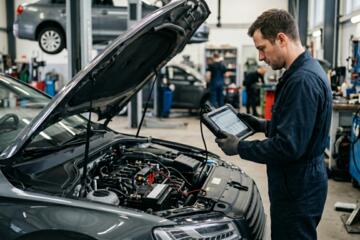
Many DIY enthusiasts also forget that some EVs require a specialized scan tool to cycle the internal electric oil pump during a refill. Without this, you may end up with air pockets in the cooling circuit, leading to localized "hot spots" in the motor that can melt insulation within minutes of high-speed driving.
FAQ
Does my car actually have transmission fluid?
Yes. Almost every EV uses a single-speed or multi-speed reduction gearbox that requires lubrication. Even though there are no "shifts" like a gas car, the gears are under immense pressure.
Can I use any high-quality synthetic ATF?
No. Standard ATF may be too conductive or have additives that corrode the copper found inside electric motors. Use only fluids labeled explicitly for EV or EDU use.
Why doesn't my manual list a change interval?
Manufacturers prioritize a "low cost of ownership" image. Listing a fluid change might make the EV seem more expensive to maintain than it is, but engineers generally agree that 100,000 miles is the practical limit for most fluids.
Will changing the fluid void my warranty?
No, as long as the fluid used meets the manufacturer's technical specifications and the work is documented. In the US, the Magnuson-Moss Warranty Act protects consumers' rights to use third-party service.
How much does an EDU fluid change typically cost?
On average, a professional service costs between $150 and $400, depending on the fluid volume and the complexity of accessing the drain and fill plugs.
Author's Insight
In my years of observing drivetrain failures, the most heartbreaking are the ones that were preventable. I’ve seen EDUs from luxury electric brands fail at 120,000 miles simply because the "lifetime" fluid had turned into a gritty, acidic sludge. My personal rule of thumb: treat your EV's gearbox like a high-end performance differential. If you plan on driving the car past the 150,000-mile mark, a fluid change at 75,000 miles is the cheapest insurance policy you can buy.
Conclusion
While electric vehicles represent a leap forward in mechanical simplicity, the physics of friction and heat remain unchanged. The fluid within your Electric Drive Unit is the only barrier between smooth operation and a multi-thousand-dollar repair bill. By ignoring the "lifetime fill" marketing and opting for data-driven fluid intervals—specifically around the 75,000 to 100,000-mile mark—you ensure your vehicle remains efficient, quiet, and reliable for the long haul. Take the proactive step: check your fluid, analyze the wear, and keep your drive unit running cool.