Smart Windshield Evolution
The automotive windshield has evolved from a passive safety barrier into the "eyes" of the vehicle. In the past, a rock chip meant a quick $200 swap at a local shop. Today, that same piece of glass houses cameras, LiDAR sensors, rain sensors, and heads-up display (HUD) projectors. When you replace the glass, you aren't just replacing silica; you are dismantling and reinstalling the vehicle's primary safety computer.
Industry data from organizations like AAA indicates that ADAS-related repairs can account for nearly 40% of total repair costs in minor collisions. For instance, a 2024 luxury sedan windshield replacement often exceeds $2,500, whereas a similar model from 2014 would have cost roughly $400. This 500% increase is driven by the tight tolerances required for sensor alignment—where a deviation of just one millimeter can cause an Emergency Braking system to miscalculate a stopping distance by several meters.
The Hidden Complexity of Integrated Tech
When a technician installs a new windshield on a modern vehicle, such as a Tesla Model 3 or a Volvo XC90, the job is only half-finished once the urethane cures. The critical step is "Recalibration." There are two types: Static (using physical targets in a controlled bay) and Dynamic (requiring the technician to drive the car at specific speeds under specific weather conditions). Without this, features like Lane Keep Assist or Adaptive Cruise Control may fail or, worse, provide phantom steering inputs.
Skyrocketing Premiums
The primary pain point for consumers is the "insurance lag." Insurers are struggling to keep pace with the rising cost of claims. Because glass claims are the most frequent type of comprehensive insurance filing, the shift from low-cost glass to high-tech sensor arrays has forced providers to hike premiums across the board.
The Accuracy Gap in Aftermarket Parts
Many vehicle owners opt for "aftermarket" glass to save money, but with integrated sensors, this is a dangerous gamble. Non-OEM (Original Equipment Manufacturer) glass often lacks the precise optical clarity required by cameras. If the glass has a slight distortion, the camera software may throw an error code, or the ADAS system might fail to recognize a pedestrian. This leads to "re-work" costs—paying twice for the same job because the first replacement didn't meet safety specifications.
The Calibration Bottleneck
Most independent glass shops do not own the $30,000+ calibration rigs produced by companies like Autel or Bosch. Consequently, they must sublet the calibration work to a dealership. This adds days to the repair timeline and adds a "middleman" markup to the final bill, which the insurance company eventually passes back to the policyholder through increased rates.
Managing Glass Costs
To navigate this high-cost environment, owners must be proactive. It is no longer enough to have "Full Glass Coverage"; you must ensure your policy covers OEM parts and the mandatory recalibration labor, which often carries a higher hourly rate than standard mechanical work.
Opt for Specialized Insurance Endorsements
Standard policies often default to "Like Kind and Quality" (LKQ) parts. For vehicles equipped with HUDs or complex ADAS, you should request an OEM Parts Endorsement. While it might add $50 to your annual premium, it prevents a $1,500 out-of-pocket dispute when the insurer refuses to pay for genuine glass that the sensors require to function correctly.
Prioritize Resin Repairs Over Replacements
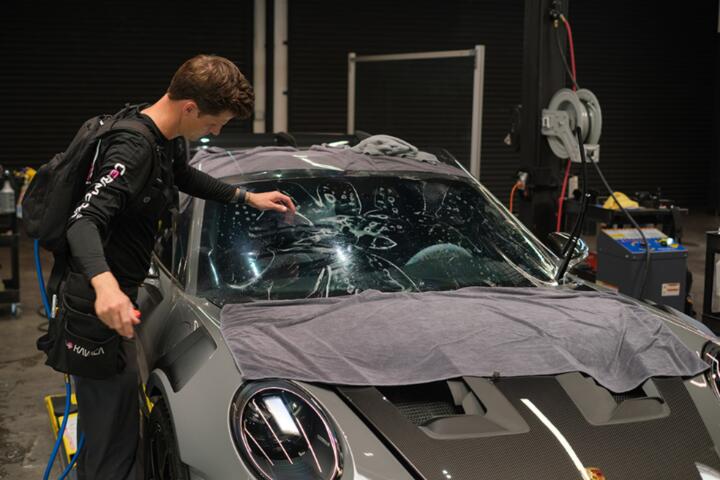
With smart glass, the goal is to avoid replacement at all costs. Modern resins from companies like GlasWeld or Delta Kits can now repair cracks up to 12 inches long with 95% optical clarity. If a chip is caught early, it costs $100 and requires no recalibration. Once that chip spreads, the price tag jumps into the thousands. Investing in a high-quality glass protection film (like ExoShield) can also provide an extra layer of impact resistance for expensive sensor-laden windshields.
Choose Certified Calibration Centers
Verify that your repair shop uses industry-standard tools. Shops using HELLA GUTMANN or Texa equipment provide digital certificates of calibration. This document is vital for maintaining your vehicle's resale value and ensuring that, in the event of a future accident, you have proof that the safety systems were functioning according to manufacturer specs.
Leverage Telematics for Discounting
If your insurance costs are rising due to glass complexity, look for insurers that offer telematics-based discounts (e.g., State Farm’s Drive Safe & Save or Progressive’s Snapshot). By proving you are a low-risk driver, you can offset the inevitable rise in comprehensive coverage costs driven by the hardware.
Utilize Manufacturer-Specific Programs
Brands like Mercedes-Benz and BMW offer "Certified Collision Programs." These facilities are mandated to use specific adhesives and calibration targets. Using a certified shop ensures that the integration between the glass and the car's software remains seamless, preventing "ghost" warnings on your dashboard that often plague low-quality third-party installs.
Real-World Case Studies
Case Study 1: The Fleet Management Oversight
A mid-sized logistics company operating a fleet of 50 Ford F-150 trucks (2023 models) switched to a budget glass provider to cut costs. Within six months, three trucks were involved in minor rear-end collisions. Investigation revealed that the aftermarket glass used in previous replacements caused the Pre-Collision Assist cameras to lag. The company faced a $150,000 liability increase. They shifted to an OEM-only policy with mandatory static calibration, reducing their accident rate by 22% over the following year despite higher upfront repair costs.
Case Study 2: The Luxury Sedan Surprise
An owner of an Audi A8 suffered a rock chip that turned into a crack. A local "mobile" glass van replaced the windshield for $900 but did not perform the necessary calibration for the night vision camera and HUD. The owner experienced blurred HUD visuals and a "System Fault" light. The dealership eventually fixed it for an additional $1,800. The owner’s insurance initially denied the second claim, citing "unauthorized secondary repair." The lesson: Always insist on a single-source repair that includes calibration.
Comparing Glass Types
| Feature | Standard Tempered Glass (Pre-2010) | ADAS-Integrated Smart Glass (Current) |
|---|---|---|
| Average Cost | $200 – $450 | $1,200 – $3,500+ |
| Repair Time | 60 – 90 Minutes | 4 – 8 Hours (including calibration) |
| Required Tech | Basic Hand Tools | Laser Targets, Diagnostic Scanners |
| Insurance Impact | Minimal | High (Primary driver of premium hikes) |
| Safety Role | Structural / Ejection Prevention | Collision Avoidance / Autonomous Input |
Common Repair Pitfalls
- Ignoring Small Chips: In a sensor-heavy windshield, the heat generated by the camera housing can cause a small chip to expand rapidly. Address chips within 24 hours.
- Assuming All Glass is Equal: Many "budget" windshields have a slightly different thickness or tint. This can cause the rain sensor to malfunction or the auto-wipers to trigger randomly. Always check the "bug" (the stamp in the corner of the glass) for manufacturer certification.
- Skipping the Post-Repair Scan: Even if no warning lights are on, the ADAS may be "blind." Demand a post-repair diagnostic report from the shop to confirm all sensors are communicating correctly.
- DIY Calibration: Never attempt to "recalibrate" a camera by simply driving. Modern systems require specific environmental triggers that a standard commute cannot provide.
- Misunderstanding "Zero Deductible": Check if your zero-deductible glass coverage includes recalibration labor. Some policies treat glass as "parts" and labor as a separate "mechanical" claim subject to a higher deductible.
FAQ
Why does my windshield cost $2,000 when the glass itself is only $400?
The "glass" price is a fraction of the cost. You are paying for the integrated heating elements, acoustic dampening layers, and most importantly, the 2–3 hours of specialized labor required to align cameras and sensors using precision electronic equipment.
Will my insurance drop me if I file a glass claim?
Generally, no. Glass claims fall under comprehensive coverage. However, the frequency of these high-dollar claims is causing insurance companies to raise the "base rate" for everyone who owns a high-tech vehicle.
Can I use a mobile service for smart glass replacement?
Only if the mobile service has a specialized van equipped for "Dynamic Calibration." However, many vehicles (like those from Honda or Subaru) often require "Static Calibration," which must be done in a level, indoor bay with specific lighting.
Does aftermarket glass void my vehicle warranty?
It won't void the entire warranty, but if your Adaptive Cruise Control fails and the dealer finds aftermarket glass with optical distortion, they will likely deny the warranty claim for that specific system.
What happens if I don't calibrate the sensors after a replacement?
Your safety systems may operate unpredictably. The car might brake for no reason (phantom braking) or fail to stay in its lane. In a legal context, if you are in an accident and it’s found your sensors were uncalibrated, you could be held liable for "negligent maintenance."
Author’s Insight
In my years tracking automotive trends, I’ve seen the "glass bill" go from a nuisance to a major financial event. I recently advised a friend with a new SUV who was quoted $2,800 for a windshield. The "sticker shock" is real, but the danger of skipping the calibration is worse. My best advice is to treat your windshield like your car's engine—don't let anyone touch it unless they have the diagnostic tools to talk to the car’s computer. A "cheap" fix here is the most expensive mistake you can make.
Summary
The era of the $200 windshield is over. As vehicles transition toward full autonomy, the glass has become a sophisticated component of the car’s nervous system. While this technology saves lives, it significantly inflates insurance premiums and repair complexity. To protect yourself, audit your insurance policy for OEM endorsements, address chips immediately to avoid full replacements, and only trust certified facilities that provide documented calibration results. Taking these steps ensures your safety systems remain an asset rather than a liability.