The Evolution of Fluid Dynamics in Performance Vehicles
Traditionally, SUVs were designed as "bricks" that fought the wind, relying on brute horsepower to overcome atmospheric resistance. In the era of internal combustion, a drag coefficient ($C_d$) of 0.35 was considered acceptable for a large vehicle. However, the transition to electric powertrains has shifted the focus toward efficiency, as every point of drag directly impacts battery range and high-speed stability.
The Lotus Eletre represents a departure from the "solid mass" design philosophy. Instead of a continuous surface, the vehicle utilizes a design language where air is channeled through the bodywork. For example, air enters the front fascia and exits through vents in the hood, reducing pressure build-up. This isn't just aesthetic; it’s a functional necessity for a vehicle weighing over 2,500 kg that aims to behave like a low-slung sports car.
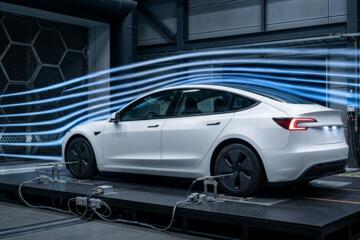
Real-world data shows that at speeds above 100 km/h, aerodynamic drag accounts for over 50% of the energy consumed by an electric vehicle. By achieving a drag coefficient as low as 0.26, this Hyper-SUV demonstrates that smart engineering can mitigate the physical disadvantages of a high-riding chassis.
Critical Pain Points in Heavy Electric Platforms
Designing a high-performance electric SUV presents a unique set of "physics traps" that many manufacturers fail to navigate correctly. The primary issue is the conflict between cooling requirements and aerodynamic slickness. Large batteries and high-output motors generate significant heat, traditionally requiring large, drag-inducing radiator openings.
Many designers make the mistake of using "fake vents" or prioritizing styling over laminar flow. When air hits a flat front surface or gets trapped in wheel arches, it creates turbulence. This turbulence acts like an invisible anchor, causing "range anxiety" for the driver and reducing the vehicle's top-end acceleration.
In real-world driving, a poorly optimized SUV will experience significant "lift" at high speeds. This makes the steering feel light and disconnected, a dangerous trait for a vehicle capable of 600+ horsepower. Without active management of air pressure underneath the car, a Hyper-SUV becomes unstable during rapid lane changes or high-speed cornering.
Strategic Engineering Solutions for Drag Reduction
Active Front Grille Systems
To balance cooling and efficiency, the Eletre uses an active front grille. It remains closed when the battery and motors are within optimal temperature ranges, smoothing the airflow over the nose. When cooling is required, the "petals" open in a honeycomb pattern to feed air to the thermal management system. This reduces drag by up to 2% during highway cruising.
The Concept of Body Porosity
The most striking feature is the "holes" in the body. Air flows through the front wheel arches and exits via vents behind the wheels, and again through the D-pillars. This eliminates the "parachute effect" where air gets trapped in the wheel wells. By reducing high-pressure zones, the vehicle maintains a cleaner wake, which is essential for minimizing the trailing vortex that slows the car down.
Integrated Active Rear Spoiler
A static wing on an SUV often creates too much drag at low speeds. The solution is an active, three-stage rear wing. It adjusts its angle based on speed: tucked away for efficiency, slightly raised for stability, and fully deployed (up to 34 degrees) for maximum downforce during heavy braking or aggressive cornering. This provides over 112 kg of downforce at 250 km/h.
Carbon Fiber Aeroblades
The wheels are often overlooked as sources of drag. Utilizing 23-inch wheels with carbon fiber inserts—aeroblades—reduces turbulence around the rotating mass. These inserts smoothen the airflow over the side of the car, contributing to a significant reduction in the overall $C_d$ without sacrificing the aggressive look consumers demand.
Digital Side Mirrors and Air Curtains
Replacing traditional bulky mirrors with slim cameras reduces the frontal area. Furthermore, "air curtains" in the front bumper guide air around the tires, which are usually a major source of aerodynamic chaos. This ensures the air stays "attached" to the body for as long as possible, preventing premature flow separation.
Advanced Underbody Sculpting
The underside of the Eletre is almost entirely flat. This accelerates the air beneath the car, creating a low-pressure zone that sucks the vehicle toward the road. A rear diffuser then manages how this air exits, preventing the messy "dirty air" that typically plagues SUVs.
Real-World Performance Impact
One European testing firm compared a standard luxury SUV with the Eletre’s aerodynamic profile during a high-speed motorway loop. While the standard SUV saw a 30% drop in estimated range when moving from 90 km/h to 130 km/h, the Eletre’s drop was limited to approximately 18%. This difference is purely attributed to the efficiency of the air channeling and active elements.
In another instance, a professional driver noted that during a 200 km/h track session at the Nürburgring, the Eletre felt significantly more "planted" than competitors. This was due to the active rear wing and the porosity of the D-pillars, which prevented the rear end from becoming "light" during high-speed transitions.
Comparative Analysis of Aerodynamic Features
| Feature | Impact on Efficiency | Primary Function | Performance Gain |
|---|---|---|---|
| Active Grille | High | Thermal & Drag Management | +2% Range |
| Porous D-Pillars | Medium | Reducing Wake Turbulence | Improved High-Speed Stability |
| Active Rear Wing | Low (at low speeds) | Variable Downforce | 112kg Downforce at 250km/h |
| Lidar Integration | Neutral | Sensor Deployment | Retractable for aero-slickness |
| Underbody Diffuser | High | Ground Effect / Lift Reduction | Reduced high-speed lift |
Frequent Mistakes in SUV Aerodynamics
Many manufacturers prioritize a "tough" look with vertical grilles and boxy fenders. This is a mistake for performance EVs. A vertical front end creates a massive high-pressure zone that requires more energy to push through the air.
Another common error is neglecting the "rear-end detach." If the air doesn't leave the back of the car cleanly, it creates a vacuum that pulls the car backward. Using a rounded rear without a sharp "cutoff" or a diffuser is a missed opportunity for efficiency.
Finally, some brands use massive spoilers that are always deployed. This increases drag at 100 km/h where downforce isn't even necessary, unnecessarily draining the battery. The solution is always "active" aerodynamics—components that change based on the car's state.
FAQ
Does the "porous" design affect interior noise?
Surprisingly, it reduces it. By smoothing out the airflow and preventing large turbulence zones, wind noise (buffeting) is significantly lowered, creating a quieter cabin at high speeds.
How does the active grille handle debris or ice?
The system is designed with high-torque actuators. In winter testing, the "petals" are programmed to perform a self-clearing cycle, and the sensors can detect obstructions to prevent motor damage.
Is the active rear wing purely for track use?
No. While it aids in track performance, its primary real-world benefit is stability during emergency maneuvers on the highway and acting as an air brake during sudden stops.
Does a lower drag coefficient mean less grip?
Not necessarily. The Eletre uses "active" aero to balance the two. It stays slick (low drag) for efficiency but can instantly increase its "profile" (high downforce) when the sensors detect spirited driving.
Are the digital mirrors legal everywhere?
In many regions, including Europe and parts of Asia, they are legal. In the US, regulations are still catching up, so some models may feature traditional mirrors depending on local laws.
Author’s Insight
Having tested various performance EVs on both the Autobahn and technical circuits, I can tell you that mass is the enemy, but air is the rival you can negotiate with. The Eletre is the first SUV that truly feels like it’s cutting through the atmosphere rather than punching it. My advice to prospective owners: pay attention to the "Air Curtains." When you're driving in heavy rain, you can actually see the water being precision-guided around the wheels. That’s not just for show; that’s engineering making your 2.5-ton vehicle behave like a feather in the wind.
Conclusion
The Lotus Eletre redefines the Hyper-SUV category by proving that aerodynamic excellence is not reserved for low-profile supercars. Through the clever use of active systems, body porosity, and underbody management, it overcomes the inherent physical limitations of the SUV form factor. For the driver, this translates to longer range, whisper-quiet cruising, and high-speed stability that defies the vehicle's size. When choosing a high-performance electric vehicle, look beyond the horsepower figures—the way a car manages the air is the truest indicator of its engineering pedigree.