Next-Gen Power Tech
For decades, the automotive industry relied on Silicon-based Insulated Gate Bipolar Transistors (IGBTs) to manage power flow between the battery and the motor. While reliable, Silicon reaches a physical limit in efficiency when pushed to higher frequencies and voltages. Silicon Carbide (SiC) is a compound semiconductor that offers a critical advantage: a wide bandgap. This allows the material to withstand higher electrical fields and operate at significantly higher temperatures without compromising structural integrity.
In a practical sense, the inverter acts as the "brain" of the drivetrain, converting DC power from the battery into AC power for the motor. When a vehicle like the Tesla Model 3—the first mass-produced car to adopt SiC—switched to this technology, it didn't just improve performance; it fundamentally altered the energy consumption profile of the vehicle. Research indicates that SiC inverters can reduce energy loss by up to 75% during the conversion process compared to traditional Si-IGBT units.
One defining metric is the breakdown electric field strength, which is approximately ten times higher for SiC than for pure Silicon. This allows for thinner device layers and lower on-resistance ($R_{DS(on)}$), meaning less energy is wasted as heat during every acceleration cycle.
Legacy Silicon Costs
The primary "pain point" in current EV engineering is the thermal bottleneck. Silicon IGBTs are notoriously slow switchers. Every time the inverter switches on and off to create the AC wave for the motor, a small amount of energy is lost as heat. At high switching frequencies, this heat accumulates rapidly, requiring massive, heavy liquid-cooling systems and bulky radiators.
Ignoring the shift to SiC leads to "range anxiety" not just from battery capacity, but from systemic inefficiency. If an inverter operates at 94% efficiency instead of 99%, that 5% difference results in kilowatts of wasted energy that never reaches the wheels. For a 100 kWh battery pack, that is 5 kWh of "ghost" energy lost in every full discharge cycle.
Real-world consequences include slower charging speeds and increased weight. Legacy systems struggle with 800V architectures because Silicon components must be stacked or oversized to handle the voltage, leading to a "diminishing returns" effect where the car becomes heavier and less efficient just to support faster charging.
Efficiency Optimization
To maximize the benefits of SiC, engineering teams must look beyond a simple component swap. The entire electrical ecosystem must be tuned to handle higher switching speeds and lower thermal resistance.
Transitioning to 800V Architecture
Moving from 400V to 800V is the most effective way to utilize SiC's high voltage threshold. Higher voltage allows for lower current ($I$) to achieve the same power ($P$), following the principle $P = IV$. Lower current reduces $I^2R$ resistive losses in the wiring harness, allowing for thinner, lighter copper cables. Lucid Motors and Porsche have successfully implemented this, resulting in 350kW charging capabilities that can add 200 miles of range in under 15 minutes.
Increasing Switching Frequency for Component Downsizing
SiC MOSFETs can operate at switching frequencies upwards of 20-40 kHz, compared to the 5-10 kHz typical of Silicon. Higher frequency allows for much smaller passive components, specifically inductors and capacitors. This reduces the physical volume of the inverter by up to 50%, freeing up space for "frunk" storage or larger battery modules.
Advanced Thermal Packaging Techniques
Since SiC can operate at higher junction temperatures (up to 200°C), manufacturers are moving away from traditional wire-bonding to "sintered" silver connections. Companies like STMicroelectronics and Wolfspeed provide power modules that use double-sided cooling. This enables the inverter to handle higher power bursts during "Ludicrous" or "Plaid" mode accelerations without entering thermal throttling.
Implementing Variable Frequency Drives
By using SiC's agility, engineers can implement sophisticated software algorithms that vary the switching frequency based on real-time load. During highway cruising, the frequency can be lowered to minimize switching losses; during heavy acceleration, it can be increased for smoother torque delivery. This granular control is what allows modern EVs to achieve 4.0+ miles per kWh.
Integration with Permanent Magnet Motors
While the inverter is the star, the motor must be compatible. SiC inverters produce a cleaner sine wave with less harmonic distortion. This reduces eddy current losses within the motor’s copper windings. When paired with an internal permanent magnet (IPM) motor, the total system efficiency improvement can reach 6% to 10% over a standard Si-IGBT and induction motor setup.
Implementation Results
Case Study 1: The Mass Market Pioneer
A leading American EV manufacturer replaced the Silicon IGBTs in their rear motor inverter with SiC MOSFETs sourced from STMicroelectronics.
- The Problem: Limited range and excessive heat during high-speed driving.
- The Action: Integrated a 24-module SiC power block.
- The Result: A 5-8% increase in overall driving range without increasing battery size, and a significant reduction in the size of the inverter housing.
Case Study 2: The Luxury Performance Shift
A European performance brand moved their flagship sedan to an 800V SiC platform.
- The Problem: 400V Silicon systems were overheating during repeated 0-100 mph launches.
- The Action: Deployment of 1200V SiC modules with silver sintering.
- The Result: Consistent performance with zero thermal derating and a charging time of 5% to 80% in just 18 minutes.
Technical Comparison
| Feature | Silicon IGBT | SiC MOSFET | Impact on EV Performance |
|---|---|---|---|
| Switching Losses | High (Tail current issues) | Ultra-Low | Better highway efficiency |
| Operating Temp | Up to 150°C | Up to 200°C+ | Smaller, lighter cooling systems |
| Voltage Ceiling | Efficient up to 400V | Efficient up to 1200V | Enables ultra-fast 800V charging |
| Size/Weight | Bulky, heavy | Compact, high density | More cabin space, better handling |
| Cost | Low (Mature market) | High (3x - 5x) | Higher MSRP but lower TCO |
Avoiding Critical Errors
One common mistake is treating SiC as a "drop-in" replacement for Silicon. Because SiC switches so much faster, it creates significantly more Electromagnetic Interference (EMI). If the circuit board layout isn't optimized with low-inductance busbars, the high $dV/dt$ (rate of voltage change) can cause "ringing" or voltage spikes that damage the motor insulation.
Another error is over-engineering the cooling system. Many engineers apply the same cooling parameters used for Silicon to SiC. This results in an oversized radiator that adds unnecessary weight and aerodynamic drag. The goal should be to downsize the thermal management system to reflect the reduced heat output of the SiC chips.
Finally, ignoring the gate driver is a recipe for failure. SiC MOSFETs require specific gate voltages (typically +18V to -5V) to switch cleanly. Using a standard Silicon gate driver will result in sluggish performance and could potentially lead to a short circuit (shoot-through) in the inverter bridge.
FAQ
Does Silicon Carbide actually increase the top speed of a car?
Not directly, but it allows the motor to maintain peak power for longer periods without overheating, which improves sustained high-speed performance.
Why aren't all EVs using SiC inverters yet?
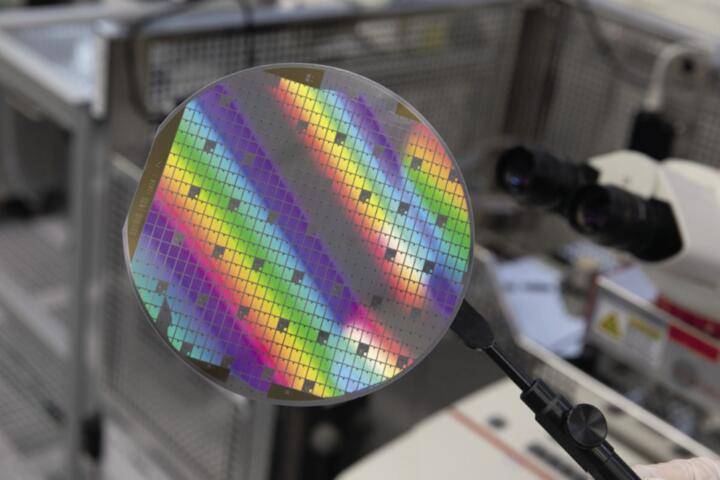
Cost is the primary barrier. SiC wafers are harder to manufacture and more expensive than standard Silicon. Currently, they are prioritized for premium models and long-range variants.
How much extra range can I expect from a SiC-equipped car?
On average, switching from a Si-IGBT to a SiC inverter adds 5% to 10% more range on a single charge, depending on the driving cycle (city vs. highway).
Does SiC improve battery life?
Yes. By reducing the heat generated during discharge and allowing for more efficient regenerative braking, the battery undergoes less thermal stress, which can extend its long-term health.
Is SiC technology reliable for long-term use?
While newer than Silicon, SiC has proven extremely durable in industrial and aerospace applications. Automotive-grade SiC is designed to last the 15-year lifespan of a typical vehicle.
Author’s Insight
In my years observing power electronics evolution, the leap from Silicon to Silicon Carbide is comparable to the jump from vacuum tubes to transistors. I’ve seen bench tests where a SiC module handled double the current of an IGBT half its size while remaining cool to the touch. My advice for anyone in the EV space: don't look at the component price in isolation. When you factor in the savings from a smaller battery and a simplified cooling loop, SiC actually lowers the total system cost for vehicles with a range requirement of over 250 miles.
Summary
Silicon Carbide inverters represent the gold standard for modern electric vehicle efficiency. By slashing switching losses, enabling 800V high-speed charging, and drastically reducing the thermal footprint, SiC technology solves the most pressing challenges of the EV era. While the initial material costs remain higher than traditional Silicon, the systemic benefits—extended range, faster turnaround at chargers, and reduced vehicle weight—provide a clear path toward mass-market adoption. For manufacturers and consumers alike, the move to SiC is no longer an optional upgrade; it is the fundamental requirement for a high-performance, sustainable future on the road.