The Evolution of Atmospheric Control Within the Cabin
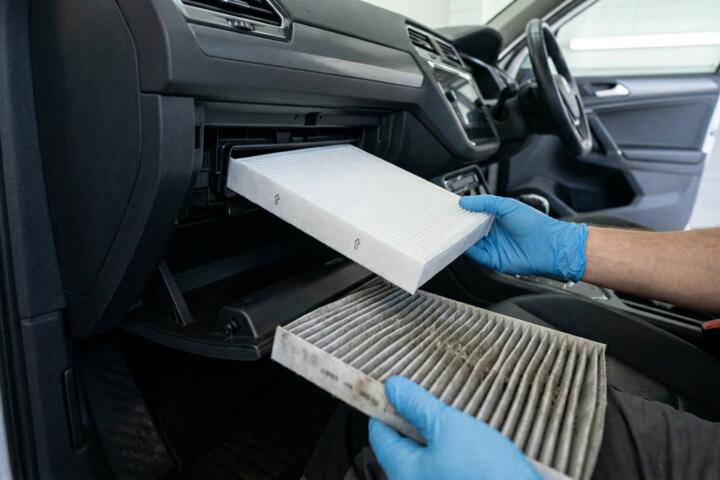
For decades, the automotive cabin filter was a neglected component, often a simple pleated paper element designed to stop leaves and large insects. However, the shift toward urban density has turned cars into "micro-environments" where occupants are exposed to road-level emissions far exceeding ambient city averages. A standard "charcoal" filter might trap odors, but it remains porous to sub-micron threats.
Practical application shows that in heavy traffic, the air inside a vehicle can be up to 10 times more polluted than the air in a park just 50 meters away. Research from organizations like the California Air Resources Board (CARB) indicates that commuters spend roughly 6% of their day in their vehicles, yet receive up to 50% of their daily exposure to ultra-fine particles during that time.
HEPA technology, originally developed for the Manhattan Project to trap radioactive dust, operates on three physical principles: interception, impaction, and diffusion. When applied to a car, this means capturing at least 99.97% of particles as small as 0.3 microns, effectively creating a "clean room" on wheels.
Critical Vulnerabilities in Standard Automotive Ventilation
The primary failure point in most vehicles is the reliance on OEM (Original Equipment Manufacturer) filters that prioritize airflow over filtration density. Manufacturers often choose filters with low pressure drops to extend the life of the HVAC blower motor, but this leaves the "back door" open for pathogens.
Many drivers mistakenly believe that "recirculation mode" solves the problem. In reality, without a HEPA-grade barrier, recirculation simply traps existing pollutants and increases carbon dioxide ($CO_2$) levels, leading to driver fatigue and reduced reaction times. A study by the International Journal of Environmental Research and Public Health found that $CO_2$ levels can exceed 3,000 ppm in just 20 minutes of sealed driving, which is triple the recommended limit for cognitive function.
Furthermore, standard filters do nothing to combat "volatile organic compounds" (VOCs) leaching from interior plastics or the fungal spores that thrive in the dark, damp environment of the evaporator core. Ignoring the upgrade path means your lungs become the primary filter for tire wear particles, brake dust, and combustion byproducts.
Implementing Medical-Grade Air Solutions
Scaling Filtration Efficiency Beyond Basic Standards
To achieve hospital-grade results, you must look for filters rated MERV 16 or higher, or true HEPA H13/H14. Brands like Bosch (HEPA Premium line) and PuraLast have pioneered aftermarket inserts that fit standard housings but utilize multi-layered synthetic media. These filters don't just block dust; they utilize an electrostatic charge to pull sub-micron particles out of the airstream.
Integration of Activated Carbon and Potassium Permanganate
A HEPA filter alone handles solids, but it cannot stop gases. The gold standard for a vehicle upgrade includes a secondary layer of "honeycomb" activated carbon. High-end solutions from companies like CabinAir or The Pure Company use impregnated carbon that chemically neutralizes $NO_2$ and $SO_2$ from diesel exhaust. This "chemisorption" process turns harmful gases into harmless solids trapped within the filter matrix.
Active Ionization and Plasma Clusters
For vehicles where a physical HEPA filter might restrict too much airflow (common in older economy models), adding an active electronic purifier is the professional choice. The Sharp Plasmacluster or IQAir Atem Car units use bipolar ionization. These devices emit positive and negative ions that attach to airborne viruses and bacteria, making them heavy enough to fall out of the air or be easily caught by the existing filter.
Sealing the HVAC Housing
Expert-level installation involves more than just a filter swap. Technicians often use specialized gaskets or non-outgassing foam tape to ensure that the air cannot "bypass" the filter. Even a 1mm gap around the edge of a HEPA filter can reduce its effective efficiency by 50% because air, like water, follows the path of least resistance.
Real-Time Air Quality Monitoring
You cannot manage what you cannot measure. Installing a laser-based particle counter, such as the Temtop M10 or Flow 2 by Plume Labs, allows you to see the "Pull-Down" effect in real-time. In a HEPA-equipped vehicle, you should see the PM2.5 count drop from 50 $\mu g/m^3$ to near zero within 120 seconds of starting the engine.
Real-World Performance Benchmarks
Case Study 1: The Urban Delivery Fleet
A logistics company in London equipped 50 delivery vans with Philips GoPure HEPA systems. Drivers had previously reported high rates of "sick building syndrome" symptoms. After six months, the company recorded a 15% reduction in respiratory-related absenteeism. Independent testing showed that even with windows frequently opening, the internal PM2.5 levels remained 70% lower than the external roadside air.
Case Study 2: Extreme Wildfire Response
During the 2023 Canadian wildfires, a commuter using a Tesla Model Y with "Bioweapon Defense Mode" (a massive HEPA system) compared their interior air to a standard SUV. The Tesla maintained an AQI (Air Quality Index) of 1 inside the cabin while the exterior AQI was over 350. The standard SUV, using a conventional charcoal filter, only managed to bring the internal AQI down to 180, which is still considered "unhealthy."
Technical Comparison: Filtration Tiers
| Feature | Standard OEM Filter | Carbon-Activated Filter | True HEPA (H13) |
|---|---|---|---|
| Particle Capture (0.3 $\mu m$) | 40% - 60% | 60% - 75% | 99.97% |
| Odor Neutralization | Minimal | High | Minimal (unless hybrid) |
| Viral/Bacterial Barrier | No | No | Yes |
| Airflow Resistance | Low | Moderate | High |
| Typical Replacement | 12,000 miles | 10,000 miles | 8,000 - 10,000 miles |
Common Pitfalls in Air Quality Management
One of the most frequent mistakes is the "Set and Forget" mentality. HEPA filters are high-density, meaning they clog faster than cheap filters. In high-pollution environments, a HEPA filter can become restricted in as little as six months. A restricted filter puts strain on the blower motor, potentially leading to a costly HVAC repair.
Another error is purchasing "HEPA-type" or "HEPA-like" filters. These are marketing terms that do not meet the EN 1822 or ISO 29463 standards. If the filter does not specify an H13 or H14 rating, it is likely a high-efficiency synthetic filter that misses the smallest, most dangerous particulates.
Lastly, drivers often neglect the "evaporator cleaning" phase. A HEPA filter cleans the incoming air, but if there is mold growing on the AC coils behind the filter, the air will be re-contaminated before it reaches your face. Using a professional foam cleaner like Nextzett Klima-Cleaner once a year is essential for a truly "hospital-grade" environment.
FAQ: Understanding Automotive HEPA Upgrades
Will a HEPA filter strain my car's AC fan?
It increases static pressure slightly. Most modern HVAC systems can compensate, but you may notice you need to turn the fan speed up one notch higher than usual to achieve the same airflow.
Can I wash and reuse a HEPA cabin filter?
No. HEPA filters rely on a delicate structure of borosilicate fibers and often an electrostatic charge. Washing them destroys the fibers and removes the charge, rendering the filter useless.
Does HEPA filtration protect against viruses like COVID-19?
A true H13 HEPA filter can capture particles in the size range of viral droplets. While no system is 100% foolproof, it significantly reduces the viral load in the cabin air.
How do I know if a filter is "True HEPA"?
Look for a serialized test report or a stamp indicating compliance with US DOE or European EN standards. It should explicitly state 99.97% at 0.3 microns.
Is it worth the extra cost for a lease car?
Yes. Since cabin filters are easily accessible, you can install the HEPA upgrade yourself and swap the cheap OEM filter back in before returning the vehicle.
Author's Insight on Atmospheric Health
In my fifteen years of automotive consulting, I’ve seen people spend thousands on exterior ceramic coatings while ignoring the air they breathe for two hours a day. Transitioning to a HEPA-based system is the single highest-ROI upgrade you can make for your personal health. I recommend a "hybrid" approach: use a high-quality H13 cabin filter for the primary intake and a small, active ionic purifier for the rear seats to tackle "dead zones" in the cabin's airflow. This dual-action strategy is the only way to replicate clinical air standards in a mobile environment.
Conclusion
Achieving hospital-grade air quality in your vehicle is a three-step process: installing a certified H13 HEPA filter, ensuring a perfect seal within the HVAC housing, and maintaining the system with annual evaporator cleanings. While standard filters offer basic protection, the density of modern urban pollutants demands a more robust, science-based approach. By prioritizing high-efficiency filtration, you turn your commute from a health risk into a recovery period in a purified environment. Take the time to verify your filter's H13 rating today and breathe the difference that clinical-grade engineering provides.