6th-Gen Power Philosophy
The shift toward the Neue Klasse (New Class) represents more than just a new line of cars; it is a total recalibration of the manufacturing DNA at the BMW Group. Historically, legacy automakers relied on "cluster architectures" like CLAR, which had to accommodate gasoline tanks, exhaust tunnels, and heavy battery packs simultaneously. This "one-size-fits-all" approach created inefficiencies in weight distribution and interior packaging.
The Neue Klasse moves to a 800-volt system, doubling the standard 400-volt charging speeds seen in the current i4 or iX models. In practice, this means gaining 300 kilometers of range in just 10 minutes of charging at a high-power Ionity station. Furthermore, the architecture introduces "super-brains"—high-performance computers that consolidate dozens of local ECUs (Electronic Control Units) into four centralized processors.
A real-world fact: The transition to cylindrical battery cells (6th gen) instead of prismatic ones increases energy density by 20% while reducing production costs by 50%. This is the financial engine that allows a premium brand to maintain margins while scaling electrification.
Traditional EV Pitfalls
Many manufacturers are currently struggling with "Legacy Drag." This occurs when an EV is built on a platform originally designed for an engine. It results in a high center of gravity and a "transmission tunnel" that serves no purpose in an electric car but occupies valuable cabin space.
The second major pain point is software fragmentation. In a typical modern vehicle, there are up to 150 different modules from various suppliers (Bosch, Continental, ZF), each running its own code. When a user tries to perform an Over-the-Air (OTA) update, these modules often fail to communicate, leading to "bricked" cars or glitches in the Infotainment System.
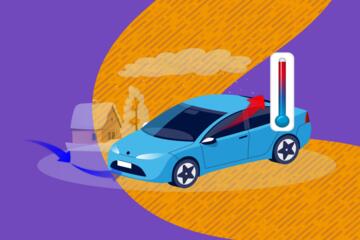
Finally, thermal management remains a massive hurdle. Most current EVs lose up to 30% of their range in temperatures below 0°C because they lack integrated heat pump ecosystems that can scavenge waste heat from the motors and the battery pack simultaneously.
Engineering Solutions
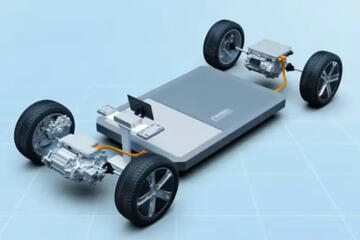
To solve these issues, the Neue Klasse utilizes several breakthroughs in modular engineering that move away from the "skateboards" of the past decade.
1. High-Voltage Cylindrical Cell Integration
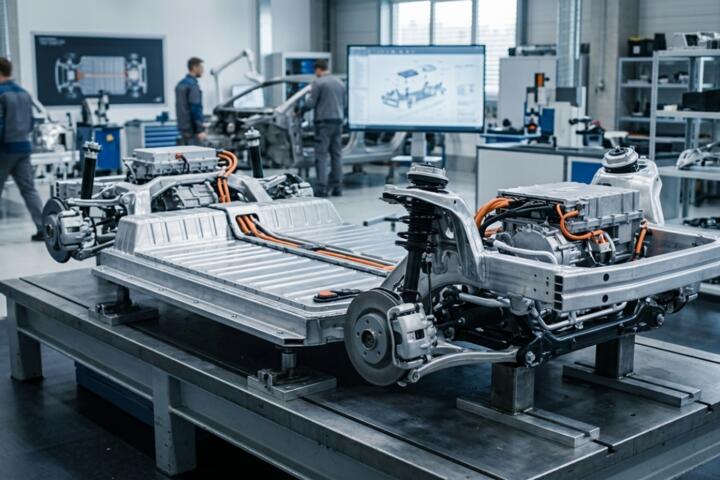
Instead of buying pre-assembled battery modules, the new architecture uses a "pack-to-chassis" approach. The battery housing becomes a structural member of the frame, increasing torsional rigidity by nearly 25%.
- The Result: Better handling and lower weight.
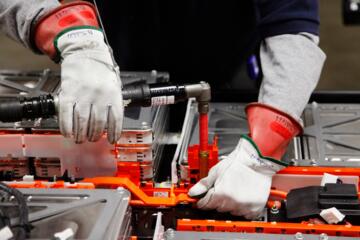
- Service Tip: Using tools like the BMW ISTA (Integrated Service Technical Application), technicians can now diagnose individual cell strings rather than replacing whole modules, lowering long-term ownership costs.
2. The Move to 800V Architecture
By doubling the voltage, the current (amperage) required to deliver power is halved. This allows for thinner, lighter copper wiring throughout the vehicle, saving roughly 20kg in harness weight alone.
- Practical Edge: This reduces heat buildup during rapid DC charging, allowing the vehicle to maintain a "flat" charging curve rather than peaking and then slowing down.
3. Centralized Computing (The Heart Brain)
BMW is replacing decentralized chips with a "Super-Brain" powered by a custom Linux-based OS. This allows the Drive, Chassis, and Automated Driving stacks to share data in microseconds.
- Tooling: Engineers use the NVIDIA DRIVE Orin platform as a baseline for the high-level ADAS (Advanced Driver Assistance Systems) calculations within this modular frame.
4. Direct Drive Efficiency
The Neue Klasse employs sixth-generation eDrive motors that do not use rare-earth magnets. This removes dependency on volatile supply chains in China and uses an excited synchronous motor design.
- The Outcome: Higher efficiency at high speeds (highway driving), where traditional permanent magnet motors often lose their edge.
5. Circular Economy
At the Debrecen plant in Hungary, the architecture is built using 100% renewable energy. The focus is on "secondary materials"—recycled aluminum and plastics that make up nearly 40% of the vehicle’s mass.
Real-World Case Studies
Case Study 1: The Efficiency Leap in the Compact Sedan Segment
A prototype test involving a Neue Klasse-based sedan vs. the current G20 3 Series (Electric) showed a massive improvement in aerodynamic drag ($C_d$). By utilizing a completely flat underbody enabled by the new battery layout, engineers reduced drag by 10 points.
- Impact: This translates to a 12% increase in highway range without adding a single gram of lithium to the battery.
Case Study 2: Supply Chain Optimization via Modularization
A major parts supplier for BMW reported that by moving to the Neue Klasse’s centralized thermal management module, the number of coolant hoses was reduced by 40%.
- Result: Production assembly time per unit dropped by 15 minutes, allowing the San Luis Potosí plant to increase its annual output capacity by roughly 30,000 units without expanding the physical footprint.
Legacy vs. Neue Klasse
| Feature | Gen 5 (Current CLAR/FAAR) | Neue Klasse (Gen 6) |
|---|---|---|
| Voltage Level | 400V | 800V |
| Cell Geometry | Prismatic | Cylindrical (46mm diameter) |
| Charging Time (10-80%) | ~30-35 minutes | ~18-20 minutes |
| Energy Density | Standard | +20% Improvement |
| Software Architecture | Distributed (Multiple ECUs) | Centralized (4 Super-Brains) |
| Sustainability | Low Recycled Content | High "Secondary First" Design |
| Drivetrain Focus | Combustion-First or Hybrid | EV-First / Digital-Only |
Platform Adoption Errors
A common error in the shift to modular EVs is "Over-Complexity." Brands often try to include too many steering and suspension options (Air suspension, rear-wheel steering, active anti-roll) on a single platform. This leads to software bugs and increased weight.
Another mistake is neglecting the "Right-to-Repair" in the design phase. As batteries become structural (cell-to-chassis), removing them for repair becomes a nightmare. BMW addresses this by using a "bolted-in" structural pack rather than a "glued-in" one, ensuring that the battery can be serviced or recycled at the end of its life cycle.
Finally, many engineers fail to account for "Phantom Drain." With so many connected features, the 12V battery can die if the high-voltage system isn't managed correctly. The Neue Klasse uses a sophisticated DC-to-DC converter that keeps the low-voltage system topped up even during deep sleep modes.
FAQ
Will the Neue Klasse replace all gas-powered BMWs?
Not immediately. While the platform is "EV-first," the lessons in manufacturing and software will eventually influence the entire lineup. However, the Neue Klasse itself is a dedicated electric architecture designed to maximize EV efficiency.
What is the primary benefit of the 800V system for the average driver?
The biggest benefit is time. You can stop at a charger like Electrify America or Ionity and add 100 miles of range in about the time it takes to buy a cup of coffee.
Does the new cylindrical battery cell design make the car safer?
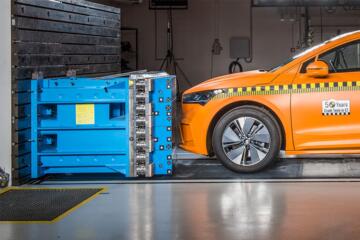
Yes. Cylindrical cells (like the 4695 and 46120 formats) have better structural integrity under pressure and improved thermal venting pathways compared to thin, flat prismatic pouches.
Can the software be updated like a smartphone?
Exactly. The "Super-Brain" architecture allows for "Whole-Car OTA." This means the car can receive updates for the motor controllers, the braking feel, and even the suspension damping over Wi-Fi.
When will the first cars on this platform be available?
Production is slated to begin in 2025 with a compact sedan and a sporty SUV, likely the next-generation iX3 and an electric equivalent of the 3 Series.
Author’s Insight
Having tracked the evolution of the Bayerische Motoren Werke since the early "Project i" days (the i3 and i8), I can say that this is the most significant pivot in the company's 100-year history. The real "magic" isn't the battery—it’s the integration. Most companies can buy a high-density battery from CATL or Northvolt, but very few can write the code that makes the motor, battery, and driver interface feel like a single, cohesive organism. My advice to prospective buyers or investors: watch the "Super-Brain" performance. That is where the battle for the premium market will be won or lost, not in the 0-60 mph times.
Summary
The Neue Klasse represents a definitive break from the "transitional" era of electric vehicles. By implementing an 800V system, cylindrical cell technology, and a centralized software "brain," this modular architecture solves the weight and efficiency problems that have plagued early-generation EVs. For the automotive industry, the lesson is clear: modularity must be built from the ground up, not retrofitted into old frames. To stay ahead, focus on structural battery integration and software consolidation as the primary metrics of success.