Zonal Architecture Basis
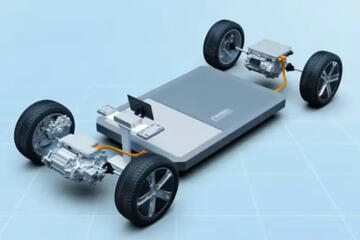
Zonal Vehicle Architecture (ZVA) reorganizes vehicle electronics by grouping functions based on spatial zones (e.g., front-left, rear-right) rather than by function (e.g., braking, infotainment). Instead of dozens of traditional ECUs scattered throughout the vehicle—sometimes 100 or more in high-end models, as reported by Bosch—ZVA consolidates computation and connectivity into fewer, more powerful zonal controllers.
For example, companies like Continental and Aptiv have demonstrated zonal controllers that manage power distribution, sensor data, and actuator commands within a single vehicle region. This approach drastically reduces wiring complexity, cutting the length and weight of wiring harnesses by up to 70%, leading to substantial material cost savings and improved vehicle weight distribution.
Traditional ECU Problems
Fragmented Systems Increase Complexity
Conventional ECUs are designed for specific functions, leading to excessive duplication of computing resources and significant integration complexity. A passenger car may have multiple ECUs for lighting, braking, infotainment, climate control, and advanced driver-assistance systems (ADAS).
Cost and Weight Penalties
Each ECU requires power, cooling, and extensive wiring, which increases vehicle weight and cost. Wiring harnesses can weigh upwards of 60 kg in luxury vehicles and account for nearly 10% of vehicle manufacturing costs.
Software Fragmentation and Update Challenges
Each ECU has its own firmware and software stack, complicating over-the-air updates and leading to security vulnerabilities. Managing software versions and ensuring cross-ECU compatibility is expensive and error-prone.
Real-life Example: Tesla’s MCU Bottleneck
Tesla’s early models struggled with scattered processing, which limited the integration speed of new features. Consolidation in their Model 3 and Model Y demonstrated improved update efficiency and feature rollout speed by moving toward zonal and central architectures.
Solutions and Advice
Adopt Centralized Zonal Controllers
Implement zonal controllers strategically positioned in vehicle sections handling multiple subsystems. This reduces ECU count and wiring complexity. For example, ZF Friedrichshafen AG’s Zonal Control Units (ZCUs) manage lighting, sensors, and actuators within one zone efficiently.
Results include up to 50% reduction in software lines of code, faster development cycles, and hardware reuse across platforms.
Utilize High-Speed, Robust Communication Protocols
Deploy Automotive Ethernet and CAN FD to support high-bandwidth data exchange within zones and across domains. Ethernet is becoming the standard for real-time, high-volume communication replacing legacy CAN buses.
Automakers like Volvo use Ethernet backbones in their SPA2 platform to facilitate advanced zonal communication.
Standardize Software Platforms and Middleware
Leveraging Adaptive AUTOSAR and standardized middleware enables scalable software components compatible across zones and domains. This reduces integration effort and increases software flexibility.
Services like Elektrobit’s EB corbos provide middleware tailored for zonal architectures, accelerating the development of complex software stacks.
Invest in Over-the-Air (OTA) Infrastructure
OTA updates are crucial for managing software in zonal architectures. Ensuring robust, secure update mechanisms (e.g., AVB - Audio Video Bridging) keeps vehicle software current and safe, extending vehicle lifecycle value.
Ford’s OTA platform, Sync, demonstrates how OTA updates via zonal controllers improve responsiveness and customer satisfaction.
Key Case Studies
Volkswagen’s Modular Electric Drive Matrix (MEB)
Problem:Complex ECU and wiring requirements limited scalability and slowed product development.
Solution:VW implemented zonal architecture with centralized computers handling powertrain, infotainment, and ADAS within zones to streamline architecture.
Results:Enabled scalable vehicle designs spanning multiple models with reduced harness lengths by 40% and accelerated software rollout cycles by 30%.
BMW iNEXT Project
Problem:To support autonomous driving and advanced connectivity, BMW needed a more flexible, scalable vehicle architecture.
Solution:Developed zonal domains, grouping sensors and compute resources per vehicle zone, connected through a high-speed Ethernet backbone.
Results:Reduced ECU count by 50%, lowered vehicle weight by 30 kg, and simplified software versioning and security management.
Architecture Checklist
| Aspect | Comparison: Traditional vs Zonal |
|---|---|
| ECU Count | 100+ units vs 10-20 controllers |
| Wiring | High complexity vs 70% reduction |
| Maintenance | Fragmented vs Streamlined OTA |
| Weight | Heavy harness vs Lightweight setup |
| Bandwidth | Legacy CAN vs High-speed Ethernet |
Common Mistakes
Overcomplicating Zonal Boundaries
Avoid defining too many small zones, which can negate the benefits of consolidation. Focus on logical spatial grouping aligned with physical vehicle sections.
Neglecting Software Standardization
Skipping standardized middleware results in increased integration costs and slower rollouts. Invest in adaptive platforms like AUTOSAR.
Underestimating Communication Requirements
Failing to implement high-speed Ethernet or CAN FD limits zonal data exchange, resulting in bottlenecks. Plan bandwidth needs early.
Ignoring OTA Security
Overlooked OTA vulnerabilities expose vehicles to cyber risks. Incorporate secure boot, encryption, and authentication from the design phase.
FAQ
What is the primary benefit of Zonal Vehicle Architecture?
Zonal Vehicle Architecture simplifies vehicle electronics by consolidating multiple ECUs into centralized controllers, reducing wiring complexity, weight, and cost, while enhancing scalability and software management.
How many ECUs does a zonal architecture typically replace?
Zonal architectures can reduce the number of ECUs from upwards of 100 individual units to around 10-20 zonal controllers, depending on vehicle complexity.
Which communication technologies are preferred in zonal architectures?
Automotive Ethernet and CAN FD are preferred as they support high data throughput and real-time communication between zones and domains.
How does Zonal Architecture impact vehicle software updates?
Zonal Architecture centralizes computing, enabling more efficient over-the-air (OTA) updates, reducing update times, and improving software security management.
Are there recognized OEMs already using Zonal Architecture?
Yes, major automakers like Volkswagen with their MEB platform, BMW with iNEXT, and Volvo with Ethernet-based platforms have implemented zonal vehicle architectures in production or pilot vehicles.
Author's Insight
Having worked on multiple automotive system integration projects, I’ve seen firsthand the headaches caused by the explosion of traditional ECUs. Transitioning to zonal architecture is not just a trend; it’s a necessity to manage the complexity of modern vehicles, especially electric and autonomous models. The biggest challenge is cultural and organizational—aligning hardware teams and software teams around a new architectural mindset. My advice: start early with a clear zoning plan and invest in Ethernet-based communication standards. The results speak for themselves—faster innovation, lighter cars, and better user experiences.
Summary
Zonal Vehicle Architecture marks the beginning of a new era in automotive electronics, replacing fragmented traditional ECUs with centralized, scalable controllers organized by vehicle zones. This transformation leads to reduced wiring complexity, lower costs, streamlined software management, and enhanced cybersecurity. Automakers should prioritize adopting high-speed communication protocols, middleware standardization, and secure OTA infrastructures to fully leverage these benefits. To succeed, focus on clear zoning logic, invest in industry-standard platforms, and plan robust cybersecurity measures from the outset.