Mechanical Health Shifts
In a traditional internal combustion engine (ICE) vehicle, kinetic energy is converted into heat through friction, physically wearing down pads and rotors. Modern electrified drivetrains change this equation by using the electric motor as a generator, capturing up to 90% of braking force. While this extends the lifespan of consumables, it introduces a "lack-of-use" syndrome that many service centers are only now beginning to document.
Practitioners at specialized workshops, such as those servicing Tesla or Rivian fleets, note that brake pads often retain 80% of their thickness after 100,000 miles, yet the system fails. A study of high-mileage hybrid taxis in London revealed that while pad thickness remained within legal limits, the braking distance increased by 15% due to glazing and surface contamination.
Real-world data suggests that EVs may go months without the friction brakes reaching their optimal operating temperature (above 200°C). This thermal dormancy prevents the "self-cleaning" effect that usually strips away road salt, moisture, and debris, leading to a unique set of failure points.
The Problem of Pad Glazing
When friction material is rarely engaged, the surface of the brake pad can undergo a chemical change known as vitrification or glazing. Instead of a porous, high-friction surface, the pad becomes smooth and glass-like, significantly reducing the coefficient of friction when an emergency stop is required.
Corrosion in Dormancy
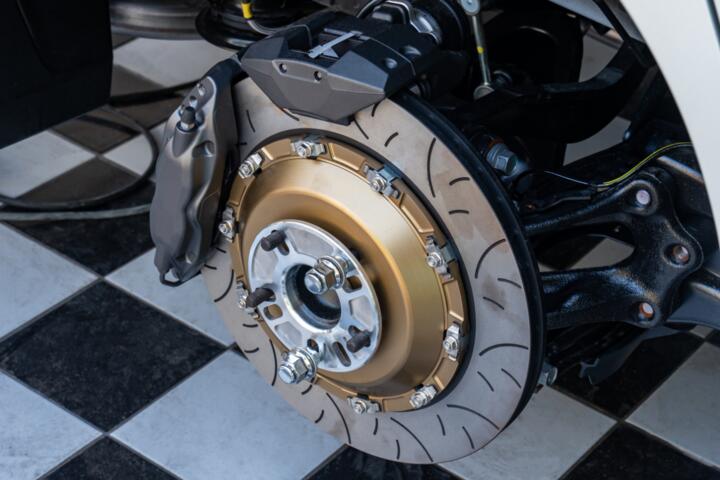
Iron rotors in regenerative systems are prone to "crevice corrosion" where the pad meets the disc. Without regular friction to scrub off surface oxidation, rust pits form deep within the metal structure, leading to permanent structural imbalances and "brake judder" that cannot be turned away on a lathe.
Brake Fluid Hygroscopy
Because the calipers are not generating heat, the brake fluid remains cold. While this sounds positive, heat actually helps evaporate small amounts of moisture that enter the system. In EVs, moisture accumulates faster, lowering the boiling point and risking vapor lock during the rare moments of heavy downhill braking.
Seizing of Slider Pins
The mechanical components of a caliper—specifically the guide pins and pistons—require movement to stay lubricated. In energy-recovery vehicles, these parts may remain static for weeks. Without periodic actuation, the factory grease thickens or washes away, causing the caliper to "freeze" in place.
Electronic Bias Shifts
Modern Electronic Braking Systems (EBS) constantly calculate the blend between motor resistance and friction. If the mechanical side is degraded by rust, the software may over-compensate, leading to jerky transitions and increased stress on the motor-generator unit.
Pain Points in Service
The primary mistake is applying "mileage-based" maintenance logic to a "time-and-environment" based system. Technicians often ignore brakes during inspections because the pads "look thick," failing to check for delamination or seized hardware.
Neglecting these hidden issues is dangerous because the first time a driver truly needs the friction brakes is usually an emergency. If the pads are glazed or the calipers are seized, the vehicle will not meet its projected stopping distance, potentially overriding the safety benefits of Advanced Driver Assistance Systems (ADAS).
In coastal regions or areas with heavy winter salting, like Norway or the Canadian Maritimes, EV rotors have been known to fail safety inspections in as little as two years due to severe pitting. This leads to high replacement costs for parts that technically haven't been "used" yet.
Case studies from fleet operators show that "ghost" brake drag—caused by partially seized calipers—can reduce EV range by 5-7%. This inefficiency often goes unnoticed until the driver realizes the kilowatt-hour per mile (kWh/mi) metric has slowly climbed over several months.
Maintenance Strategies
Switch to a "Condition-Based" inspection cycle rather than a mileage-based one. For vehicles in salt-heavy climates, calipers should be stripped, cleaned, and re-lubricated every 12 months, regardless of mileage. Use high-temperature silicone-based lubricants like Permatex Ceramic Extreme on slider pins.
Implement a "Brake Bedding" routine. Once a week, in a safe and empty area, drivers should perform 2-3 firm stops from 50 mph to 10 mph using "Neutral" gear (which typically disables regeneration). This generates enough heat to burn off surface oxidation and prevents glazing.
Utilize specialized hardware. Companies like Brembo and Continental have developed "EV-specific" rotors with galvanized coatings or high-carbon content to resist corrosion. Brembo's "Beyond" line, for instance, uses a dedicated coating process that specifically targets the moisture-rich environment of regenerative vehicles.
Flush brake fluid every 24 months strictly. Even if the car has only driven 5,000 miles, the lack of thermal cycling makes moisture accumulation a silent killer. Use a digital moisture tester to ensure the water content is below 2%.
For professional workshops, use a dynamic brake tester (rolling road) rather than just a visual check. This measures the actual braking force of each wheel, identifying seized calipers that look perfectly fine through the wheel spokes.
Mini-case examples
Case 1: The Nordic Logistics Fleet
A delivery company in Oslo operating 50 electric vans noticed a 12% increase in "brake binding" complaints.
Action: They implemented a semi-annual caliper lubrication schedule and replaced standard rotors with coated aftermarket versions.
Result: Emergency braking failures dropped to zero, and average vehicle uptime increased by 15 days per year.
Case 2: The Urban Commuter Recovery
An owner of a high-end electric sedan reported a "crunching" sound and reduced range.
Action: Inspection revealed that the rear pads had partially delaminated from the backing plate due to rust.
Result: After replacing the set and adopting a weekly "friction-only" braking habit, the owner saw a 6% improvement in efficiency (Wh/mi).
System Comparison
| Component | ICE Vehicle | Regen System | Priority |
|---|---|---|---|
| Brake Pads | Friction wear | Glazing/rust | De-glazing |
| Rotors | Thinning | Oxidation | Coatings |
| Caliper Pins | Motion wear | Inactivity seize | Lubrication |
| Brake Fluid | Thermal degradation | Moisture build-up | 2-year flush |
Avoiding Common Errors
The most frequent error is assuming that "One-Pedal Driving" modes eliminate the need for brake maintenance. In fact, the more you use one-pedal driving, the more critical it becomes to manually exercise the friction system. Many Tesla owners rely exclusively on the "Hold" mode, which uses the motor to stop, leaving the calipers completely idle.
Another mistake is using generic, low-cost brake pads. Many cheap pads use a high metallic content that is prone to rusting. In a regenerative system, it is better to use high-quality ceramic or copper-free pads that are less reactive to environmental moisture.
Do not ignore "minor" noises. A light squeal in an EV often indicates a pad that is stuck in its bracket or a "lip" of rust forming on the edge of the rotor. Addressing this with a simple cleaning can save the cost of a full rotor replacement later.
Avoid pressure-washing the wheel area directly. High-pressure water can force salt and detergents past the dust boots of the caliper pistons, accelerating the internal corrosion process in a system that doesn't get hot enough to dry itself out.
FAQ
Do EVs need brake jobs?
Yes, but the nature of the job changes. Instead of replacing worn material, the service focuses on cleaning, lubricating, and removing corrosion to ensure the system remains functional for emergencies.
How often should I change EV brake fluid?
Most manufacturers recommend every two years. Because EV brakes run cooler, they don't boil off moisture, making regular fluid replacement critical to prevent internal rust.
Why do my brakes squeal if I barely use them?
This is usually caused by a thin layer of "flash rust" on the rotors or glazed pads. A few firm stops in neutral gear often resolve this issue by cleaning the surfaces.
Is regeneration enough for emergency stops?
No. Regeneration is limited by battery temperature, state of charge, and motor capacity. For sudden stops, the mechanical friction brakes are the only system capable of providing 100% stopping power.
Are ceramic pads better for electric cars?
Generally, yes. Ceramic compounds tend to be more stable during long periods of disuse and are less likely to "weld" themselves to the rotor via rust compared to semi-metallic pads.
Author’s Insight
Having spent a decade in automotive diagnostics, I have seen a clear trend: the cleaner the drivetrain, the dirtier the brakes. I once inspected a three-year-old EV where the brake pads had literally crumbled off their metal backing plates while still having 9mm of friction material left. My strongest advice is to stop thinking about your brakes as a "wear item" and start treating them as "safety hardware" that requires active exercise. A simple 30-second bedding procedure every Sunday will save you thousands in premature hardware replacement.
Summary
The transition to regenerative braking is a triumph of efficiency, but it demands a fundamental shift in how we approach vehicle longevity. Hidden issues like rotor pitting, pad glazing, and caliper seizing are the new "wear and tear" for the electric age. To maintain safety and efficiency, you must move beyond visual pad-depth checks and embrace a proactive regimen of cleaning, lubrication, and deliberate friction engagement. By treating your braking system as a dynamic safety component rather than a dormant backup, you ensure that your vehicle remains as reliable as it is efficient.