Beyond the Acronyms: Understanding Battery Fundamentals
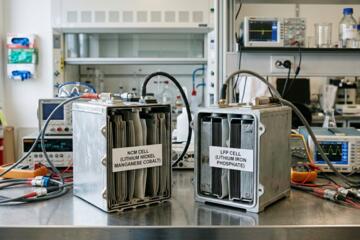
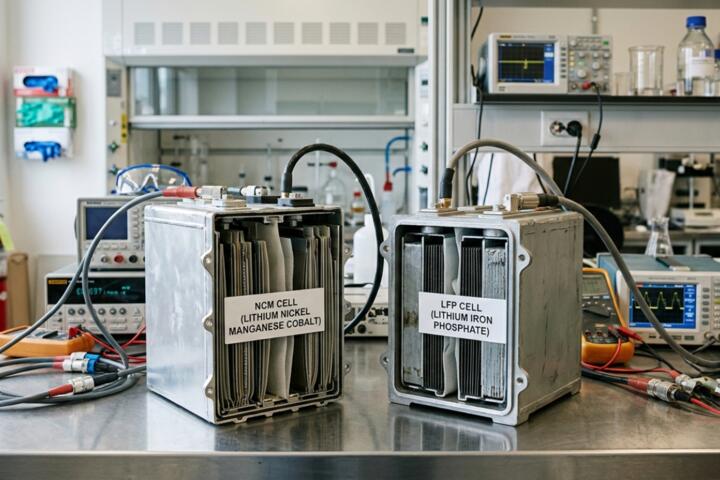
When we talk about EV batteries, we are essentially discussing how lithium ions move between two electrodes. The "chemistry" refers to the cathode material. NCM (Nickel Cobalt Manganese) is the high-performance sprinter, using rare metals to pack as much energy as possible into a small space. LFP (Lithium Iron Phosphate) is the marathon runner—sturdier, heavier, and built to withstand thousands of repetitions without breaking a sweat.
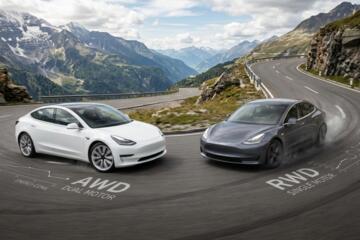
In real-world terms, choosing between them isn't about which is "better," but which fits the mission profile. For instance, a Tesla Model 3 RWD utilizes LFP for cost-effectiveness and cycle life, while the Long Range and Performance variants rely on NCM (or NCA) to achieve the 0-60 mph sprints and 350-mile ranges consumers demand.
The energy density gap is significant. A typical NCM cell might offer $250-300 Wh/kg$, whereas LFP usually sits around $140-170 Wh/kg$. However, statistics from CATL, the world’s largest battery manufacturer, suggest that LFP technology is closing the gap, with their "Shenxing" battery promising 400km of range from a 10-minute charge.
The Friction Points: Common Misconceptions in Battery Selection
Overlooking the Impact of Ambient Temperature
A major pain point for EV owners in northern climates is "winter range anxiety." NCM batteries generally perform better in sub-zero temperatures because the electrolyte remains more efficient at lower thresholds. LFP batteries, conversely, can see a significant drop in charging speed and usable capacity when the mercury dips below $0^\circ C$. Failing to account for local climate leads to unexpected downtime at chargers.
Mismanaging the State of Charge (SoC)
One of the most frequent mistakes is treating an NCM battery like a fuel tank—filling it to 100% every night. This accelerates the growth of "dendrites" (microscopic spikes) that can eventually short the cell. For NCM, the sweet spot for longevity is maintaining a charge between 20% and 80%. LFP is much more forgiving and actually benefits from a weekly 100% charge to calibrate the Battery Management System (BMS).
Thermal Runaway Hazards
Safety is the elephant in the room. While modern cooling systems like those used by Rivian or Lucid are world-class, the chemical makeup matters. NCM releases its own oxygen during a fire, making it extremely difficult to extinguish. LFP is much more thermally stable; its "runaway" temperature is significantly higher (around $270^\circ C$ compared to NCM's $210^\circ C$), and it doesn't support combustion to the same degree.
Ignoring the Resale Value Delta
As the used EV market matures, the "State of Health" (SoH) report becomes the primary price driver. An LFP-powered car with 100,000 miles might still show 95% health, whereas an NCM-powered vehicle subjected to frequent fast-charging might be at 88%. This 7% difference can equate to thousands of dollars in resale value.
Engineering Longevity: Strategic Recommendations
Adopt a Chemistry-Specific Charging Protocol
To maximize an NCM battery, use apps like Recurrent Auto to track degradation. Set your vehicle’s software limit to 80% for daily use. If you drive an LFP vehicle, such as the base Ford Mustang Mach-E, do not be afraid to charge to 100%. The phosphate bond is physically stronger than the oxide bond in NCM, allowing for up to 3,000 cycles compared to NCM’s 1,000–1,500.
Thermal Management Optimization
For NCM owners in hot climates (Arizona, UAE), prioritize parking in the shade or using "Pre-conditioning" features. High heat is the primary catalyst for NCM degradation. For LFP owners in cold climates, look for vehicles with heat pumps (like the Hyundai Ioniq 5). A heat pump can use waste heat from the motors to warm the battery, mitigating the LFP cold-weather performance dip by up to 15%.
Selecting the Right Tool for the Job
If your use case involves heavy towing or long-distance interstate travel, NCM remains the gold standard. The weight savings of NCM (up to 200kg for an 80kWh pack) translates directly into payload capacity and efficiency. For urban commuting, delivery fleets, or "city cars," LFP is the superior financial and safety choice due to its lower cost per kWh ($70-80 for LFP vs $100-110 for NCM).
Utilize Data-Driven Monitoring
Use OBD-II scanners like "OBDLink LX" combined with apps like "ABetterRoutePlanner" (ABRP). These tools provide real-time data on cell voltage deviation. A deviation of more than 30mV in an NCM pack under load is a red flag for early-stage degradation, whereas LFP packs are naturally more balanced but require periodic full charges to ensure the BMS accurately tracks the voltage curve.
Operational Benchmarks: Real-World Comparisons
Case Study 1: The Urban Delivery Fleet
A logistics company in Oslo switched its fleet of 50 delivery vans from NCM-based older models to LFP-equipped models.
Problem: High maintenance costs and range degradation after two years of daily DC fast-charging.
Action: Implemented a "Full Charge Every Night" policy on LFP packs.
Result: After 36 months, the fleet showed a negligible 2% degradation in range, and the lower cost of LFP vehicles reduced the initial capital expenditure by 12%.
Case Study 2: The Long-Haul Executive Service
A premium chauffeur service in London utilized NCM-powered luxury sedans.
Problem: Drivers were losing 45 minutes midday due to slow LFP charging speeds in winter.
Action: Upgraded to high-nickel NCM packs with advanced liquid cooling.
Result: Charging times from 10% to 80% dropped to 22 minutes regardless of weather, increasing the number of billable trips per driver by 15% daily.
Direct Comparison: Longevity and Safety Metrics
| Feature | NCM (Nickel Cobalt Manganese) | LFP (Lithium Iron Phosphate) |
|---|---|---|
| Cycle Life | 1,000 - 1,500 full cycles | 3,000 - 5,000+ full cycles |
| Energy Density | High ($250+ Wh/kg$) | Moderate ($160 Wh/kg$) |
| Thermal Stability | Risks runaway at $210^\circ C$ | Stable up to $270^\circ C$ |
| Charge Ceiling | 80% recommended for daily use | 100% recommended weekly |
| Cold Weather | Retains ~85% range at $-10^\circ C$ | Retains ~70% range at $-10^\circ C$ |
| Cost | Higher (Cobalt is expensive) | Lower (Iron is abundant) |
| Toxicity | Contains heavy metals | Environmentally "greener" |
Avoiding Critical Battery Failures
The "Deep Discharge" Trap
The most dangerous thing you can do to any lithium battery—but especially NCM—is leaving it at 0% for an extended period. This can cause the voltage to drop below the "brick" threshold, where the BMS will permanently disable the pack for safety reasons. If you plan to store an EV for a month, leave it at 50%, not 100% or 5%.
Ignoring Cooling System Flushes
Many owners assume EVs have zero maintenance. However, NCM packs rely heavily on glycol-based coolants to prevent localized hot spots during fast charging. Failure to change this coolant according to manufacturer intervals (e.g., every 4 years for some brands) can lead to uneven cell aging and, in extreme cases, internal shorts.
Fast Charging Obsession
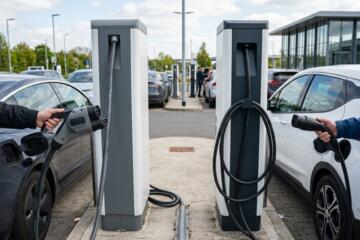
Consistently using 350kW "Ultra-Fast" chargers (like Electrify America or IONITY) places immense stress on the chemistry. For NCM, this "blasts" the lithium ions into the anode too quickly, causing mechanical stress. Limit DC fast charging to road trips; use Level 2 (AC) charging for 90% of your needs to extend battery life by up to 25%.
Frequently Asked Questions
Which battery is safer in a crash?
LFP is inherently safer. Because the phosphate-oxygen bond is stronger, the battery is much less likely to catch fire or explode if the casing is punctured. It does not exhibit the "self-oxygenating" behavior that makes NCM fires so aggressive.
Can I upgrade my car from LFP to NCM?
Generally, no. The two chemistries have different weights and voltage curves. A car designed for LFP has different suspension tuning to handle the extra weight and different BMS software. It is not a "plug and play" swap.
Does LFP really last 10 years longer?
In terms of cycle life, yes. If you drive 15,000 miles a year, an LFP battery could theoretically last for over 500,000 miles before hitting 80% capacity. NCM will likely reach that point closer to 200,000 miles.
Is cobalt-free NCM a thing?
Yes, manufacturers are moving toward "High-Nickel" chemistries (like NCM 811) which significantly reduce cobalt content. This improves energy density and ethics but can slightly decrease thermal stability compared to older NCM 111 formulas.
Why is LFP charging so slow in the winter?
The internal resistance of LFP increases more sharply in the cold than NCM. This means the battery can't accept high current without getting too hot internally, so the car's software throttles the charging speed to protect the cells.
Expert Perspective: The Shift Toward Specialized Chemistry
In my years of analyzing electric drivetrains, I’ve seen the industry pivot from a "one-size-fits-all" approach to a nuanced, tiered system. We are moving toward a world where NCM is the "Premium" or "Towing" tier, while LFP is the "Value" or "Reliability" tier. If I were buying a car to keep for 15 years as a daily commuter, I would choose LFP without hesitation. The peace of mind regarding fire safety and the ability to charge to 100% daily outweighs the weight penalty. However, for those who live in high-latitude regions or require maximum range for highway travel, NCM remains the only viable path for the foreseeable future. Keep an eye on Sodium-ion batteries, which are beginning to challenge LFP in the budget segment.
Conclusion
The "win" between NCM and LFP depends entirely on your operational environment. NCM is the superior choice for high-performance, long-distance travel, and cold climates, provided you are disciplined enough to manage the 20-80% charge cycle. LFP is the champion of longevity, safety, and cost, making it the ideal chemistry for urban drivers and those looking for the lowest possible total cost of ownership. To ensure your battery's health, always prioritize slow AC charging when possible, stay within your chemistry's recommended SoC limits, and never ignore your thermal management system's maintenance. By matching the chemistry to your driving habits, you ensure your vehicle remains an asset rather than a liability.