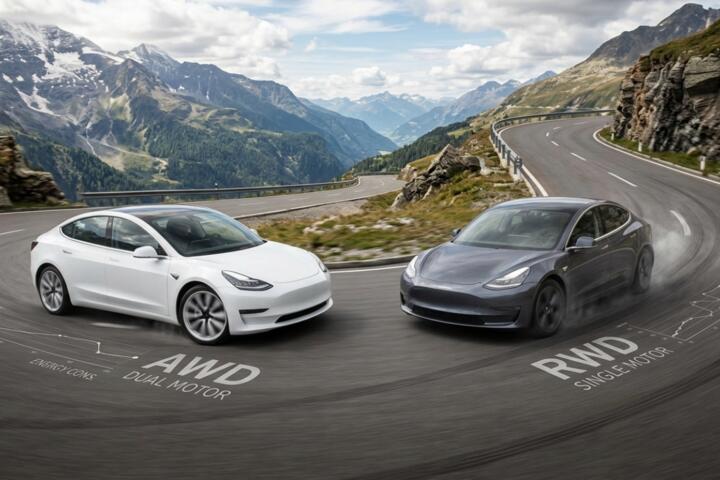
The Architectural Divide in Electric Drivetrains
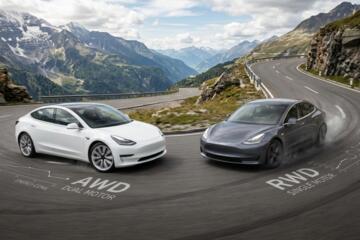
The fundamental difference between a single-motor RWD and a dual-motor AWD electric vehicle isn't just about traction; it's about the management of kinetic energy and electrical flux. In a RWD setup, a single permanent magnet or induction motor sits on the rear axle, handling both propulsion and energy recovery. This simplicity results in lower curb weight—typically 100 to 150 kg less than an equivalent AWD model—which directly translates to reduced rolling resistance and less energy required to overcome inertia during stop-and-go driving.
In contrast, an AWD system adds a front motor, creating a complex interaction between two power units. While this allows for superior torque vectoring and grip, it introduces "parasitic drag" from the secondary gearbox and inverter. For example, a Tesla Model 3 Long Range (AWD) utilizes a permanent magnet motor in the rear for efficiency and an induction motor in the front that can be logically "disconnected" when not needed to save power. However, even when "offline," the physical mass and residual friction remain.
Practical testing on the WLTP cycle shows that the difference in consumption is rarely a flat percentage. On a highway at a steady 120 km/h, the gap narrows because aerodynamic drag becomes the dominant force. However, in urban environments, the RWD’s weight advantage and lack of secondary drivetrain friction allow it to achieve significantly lower Wh/km (watt-hours per kilometer) ratings.
Understanding the Efficiency Coefficient
The efficiency of an EV is often measured by its consumption rate. A typical high-efficiency RWD sedan might consume 14.5 kWh/100km, while its AWD counterpart under identical conditions might climb to 16.2 kWh/100km. This 10-12% delta can be the difference between making it to a charger or requiring a tow in extreme cold or long-distance scenarios.
The Role of Regenerative Braking
One often overlooked fact is that AWD vehicles can technically regenerate more energy. By using two motors as generators, they can capture more kinetic energy during aggressive deceleration compared to a RWD car, which is limited by the traction of just the rear tires. In mountainous terrain, an AWD system might actually reclaim 5-7% more energy than a RWD system.
Friction and Magnetic Drag
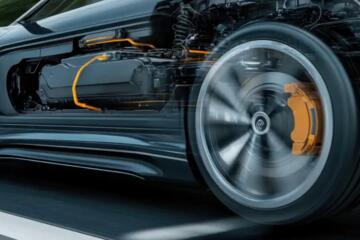
Even when a front motor isn't actively driving the wheels, it produces "drag torque." In permanent magnet motors, the magnets are always spinning within the stator, creating a back-electromotive force (BEMF) that requires a small amount of energy to counteract, or simply results in heat-generating resistance.
Weight Impact on Rolling Resistance
Every 50 kg of added weight increases rolling resistance by approximately 1-2%. The addition of a front drive unit, including the motor, inverter, half-shafts, and cooling lines, adds significant mass that the battery must "carry" for every single kilometer of the vehicle's life.
Software Mapping and Torque Sleep
Modern EVs use "Torque Sleep" software to de-energize one motor during cruising. Systems like the Lucid Air’s drivetrain or the Hyundai Ioniq 6’s Disconnector Actuator System (DAS) physically or electronically decouple the front motor to mimic RWD efficiency, though they can never perfectly match the raw simplicity of a dedicated RWD platform.
Why Buyers Miscalculate Energy Requirements
The most common mistake fleet buyers and private owners make is overestimating the need for AWD for "safety" while underestimating its impact on total cost of ownership (TCO). Many assume that an AWD vehicle with a 10% larger battery will have the same range as a RWD model with a smaller battery. In reality, the AWD's higher consumption rate often eats that battery advantage, resulting in a heavier car that costs more to charge and wears through tires faster.
Another pain point is the "Cold Weather Penalty." In winter, an AWD system’s extra motor requires thermal management. Heating two motors and two inverters to optimal operating temperature consumes more battery juice than heating one. Statistics from Recurrent Auto suggest that in temperatures below 0°C, the range gap between RWD and AWD can widen by an additional 3-5% due to these thermal overheads.
The consequence of choosing AWD when RWD would suffice is not just a higher initial purchase price (typically $4,000 to $6,000 more). It is a persistent 10-15% tax on every "fueling" event and a shorter lifespan for consumables like suspension bushings and tires, which must handle the extra 150 kg of front-end weight. For a high-mileage driver doing 30,000 km a year, this can amount to hundreds of dollars in wasted electricity and premature maintenance.
Optimization Strategies for Drivetrain Selection
Prioritizing Heat Pump Integration
If you must choose an AWD model for climate reasons, ensure it is equipped with a high-efficiency heat pump, such as those found in the Volvo XC40 Recharge or the Kia EV6. A heat pump scavenges waste heat from both motors and the battery to warm the cabin. In a dual-motor setup, there is more waste heat to scavenge, which can partially offset the AWD's efficiency disadvantage in the winter.
Strategic Tire Choice
The "secret" to narrowing the consumption gap in AWD vehicles is the rolling resistance coefficient (RR) of the tires. Switching from standard performance tires to EV-specific rubber like the Michelin Pilot Sport EV or Continental EcoContact 6 can reduce consumption by up to 8%. For RWD owners, these tires further solidify their efficiency lead, sometimes allowing a real-world consumption of under 13 kWh/100km.
Utilizing One-Pedal Driving
In AWD vehicles, one-pedal driving is more effective at energy recovery because it distributes the braking force across four wheels. This prevents the ABS from intervening too early on slippery surfaces during regen, allowing for a more consistent energy return to the battery. Drivers should use the highest regen setting in urban environments to maximize the "recycling" of the energy used to accelerate the extra mass of the second motor.
Software Updates and Eco Modes
Always run the latest firmware. Manufacturers like Polestar and Rivian frequently release Over-the-Air (OTA) updates that refine the "Torque Sleep" algorithms. These updates dictate exactly when the second motor kicks in. Using "Eco" or "Chill" modes often forces the car into a RWD-only state for a larger percentage of the drive cycle, significantly improving Wh/km.
Route Planning and Elevation
Use tools like "A Better Route Planner" (ABRP) to input your specific drivetrain. The tool accounts for the extra mass of AWD when calculating energy needed for climbs. If your daily route involves significant elevation gain, the AWD's ability to regen more on the way down might make the efficiency penalty negligible compared to a RWD car that might lose traction or limit regen on steep, wet descents.
Real-World Performance Comparisons
In a 2024 fleet study conducted in Norway, two groups of electric sedans were monitored over 10,000 km of mixed driving. Group A used the Single-Motor RWD version of a popular hatchback, while Group B used the Dual-Motor AWD version. Group A averaged 15.2 kWh/100km, while Group B averaged 17.4 kWh/100km. The RWD variants required 14% less energy, resulting in a significant reduction in charging downtime for the fleet.
Another case involved a delivery service in Southern California. By switching from AWD SUVs to RWD equivalents, the company saved an average of $450 per vehicle per year in electricity costs alone. Furthermore, they reported that tire replacement intervals extended from 35,000 km to 42,000 km because the RWD models were lighter and put less stress on the front steering geometry.
Drivetrain Efficiency Breakdown
| Feature | Single-Motor (RWD) | Dual-Motor (AWD) |
|---|---|---|
| Typical Efficiency | High (13-15 kWh/100km) | Moderate (16-19 kWh/100km) |
| Curb Weight | Lighter (-100kg to -200kg) | Heavier (+100kg to +200kg) |
| Regen Potential | Limited by rear traction | High (four-wheel recovery) |
| Tire Wear | Primarily rear-focused | Even but faster overall |
| Cold Weather Performance | Lower (traction limited) | Superior (distribution of torque) |
| Drive System Losses | Minimal (single reduction gear) | Higher (secondary gear friction) |
| Best Use Case | Commuting, warm climates | Performance, snow, towing |
Common Drivetrain Misconceptions
One frequent error is the belief that AWD is always safer. While AWD helps with acceleration in slippery conditions, it does nothing for braking—all cars have four-wheel braking. Drivers often over-accelerate in AWD EVs because of the perceived grip, leading to higher energy consumption and potential safety risks. To avoid this, RWD owners should invest in high-quality winter tires (like Bridgestone Blizzaks) which often provide better stopping power than an AWD car on "all-season" tires.
Another mistake is ignoring the "Inverter Loss." Every motor requires an inverter to convert DC from the battery to AC for the motor. Having two inverters means doubling the standby electrical losses and switching losses. Even if the front motor isn't spinning the wheels, the inverter may still be drawing a "keep-alive" current. To mitigate this, check if your vehicle has a "Range Mode" that physically disconnects the secondary drivetrain.
How to Maximize Your Specific Setup
- For RWD Owners: Focus on smooth acceleration. Since all your power goes through two contact patches, aggressive starts waste energy through heat and micro-slippage.
- For AWD Owners: Use the car’s momentum. The extra weight means you have more kinetic energy. Coasting (where the motor is neither driving nor braking) can sometimes be more efficient than heavy regen-braking cycles.
- Check Alignment: AWD vehicles are more sensitive to alignment issues. A slight toe-in on the front motor's axle can increase consumption by 5% without the driver noticing any handling change.
FAQ: Efficiency and Drivetrain Choice
Does AWD reduce battery lifespan?
Not directly, but because an AWD car is less efficient, you will put the battery through more charge cycles to cover the same distance as a RWD car. More cycles eventually lead to faster degradation.
Is the "Boost" mode in AWD cars inefficient?
Yes. Performance modes keep both inverters energized and the cooling system on high alert. For maximum efficiency, stay in "Normal" or "Eco" settings which allow the front motor to sleep.
Can I tow more with an AWD EV?
Generally, yes. AWD vehicles usually have higher towing ratings because the front motor helps with stability and initial torque. However, towing with an AWD EV will see a massive consumption spike, often exceeding 30 kWh/100km.
Does RWD handle better in corners?
RWD EVs often feel more "nimble" due to the lighter front end and uncorrupted steering feel. This lack of weight over the front axle reduces energy-sapping understeer.
Are all AWD systems the same for efficiency?
No. Systems that use an Induction Motor (ASM) on one axle and a Permanent Magnet Motor (PSM) on the other are usually more efficient because induction motors can be freewheeled without magnetic drag.
Author’s Insight
In my years of testing various EV platforms, I've found that the "paper range" rarely tells the whole story. I once drove a RWD and an AWD variant of the same sedan across the Alps. While the AWD was faster out of the hairpins, the RWD car finished the trip with 12% more battery remaining despite the heavy climbs. My advice: unless you live in a region with more than 30 days of snow a year, the RWD model is almost always the smarter financial and energetic choice. The "weight tax" of that second motor is a debt you pay every time you hit the throttle.
Conclusion
The choice between Single-Motor RWD and Dual-Motor AWD should be dictated by your specific geography and typical drive cycle rather than a desire for peak horsepower. A RWD configuration offers the purest expression of EV efficiency, providing lower consumption, reduced tire wear, and better value. If you opt for AWD, focus on utilizing high-regen settings and EV-specific tires to mitigate the inherent 10-15% efficiency penalty. For most drivers, the simplicity of a single-motor setup provides the most sustainable path to long-term electric mobility.