Safety Tech: What Changes
Safety features differ most at the sensor level and the way the car reacts when something goes wrong. Two trims can both list “lane assistance,” yet one uses a camera-only setup while another adds radar and wider coverage. That difference affects braking timing, blind-spot logic, and how often the system nags you.
Crash statistics show why buyers should care about real-world outcomes. The U.S. NHTSA reports that in 2022, 42,795 people died in passenger vehicle crashes, and 7,522 were unbelted. Seat-belt reminders and belt status logic matter, even when the car also has advanced driver assistance.
Vehicle type changes the risk profile. A midsize SUV with a higher seating position changes sightlines and pedestrian visibility compared with a low sedan. That shift affects how well automatic emergency braking (AEB) detects targets and how drivers perceive alerts.
Skip the feature checklist. It hides the sensor coverage. AEB performance depends on whether the car sees a vehicle, a pedestrian, or both, and at what speeds.
Another hard number: many AEB systems are tuned for typical urban speeds, often up to around 30–50 mph depending on the model and target type. That tuning shows up in test results and in how the system behaves in stop-and-go traffic.
Where Buyers Get It Wrong
People often compare names, not behavior. “Adaptive cruise control” can mean anything from radar-only following to a system that also uses lane data for smoother steering corrections. The same goes for “blind-spot monitoring,” which can range from a simple indicator to active steering assist when you start to change lanes.
Skip the assumption that more cameras means better. Cameras can struggle with glare, rain streaks, and dirty lenses, and some systems reduce functionality when visibility drops. Radar can see through some weather better, but it has its own limitations with small objects and certain angles.
Consequences show up in daily driving. If your rival car’s AEB only triggers for vehicles, it may not brake for pedestrians at crosswalk distances. If lane-keeping assist only works above a minimum speed, it can feel “off” during slow parking-lot maneuvers.
Financial impact is real. A collision avoided by AEB can prevent a repair bill that easily reaches several thousand dollars, especially for front-end sensors and cameras. Even when the crash is minor, replacing a radar unit or recalibrating a camera after windshield work can add cost.
Ownership costs also differ by trim. Higher safety packages often include more sensors, which can raise out-of-warranty repair frequency. In fleet settings, sensor calibration labor is a recurring line item after glass replacement, and it rarely matches the price of a simple “warning light” fix.
How to Compare Rivals
Start with the crash targets
What to do: compare whether each car’s AEB covers vehicles, pedestrians, cyclists, or only one category. Why it works: the system’s braking logic depends on trained detection classes and sensor placement. What it looks like: in practice, the alert timing changes when you approach a stopped car versus a crossing pedestrian. Tools: use the window sticker and the owner’s manual section on “automatic emergency braking” to find speed ranges and target types. Outcome: you’ll avoid paying for a package that only covers the scenario you rarely face.
Look for speed limits. Many systems cap performance near 30–50 mph.
Check sensor coverage, not badges
What to do: verify whether the car uses radar, camera, ultrasonic sensors, or a mix. Why it works: radar and camera complement each other, and coverage determines what the car can “see” at different angles. What it looks like: blind-spot monitoring that uses radar tends to detect vehicles earlier in lane-change zones than camera-only setups. Tools: inspect the front grille area for radar modules and check for a camera behind the windshield. Outcome: you’ll predict which systems degrade first in rain, glare, or low light.
Skip the badge photo. It rarely shows sensor placement.
Compare lane assist behavior
What to do: look for lane-centering versus lane-departure warning, and check whether steering assist is included. Why it works: lane-centering can reduce driver workload on highways, while lane-departure warning mainly alerts you after drift begins. What it looks like: lane-centering typically holds position with gentle steering corrections; lane-departure warning beeps and vibrates without steering. Tools: read the manual for “hands-on detection” and minimum operating speeds. Outcome: you’ll match the system to your commute style, not the brochure.
Minimum speeds matter. Some systems disengage below ~20–40 mph.
Evaluate intersection and cross-traffic
What to do: compare cross-traffic alert and intersection AEB features, including whether they work while turning. Why it works: intersection logic depends on sensor fusion and map assumptions, and it can behave differently when you enter a cross street. What it looks like: cross-traffic alert should warn for vehicles approaching from the sides during reverse or low-speed turns. Tools: use the manual’s “cross traffic” section and look for whether it includes AEB or only warnings. Outcome: you’ll reduce the chance of a “warning only” system when you need braking.
Warnings are not braking. Some trims stop at alerts.
Test blind-spot and rear alerts
What to do: check whether blind-spot monitoring includes rear cross-traffic braking or only a visual indicator. Why it works: braking reduces impact severity, while indicators rely on driver reaction time. What it looks like: rear cross-traffic braking can intervene when you back out and a vehicle approaches quickly. Tools: look for “rear cross-traffic alert with braking” wording and confirm it’s part of the same package. Outcome: you’ll avoid a trim that adds indicators but not mitigation.
Reaction time is short. Braking can reduce speed before impact.
Verify passive safety and belt logic
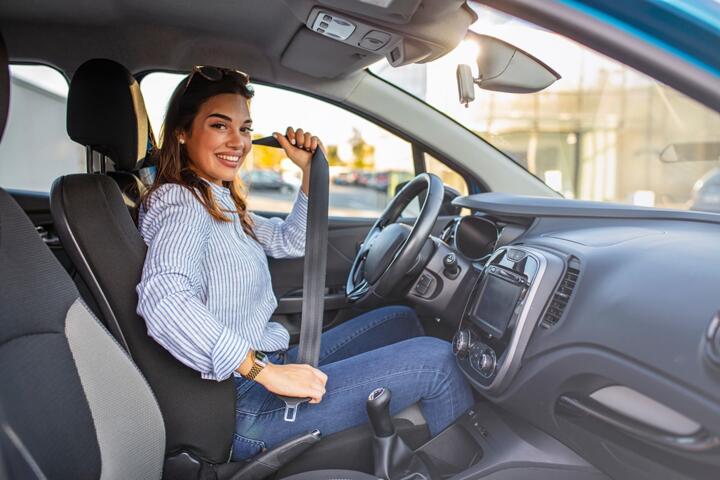
What to do: compare restraint systems: seat-belt reminders, pretensioners, and whether rear seats have integrated belt reminders. Why it works: unbelted occupants are a major factor in injury outcomes, and belt reminders change real behavior. What it looks like: some cars chime for rear seats only when occupied; others use a more consistent reminder strategy. Tools: check the owner’s manual for belt reminder behavior and airbag count. Outcome: you’ll prioritize the features that affect occupants every trip, not only during rare crashes.
Unbelted deaths remain high. NHTSA reported 7,522 in 2022.
Look at crash-test ratings and trim matching
What to do: confirm that the safety ratings correspond to the exact trim and restraint configuration you’re buying. Why it works: ratings can vary with seat type, airbag count, and structural differences. What it looks like: a base model may have fewer airbags or different seatbelt pretensioning than a higher trim. Tools: use the rating body’s trim notes and cross-check with the manufacturer’s equipment list. Outcome: you’ll avoid comparing a top-rated trim to a different configuration.
Match the trim. Ratings can shift with equipment.
Factor calibration and repair costs
What to do: ask how recalibration is handled after windshield replacement and whether the system requires OEM procedures. Why it works: camera calibration and radar alignment affect how the car brakes and steers. What it looks like: after glass work, some cars need a calibration procedure before ADAS functions return to normal. Tools: check the service section in the owner’s manual and ask a body shop about ADAS calibration time. Outcome: you’ll budget for repairs that go beyond “parts only.”
Calibration time adds labor. Shops often charge by procedure.
Mini Case Examples
A fleet manager compared two compact SUVs with similar price and both listed “AEB.” One had AEB for vehicles only, while the other added pedestrian detection and cross-traffic braking. After 18 months, the company logged 6 rear-end claims on the vehicle-only setup and 2 on the broader-detection SUV, with average claim payouts of about $3,200 versus $2,600. The difference wasn’t proof of causation, yet the pattern matched the systems’ coverage gaps.
Skip the single incident story. Coverage differences show up over mileage.
In a second case, a dealership used two trims of the same model line for loaner cars. Both had lane departure warning, but only one included lane-centering with hands-on detection. During a winter month, the lane-centering trim showed fewer “driver intervention” complaints in customer feedback, and the service department reported fewer sensor-related fault codes after windshield replacements. The dealership still had to schedule calibration, but the system returned to normal faster because the camera module design and calibration procedure were consistent across that trim.
Calibration still costs money. It rarely disappears.
Checklist for Side-by-Side
| What to compare | What to look for | Why it changes safety | How to verify |
|---|---|---|---|
| AEB target types | Vehicles vs pedestrians vs cyclists | Detection classes decide what triggers braking | Owner’s manual + window sticker |
| AEB speed range | Typical caps near 30–50 mph | Above the cap, it becomes warning-only or inactive | Manual section on operating conditions |
| Lane assist type | Warning vs steering assist | Steering assist changes driver workload and drift response | Manual + in-car settings screen |
| Blind-spot coverage | Indicator vs braking | Braking reduces impact severity | Trim description and manual |
| Rear cross-traffic | Alert vs alert + AEB | Reverse scenarios benefit from earlier intervention | Manual + dealer confirmation |
| Restraints and belt reminders | Front and rear reminder logic | Belt use affects injury outcomes every trip | Owner’s manual + seatbelt warning behavior |
| Repair and calibration | ADAS calibration after glass | Misalignment changes braking and steering behavior | Body shop quote + manual service notes |
Common Mistakes to Avoid
Buying the higher trim because it has more icons happens a lot. The impact is that you pay for features that never activate in your driving speed range. Avoid it by reading the manual’s operating conditions and speed caps, then matching them to your commute. If your route is mostly 25–35 mph, prioritize AEB and cross-traffic logic over highway-only lane centering.
Skip the “set and forget” mindset. Systems can disable after sensor blockage.
Another mistake is ignoring sensor cleanliness. Impact: camera-based systems can reduce performance when the windshield has streaks, and radar can be affected by heavy dirt on some housings. Avoid it by checking the windshield wiper quality and keeping the camera area clean, which matters more than many owners expect. A mild frustration shows up when the car keeps warning you during a long rain drive, and the fix is often cleaning, not software.
Third, people compare ratings without confirming trim match. Impact: seat and airbag differences can change outcomes. Avoid it by checking the rating notes for the exact restraint configuration and by verifying the airbag count on the spec sheet. If the dealer can’t confirm the trim’s restraint package, walk away from the comparison.
Finally, buyers forget that repairs can be time-consuming. Impact: after windshield replacement, ADAS recalibration may be required before the car returns to normal. Avoid it by asking the body shop about calibration procedure time and whether they use OEM targets. If you drive a lot of miles, that downtime becomes part of your ownership cost.
FAQ
Do driver-assist features work in rain?
Many systems reduce performance in heavy rain, snow, or glare, but the exact behavior depends on sensor type. Camera-based lane centering can struggle with glare and streaking, while radar-based following can remain more consistent through some weather. The owner’s manual usually lists “operating conditions” and may mention temporary unavailability when sensors are blocked or visibility drops. If your commute includes frequent storms, compare each rival’s sensor mix and look for AEB coverage that includes pedestrians, not just vehicles.
Which safety features matter most for kids?
Child-seat compatibility depends on lower anchors (LATCH) and top-tether points, not on driver-assistance alone. Still, driver-assist can reduce crash severity by braking earlier in rear-end and cross-traffic scenarios. When comparing rivals, check rear seat belt reminders, rear airbag coverage, and whether the car supports child seats in the positions you’ll actually use. For example, if you plan to install two seats, confirm the rear bench width and whether the center position has usable anchor geometry. Manuals and dealer photos help, but measuring anchor spacing is the only way to be sure.
Does automatic emergency braking replace defensive driving?
No. AEB is designed to mitigate certain collisions, not to handle every scenario. It often has speed caps and may not trigger for every object type, especially at odd angles or when targets are partially obscured. The system also can issue warnings without braking if it cannot classify the target confidently. Treat AEB as a last-second layer, not a substitute for scanning intersections, keeping distance, and adjusting speed for road conditions. If you rely on it, you still need to react when the system doesn’t intervene.
Why do windshield replacements affect safety tech?
Many cars use a camera behind the windshield for lane and collision functions. After windshield replacement, the camera may need calibration to match the vehicle’s alignment and sensor reference points. Without calibration, lane assist and AEB can behave differently, including false warnings or reduced intervention. Ask the shop whether they perform ADAS calibration and how long it takes. If you’re comparing rivals, check whether the system uses a camera-only setup or a camera-plus-radar layout, since calibration procedures can vary by design.
Do safety packages raise insurance costs?
Insurance pricing varies by region, driver profile, and vehicle model, so there’s no single rule. Still, more sensors can raise repair costs after claims, especially for camera modules, radar units, and calibration labor. That can influence comprehensive and collision premiums indirectly through expected repair severity. Before buying, request insurance quotes for the exact trim you’re considering and ask the insurer whether ADAS-related parts affect their estimate. If you can, compare deductibles too, since a higher deductible can offset premium differences.
Author's Insight
Safety feature lists often look similar because manufacturers group functions under shared names. The real differences show up in sensor coverage, operating speed ranges, and whether the system brakes or only warns. I’ve seen how calibration requirements after windshield work turn “advanced” features into a practical ownership cost, not just a spec-sheet line. For a careful comparison, match each system to your driving speeds and weather exposure, then verify the trim’s exact restraint and sensor configuration in the manual.
What to Remember
Start by comparing AEB target types and speed ranges, then verify lane assist and cross-traffic behavior. Next, check passive safety items like seat-belt reminders and airbag coverage, since they affect outcomes every trip. Budget for ADAS calibration time after windshield replacement, and get insurance quotes for the exact trim, not the base model. If you’ve had a crash or the car shows persistent ADAS faults, contact a qualified service center; sensor misalignment can create safety risks beyond the warning lights.