The Car That Watches Back
For most of automotive history, cars were wonderfully forgetful machines. They didn't remember where you'd been, how hard you'd braked, or whether you'd spent the morning pretending every freeway on-ramp was the final lap at Le Mans. Turn the key off, walk away, and the car effectively forgot you existed.
Today's connected vehicles operate under a very different philosophy. Beneath the leather, aluminum, and carefully sculpted sheetmetal lives a digital ecosystem that observes nearly everything. Modern cars don't simply travel through the world anymore—they collect information about it.
The shift happened gradually. First came onboard diagnostics. Then navigation systems. Then Bluetooth connectivity, smartphone integration, cloud services, over-the-air updates, and increasingly sophisticated driver-assistance systems. Like a neighborhood that slowly transforms over twenty years, the automobile became something entirely different before most drivers realized how much had changed.
What once relied primarily on pistons, gears, and hydraulic pressure now depends equally on software, wireless networks, and data processing. A modern luxury vehicle can contain more computer code than a fighter jet from the Cold War era. That's not a metaphor. It's simply the reality of what happens when transportation collides with Silicon Valley.
The result is both impressive and slightly unsettling. Your car can help you avoid traffic, summon emergency services after a crash, remotely diagnose mechanical problems, and even warm the cabin before you leave the house. It can also know an awful lot about your habits. Like the friend who remembers every embarrassing story you've ever told, connected cars have become remarkably difficult to surprise.
A Rolling Data Center
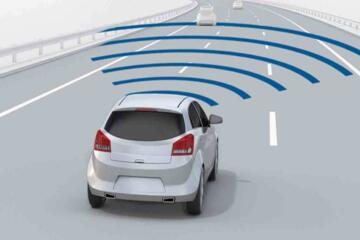
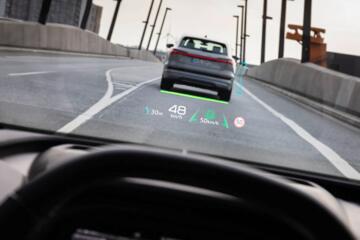
A modern connected vehicle contains dozens of electronic control units, hundreds of sensors, GPS receivers, cameras, radar modules, wireless antennas, and enough computing power to make yesterday's luxury sedans seem mechanically Amish.
Every journey generates information. Speed. Location. Fuel consumption. Battery health. Steering inputs. Tire pressures. Infotainment usage. The car becomes a rolling notebook, continuously scribbling observations about both itself and its driver.
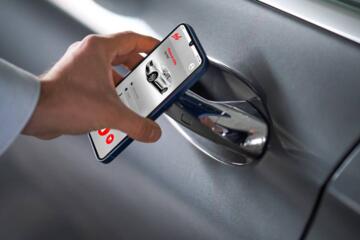
Even seemingly mundane actions generate data. Opening a door, adjusting a seat, selecting a drive mode, pairing a phone, or setting a navigation destination can all create information points that the vehicle stores or transmits. Individually, these details seem harmless. Collectively, they create an astonishingly detailed picture of how the vehicle is used.
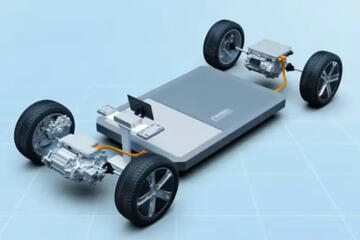
Electric vehicles push the concept even further. Battery temperatures, charging patterns, energy consumption rates, regenerative braking behavior, charging locations, and state-of-health metrics become part of a constantly evolving digital profile. Engineers love this information because batteries are extraordinarily complex. Drivers benefit because software can use the data to optimize range and reliability.
What makes modern connected cars remarkable is not the existence of data collection but the sheer scale of it. A performance car attacking a mountain road can generate telemetry that would have impressed professional racing teams a generation ago. The difference is that the information now exists quietly in the background while the driver focuses on the road ahead.
Why Manufacturers Want It
Automakers didn't spend billions creating connected platforms simply because they enjoy paying software engineers. The data serves practical purposes. Engineers use it to identify reliability issues, diagnose faults remotely, improve navigation systems, and understand how customers actually use their vehicles.
Sometimes those findings are surprising. Features that dominate marketing brochures occasionally gather digital dust, while obscure functions become daily habits.
Imagine spending years developing an advanced infotainment feature only to discover that most owners never touch it. Conversely, a simple convenience tool buried three menus deep might become wildly popular. Connected data gives manufacturers a direct window into those behaviors.
The information also helps improve future products. Engineers can study how suspensions perform on real roads, how batteries age in different climates, how frequently drivers engage advanced driver-assistance systems, and which software features generate the most complaints. It's the automotive equivalent of receiving millions of test-drive reports every day.
Of course, this relationship isn't entirely altruistic. Data has become valuable currency in the modern economy. The more connected products become, the more companies seek ways to transform information into business opportunities. The automotive industry is hardly immune to that temptation.
The Safety Case
The strongest argument for connected-car data isn't convenience. It's safety.
Modern emergency-response systems can detect collisions, transmit location information, summon assistance, and provide first responders with crucial details before a witness has even unlocked a smartphone.
Like anti-lock brakes or stability control, the technology is easiest to appreciate when everything goes wrong.
Many vehicles now monitor the health of critical systems continuously. If a sensor detects abnormal behavior in the braking system, steering components, battery pack, or powertrain, the vehicle can often alert the driver before a minor issue becomes a major problem.
Connected infrastructure may eventually expand these capabilities even further. Engineers envision vehicles communicating with traffic signals, road construction zones, weather networks, and even other vehicles. In theory, a car could know about a hazard around the next corner before the driver ever sees it.
That vision remains a work in progress, but the trajectory is clear. Cars are becoming participants in a broader information network rather than isolated mechanical devices. Whether that future sounds exciting or alarming depends largely on how much trust you place in technology.
The Insurance Question
Here's where the conversation usually gets interesting.
Driving behavior has become valuable information. Hard braking events, mileage, acceleration patterns, time-of-day usage, and other metrics can help insurers build risk profiles. For cautious drivers, that can mean lower premiums. For aspiring Formula One heroes commuting to work, the math may prove less flattering.
It's the automotive equivalent of having a driving instructor permanently installed beneath the dashboard.
Usage-based insurance programs have expanded rapidly because connected vehicles make them easier to implement. Instead of relying solely on age, location, and claims history, insurers can evaluate actual driving behavior. From a statistical standpoint, it's easy to understand the appeal.
The debate centers on fairness. Supporters argue that careful drivers should benefit from lower rates. Critics counter that driving data can lack context. A hard braking event might indicate reckless behavior—or it might simply mean somebody cut in front of you during rush hour traffic.
The conversation becomes even more complex when data moves between manufacturers, service providers, and insurance companies. Drivers often discover that understanding who has access to information can be nearly as difficult as understanding a German luxury car's option sheet.
As insurers gain access to increasingly sophisticated driving metrics, the relationship between driving habits and insurance pricing will likely become more direct. Whether that's viewed as progress or surveillance depends largely on which side of the premium equation you occupy.
Who Else Sees It?
One of the biggest misconceptions surrounding connected-car technology is that data exists in a simple pipeline flowing from vehicle to manufacturer. Reality is considerably messier.
Depending on the vehicle and service agreements involved, information may pass through software providers, cloud-service operators, navigation partners, telecommunications companies, emergency-response providers, dealerships, fleet-management services, and various third-party vendors.
Most of these relationships serve legitimate operational purposes. Navigation systems require mapping partners. Emergency services require communication networks. Remote diagnostics require cloud infrastructure. The challenge is that modern digital ecosystems often become extraordinarily complex.
For drivers, this complexity creates a transparency problem. Understanding exactly where information travels can feel like tracing every wire behind the dashboard of a heavily modified project car. Eventually, you stop counting and simply hope everything remains connected.
Regulators around the world continue to scrutinize these practices, particularly as privacy expectations evolve. Automakers increasingly provide disclosure documents, consent settings, and privacy controls, but few owners spend Saturday afternoon reading through them for entertainment.
How Much Control Do You Have?
The answer varies dramatically between manufacturers. Some systems allow drivers to disable certain categories of data sharing. Others bury permissions deep inside menus and terms-of-service agreements that read like stereo instructions translated six times before publication.
Understanding those settings is becoming as important as understanding tire pressures or maintenance schedules.
Many owners remain unaware that their vehicles include privacy controls at all. They eagerly customize ambient lighting colors, drive modes, and radio presets while ignoring the digital permissions quietly operating in the background.
Like every engineering compromise, there is a tradeoff. Greater connectivity often delivers greater convenience. Reduced data sharing may increase privacy but limit functionality. There is no universally correct answer—only a balance that reflects individual priorities.
The key is making an informed decision rather than stumbling into one by default. Connected technology is most useful when drivers understand both its benefits and its costs.
The Bottom Line
Connected-car data isn't inherently good or bad. It's a tool. Like turbocharging, electronic stability control, or automatic transmissions, its value depends largely on how it's implemented and how transparently it's used.
The modern automobile has become something its creators could scarcely have imagined a generation ago: part transportation, part computer, part communications device. The horsepower wars may still make the headlines, but increasingly the most important battles are being fought not under the hood, but inside the data stream quietly flowing out of the car every time it leaves the driveway.
For enthusiasts, that reality can feel strange. Cars have always been emotional objects. We celebrate engines, handling balance, steering feel, and design. Data collection rarely inspires the same passion as a naturally aspirated V-8 winding toward redline.
Yet connected technology is becoming just as influential as any mechanical component. It affects ownership costs, safety performance, maintenance experiences, insurance pricing, and even resale values. In many ways, the invisible software architecture beneath the bodywork now matters as much as the hardware itself.
The next time you press the start button, remember that you're not just waking up an engine, motor, or battery pack. You're activating one of the most sophisticated data-gathering devices most people will ever own. The remarkable part is that it still manages to feel like a car.