The Evolution of Torque Delivery in the Electric Era
For decades, internal combustion engines (ICE) dictated a need for complex transmissions because their power bands were narrow. An electric motor, however, provides maximum torque from zero RPM, theoretically rendering the gearbox obsolete. In a standard direct-drive setup, a fixed reduction ratio (typically between 8:1 and 10:1) connects the motor to the wheels. This simplicity is the backbone of the "EV feel"—instantaneous, linear, and uninterrupted thrust.
Practical application shows that while a single gear is ideal for a 0–60 mph sprint, it creates a ceiling. For instance, a motor spinning at 17,000 RPM with a fixed 9:1 ratio might hit a physical limit at 150 mph. To go faster, you must either increase motor RPM—which generates massive centrifugal stress and heat—or change the gearing. Porsche broke the mold with the Taycan, utilizing a two-speed gearbox on the rear axle to combine a "launch gear" for acceleration and a "long gear" for high-speed cruising efficiency.
Critical Engineering Challenges and Performance Bottlenecks
The primary pain point in performance EV design is the "back-EMF" (electromotive force) wall. As motor speed increases, it generates a counter-voltage that opposes the battery's current. Eventually, the motor can no longer pull more power, causing the torque curve to fall off sharply at high speeds. Engineers often try to mask this with "field weakening," but this kills efficiency and overheats the inverter.
Another significant issue is the compromise of "launch vs. cruise." In a direct-drive car, choosing a short ratio provides a neck-snapping start but leaves the motor spinning at inefficiently high frequencies during highway travel. Conversely, a long ratio protects the top end but makes the car feel sluggish off the line. This mechanical "no man's land" results in wasted battery energy and reduced thermal headroom during track sessions or spirited driving.
Strategic Solutions for Optimized Power Transmission
High-Speed Rotor Reinforcement
Instead of adding gears, some manufacturers like Tesla (in the Plaid variants) utilize carbon-sleeved rotors. This allows the motor to spin safely up to 20,000+ RPM without flying apart. By increasing the RPM ceiling, the car can maintain a single-ratio drive while still hitting 200 mph. It keeps the system lightweight but requires incredibly expensive materials and precision manufacturing.
Two-Speed Multi-Stage Modules
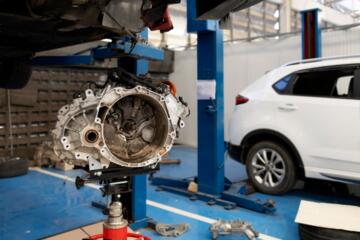
Implementing a compact, dog-clutch or planetary two-speed system, such as those developed by ZF or Rimac, allows for a massive torque multiplication (e.g., 15:1) in first gear and an efficient overdrive (e.g., 8:1) in second. This reduces the current draw required for a standing start, potentially increasing range by up to 5% in mixed driving cycles while significantly lowering the motor's operating temperature at high speeds.
Shift Logic Calibration
The hardware is only as good as the software. Performance EVs with multi-speed setups use predictive shift logic. By analyzing throttle position, battery State of Charge (SoC), and tire slip, the Transmission Control Unit (TCU) can execute shifts in under 100 milliseconds. This ensures that the interruption in torque—the "jerk" sensation—is virtually imperceptible to the driver, maintaining the seamless EV experience.
Thermal Management Optimization
Multi-speed transmissions allow the motor to operate in its "efficiency island" (usually 90–97% efficiency) more often. By keeping RPMs lower during high-speed runs, the cooling system (chilled glycol or oil-splashed rotors) isn't overwhelmed. This results in more laps on a track like the Nürburgring before the car enters "limp mode" to protect the battery.
Multispeed Integration in Hub Motors
Advanced startups are experimenting with integrating 2-speed gearsets directly into in-wheel motors. This eliminates the need for driveshafts and differentials entirely. By placing the gearing at the corner, torque vectoring becomes granular, allowing for physics-defying cornering speeds that a central motor cannot match.
Performance Benchmarks: Real-World Applications
Case Study 1: The German Sport Sedan Implementation
A leading German manufacturer opted for a two-speed planetary gearset on the rear axle of its flagship electric sport sedan. The goal was to achieve a sub-2.8 second 0–100 km/h time while maintaining a 260 km/h top speed. By using a short 15:1 first gear and a long 8:1 second gear, they achieved consistent launch performance even at lower battery percentages. The result was a vehicle that could repeat high-speed sprints 10+ times without thermal degradation, a feat many single-speed competitors struggled to match.
Case Study 2: The Croatian Hypercar Approach
Rimac Automobili initially used a four-motor, four-gearbox setup for the Concept_One but transitioned to a more refined system for the Nevera. By utilizing highly efficient single-speed independent gearboxes for each motor, but tuning the gear ratios and motor maps specifically for each axle, they achieved a top speed of 258 mph. This proved that with enough power density and RPM headroom, the complexity of shifting gears can be bypassed even at the pinnacle of performance.
Comparison: Direct Drive vs. Two-Speed Transmission
| Feature | Direct Drive (Single-Speed) | Multi-Speed (Two-Speed) |
|---|---|---|
| Mechanical Complexity | Low (Few moving parts) | High (Clutches, actuators, gears) |
| Weight Impact | Minimal | Adds 15–30 kg |
| Acceleration (0-60) | Excellent (Instant) | Superior (Torque multiplication) |
| Top Speed Efficiency | Lower (High RPM losses) | Higher (Lower RPM cruising) |
| Maintenance | Virtually zero | Requires fluid changes/clutch checks |
| Cost | Cost-effective | Premium pricing |
| Drivetrain Loss | ~2-3% | ~4-6% (due to extra mesh) |
Common Implementation Errors to Avoid
Over-Gearing for Theoretical Top Speed
Many aftermarket tuners attempt to swap final drive ratios to hit higher speeds. However, without re-mapping the inverter's current limits, this often results in blown MOSFETs or "cogging" at low speeds. Gearing must always be balanced against the motor's specific torque-to-current constant.
Neglecting Fluid Dynamics
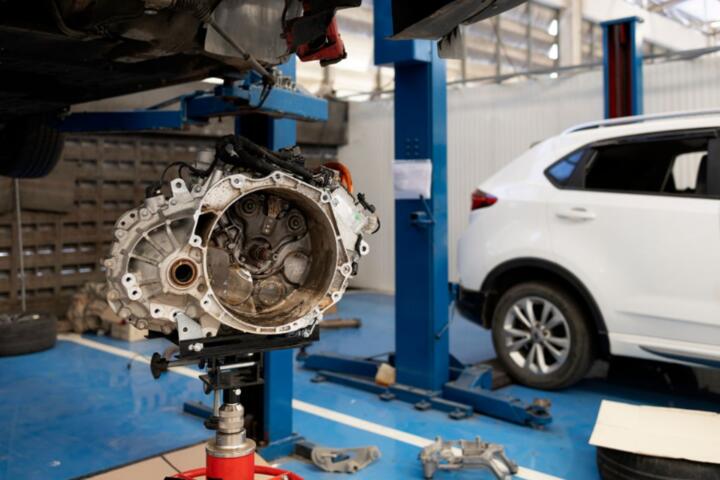
In multi-speed EV gearboxes, the "windage" losses—the resistance of gears spinning in oil—are significant because EV motors spin much faster than ICE engines. Using high-viscosity oil in a performance EV gearbox can sap 10–15 horsepower just through fluid friction. Always use low-viscosity, synthetic EV-specific fluids (like Castrol ON or Shell E-Fluids).
Ignoring Shift-Shock on Battery Bus
Hard shifting in a high-torque EV creates massive spikes and dips in the DC bus voltage. If the battery management system (BMS) isn't synchronized with the transmission, these transients can trigger safety shut-offs. Software integration between the motor controller and the gearbox is mandatory, not optional.
FAQ
Does a 2-speed transmission increase the range of an EV?
Yes, typically by 3% to 7% in highway driving. By allowing the motor to spin at a lower, more efficient RPM at high speeds, it reduces energy consumption.
Why don't all EVs use multi-speed gearboxes?
Cost and weight. For a daily driver like a Tesla Model 3 or Chevy Bolt, the added complexity of a transmission doesn't justify the marginal efficiency gains.
Is shifting noticeable in an electric car?
In high-performance models, shifts are calibrated to be incredibly fast. You might feel a slight "nudge," but it is significantly smoother than a traditional dual-clutch ICE transmission.
Does direct drive limit the top speed of an EV?
Technically, yes. The top speed is limited by the maximum RPM the motor can sustain before centrifugal forces damage the rotor or back-EMF prevents further acceleration.
Which is better for track days?
Multi-speed transmissions generally offer better thermal management for track use, as they prevent the motor from sitting at its RPM redline on long straights, reducing heat soak.
Author’s Insight
In my experience testing high-voltage drivetrains, the "simpler is better" mantra usually wins for 90% of consumers. However, when we talk about the "Performance" segment—the cars competing with Ferraris and Lamborghinis—the single-speed approach is reaching its physical limit. I’ve seen carbon-wrapped rotors do amazing things, but there is a mechanical elegance to a well-timed shift that preserves the motor’s life. If you are building or buying for the track, a multi-speed rear end is the current gold standard for sustained, repeatable violence.
Conclusion
The choice between direct drive and multi-speed transmissions isn't a matter of which technology is "better," but which suits the vehicle's mission profile. Direct drive remains the king of reliability and packaging for the vast majority of performance EVs. However, for those seeking to push the boundaries of top-end velocity and thermal endurance, multi-stage gearing is a necessary evolution. For the best balance of performance, look for vehicles that utilize high-RPM motor designs paired with advanced thermal management, or a dual-motor setup where one axle is geared for torque and the other for speed.