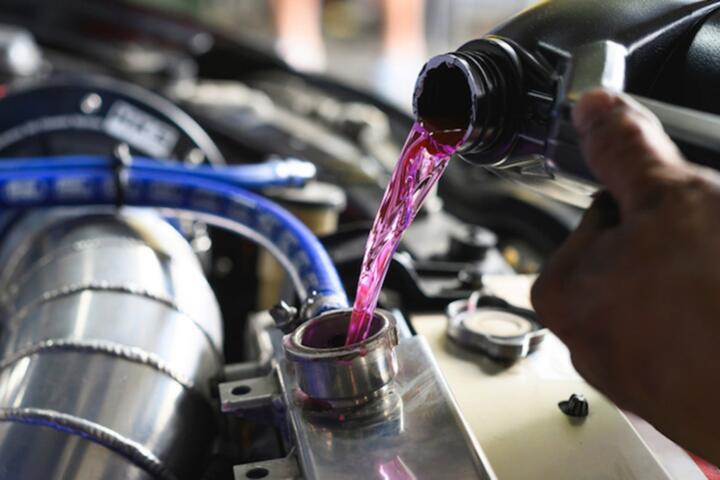
Fluid Evolution
As we move through 2026, the thermal management of Electric Vehicles (EVs) has shifted from simple heat rejection to high-precision temperature regulation. Unlike Internal Combustion Engines (ICE) that primarily use water-glycol mixtures to prevent freezing and boiling, EVs require fluids with specific electrical properties. The battery pack is the most sensitive component, operating optimally between 15°C and 35°C.
The primary technical differentiator in modern EV coolant flushes is the requirement for "dielectric" or low-conductivity fluids. Traditional coolants can have electrical conductivity levels exceeding 3,000 µS/cm, which is catastrophic in a high-voltage environment. If a leak occurs internally within a battery module, standard coolant acts as a conductor, leading to short circuits and thermal runaway.
Currently, approximately 72% of EVs use indirect cooling loops with low-conductivity glycol, while 10% of high-performance models have moved to full immersion cooling using synthetic esters. This complexity means a "one-size-fits-all" approach to coolant flushes is no longer viable for professional service centers.
Thermal Management Risks
The most significant mistake technicians make is assuming that "Extended Life" coolant from the ICE world is compatible with EV high-voltage loops. Using a high-conductivity fluid in a system designed for dielectric media can bridge the gap between battery cells and the chassis ground, triggering a "Ground Fault" error that completely disables the vehicle.
Contamination is another critical pain point. Even a 1% residue of old, degraded fluid or tap water can alter the dielectric strength of the new fill. This degradation reduces the fluid's breakdown voltage—the point at which the liquid itself becomes a conductor. In an 800V architecture, like those found in the Porsche Taycan or Hyundai Ioniq 6, the margin for error is non-existent.
Consequences of improper flushing include localized hotspots and reduced DC fast-charging speeds. If the fluid's viscosity is too high or its heat capacity is too low, the Battery Management System (BMS) will throttle charging current to prevent damage, turning a 20-minute charge into a two-hour ordeal for the owner.
Critical Flush Standards
Dielectric Strength Verification
Every dielectric fluid used in an EV flush must meet specific breakdown voltage standards, typically measured via ASTM D877. For immersion cooling, the fluid must withstand at least 30kV. This ensures that even under the intense electrical fields generated during a 350kW fast-charging session, the fluid remains an insulator.
Technicians must use dedicated testers to verify the fluid condition before and after the flush. If the breakdown voltage drops below OEM-specified limits—often due to moisture absorption or metallic particulate contamination—the fluid has failed its primary safety function.
Low-Conductivity Glycols
For vehicles using indirect cooling, such as the Tesla Model 3 or VW ID.4, the requirement is "Low-Conductivity" (LC) coolant. These are specialized OAT (Organic Additive Technology) fluids that maintain a conductivity below 20 µS/cm. Traditional coolants use silicates and phosphates that are highly conductive.
Using the wrong glycol mix can lead to "electro-chemical migration," where metal ions from the cooling plates are transported by the fluid, leading to internal corrosion and eventual leaks. Always verify that the fluid container explicitly states "EV Compatible" and matches the OEM part number exactly.
Immersion Synthetic Esters
High-performance EVs are increasingly using immersion cooling, where the battery cells are physically submerged in fluid. These systems use synthetic esters, such as those produced by Castrol ON or Shell E-Fluids. Esters offer superior thermal mass compared to hydrocarbons and have a much higher flash point, typically above 250°C.
During a flush, these fluids require vacuum-assisted filling to ensure zero air pockets remain between cells. An air pocket in an immersion system creates a localized insulator, preventing heat from leaving the cell and potentially leading to a single-cell thermal event.
Material Compatibility Check
EV cooling loops contain a variety of new materials, including specialized polymers, silicones, and aluminum alloys. Dielectric fluids must be chemically inert toward these materials. For instance, some ester-based fluids can cause legacy EPDM rubber seals to swell and fail within weeks.
Before performing a flush, reference the vehicle's Technical Service Bulletin (TSB) for seal compatibility. Modern fluids are formulated to be "Seal Friendly," but using an industrial-grade dielectric oil not designed for automotive use can lead to catastrophic system-wide leaks.
De-Ionizing Resin Filters
Some advanced EV cooling systems, such as those in the hydrogen-powered Toyota Mirai or specific heavy-duty electric trucks, incorporate a de-ionizing (DI) filter within the loop. This filter constantly "scrubs" ions from the fluid to keep conductivity near zero.
A professional coolant flush is not complete without replacing this DI resin cartridge. If the filter is saturated, the new fluid will quickly become conductive as it picks up residual ions from the system walls, defeating the purpose of the maintenance interval.
Viscosity at Low Temp
Dielectric fluids must remain pumpable at extreme temperatures. In cold climates, a fluid that becomes too viscous (thick) will cause "cavitation" in the high-voltage water pump. This leads to mechanical pump failure and an immediate "Power Limited" warning on the dashboard.
OEM specs usually require a kinematic viscosity of less than 10 cSt at 40°C. During a flush, ensure the system is bled according to the manufacturer's thermal "warm-up" cycle to confirm the pump is moving the fluid efficiently across the entire temperature gradient.
Maintenance Case Studies
A logistics company operating a fleet of 50 electric delivery vans noticed a 15% increase in battery temperature warnings during summer months. Diagnostic data showed the original "lifetime" coolant had reached a conductivity of 150 µS/cm due to moisture ingress through the reservoir cap. After a full flush with LC-glycol and a reservoir seal replacement, temperatures stabilized, and fleet uptime increased by 12%.
In another case, a specialized EV repair shop serviced a high-performance grand tourer that had been topped off with standard "Green" antifreeze. Within 500 miles, the vehicle threw a "High Voltage Isolation Fault." The shop had to perform three consecutive flushes with dielectric ester fluid to bring the system's conductivity back into the safe range, highlighting the cost of improper fluid usage.
Fluid Selection Criteria
| Fluid Type | Conductivity | Base Chem | Application |
|---|---|---|---|
| Low-Conduct | <20 µS/cm | Glycol/Water | Indirect Loop |
| Immersion | 0 µS/cm | Synth Ester | Direct Contact |
| Hydrocarbon | 0 µS/cm | PAO Oil | E-Axle/Motor |
| Legacy ICE | >3000 µS/cm | Standard OAT | Do Not Use |
Avoid Critical Failures
The most dangerous error during an EV coolant flush is failing to properly "de-gas" the system. High-voltage battery packs often have complex, serpentine cooling paths. Air bubbles trapped in these paths can lead to "thermal runaway" in specific cells while the rest of the pack appears cool. Always use a vacuum-filling tool like the Airlift system to pull a deep vacuum before injecting the fluid.
Never reuse dielectric fluid. Unlike engine oil, which shows obvious darkening when dirty, dielectric fluid can look perfectly clear while being chemically degraded or moisture-saturated. Always use fresh, sealed containers to prevent atmospheric moisture from entering the fluid before it even enters the vehicle.
Finally, ensure that all service equipment—pumps, hoses, and containers—is dedicated solely to EV coolants. Cross-contamination from a pump previously used for standard antifreeze or oil will ruin the dielectric properties of the new fluid immediately, potentially leading to a warranty denial for the battery pack.
FAQ
How often is a flush needed?
While some OEMs claim "fill-for-life," most manufacturers recommend a full dielectric coolant flush every 5 to 8 years or 100,000 miles. However, if the vehicle has undergone any high-voltage component repairs or experienced an overheating event, the fluid should be replaced immediately regardless of mileage.
Can I use deionized water?
No. While deionized water has low conductivity initially, it is highly "hungry" for ions and will quickly leach metals from the cooling system, becoming conductive within weeks. Always use a pre-mixed, OEM-approved dielectric fluid that contains the necessary corrosion inhibitors for a high-voltage environment.
What is breakdown voltage?
Breakdown voltage is the maximum electrical field that a fluid can withstand before it begins to conduct electricity. For EV battery immersion fluids, this is a critical safety metric. If the fluid's breakdown voltage is too low, the battery's electrical energy can "arc" through the liquid, causing a fire.
Are EV coolants toxic?
Specialized dielectric fluids, particularly synthetic esters, are often marketed as biodegradable and less toxic than traditional glycols. However, they must still be disposed of as hazardous waste because they pick up heavy metals and chemical residues from the battery pack's internal components over time.
How do I test conductivity?
You must use a dedicated low-conductivity meter. Standard automotive multimeters or "coolant strips" are not sensitive enough to measure the micro-Siemens range required for EV safety. If the reading exceeds 20 µS/cm for a glycol-based EV system, a flush is mandatory.
Author's Insight
Having overseen the transition of several major fleet maintenance programs to electric platforms, I can say that the "fluid" side of EVs is where most technical debt is hidden. Many shops think they are doing a favor by topping off a Tesla with generic Dex-Cool, but they are effectively planting a time bomb in the battery pack. My rule of thumb is simple: if you don't have a conductivity meter and a vacuum-fill tool on the bench, you shouldn't be opening an EV cooling loop. Precision is the only way to protect these six-figure battery assets.
Summary
Maintaining the dielectric integrity of an EV's cooling system is non-negotiable for safety and performance. A proper coolant flush requires selecting the correct fluid—whether low-conductivity glycol or synthetic ester—and using specialized vacuum-fill techniques to eliminate air pockets. By adhering to OEM breakdown voltage standards and moisture limits, you ensure the battery remains in its "Goldilocks" temperature zone, preserving charging speeds and preventing isolation faults. Actionable advice: Always check the TSB for DI filter replacement during every major service interval.