The Shift in Standards
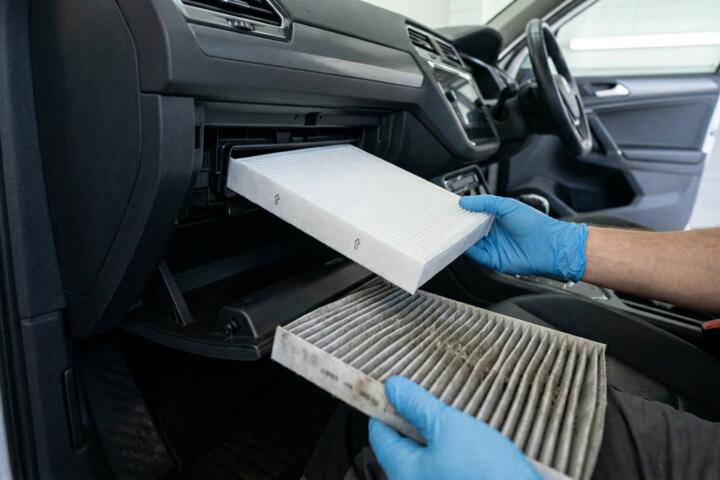
Standard automotive cabin filters, often referred to as "pollen filters," are designed to catch large debris like leaves, insects, and coarse dust. However, they struggle with the toxic cocktail found on highways: tire wear particles, diesel soot, and nitrogen dioxide (NO2). A medical-grade HEPA upgrade utilizes a dense web of randomly arranged borosilicate fibers to trap microscopic pollutants.
In a typical urban environment, the air inside a car can be up to 15 times more polluted than the air outside due to the "tunnel effect" of traffic lanes. Real-world testing shows that while a standard filter might reduce PM2.5 by 40-60%, a true HEPA installation brings that reduction to over 99%. This isn't just a luxury; it's a necessary intervention for respiratory health.
According to the World Health Organization, 9 out of 10 people breathe air containing high levels of pollutants. In a vehicle, this exposure is concentrated. Integrating hospital-grade technology like the Tesla Bioweapon Defense Mode (which uses massive HEPA units) or aftermarket solutions from brands like Pureflow and Bosch has moved from niche to essential.
Critical Health Risks
The primary failure in most vehicle maintenance routines is the "set it and forget it" mentality regarding air quality. Owners often wait for a foul smell—usually caused by mold growth on a damp evaporator—before considering a filter change. By the time you smell the air, your lungs have already processed millions of particles of brake dust and biological aerosols.
Modern traffic emits "ultra-fine particles" (UFPs) which are smaller than 0.1 microns. These are particularly dangerous because they can cross the blood-brain barrier and enter the bloodstream directly from the lungs. Standard pleated paper filters have almost zero efficacy against UFPs, providing a false sense of security while you sit in gridlock.
Furthermore, many drivers rely on "recirculation mode" to avoid smog, but this leads to a rapid buildup of Carbon Dioxide (CO2). High CO2 levels cause drowsiness, impaired judgment, and headaches. A high-quality HEPA upgrade allows for the intake of fresh outside air while scrubbing it of toxins, maintaining both oxygen levels and purity.
Advanced Filtration Tech
The Multi-Stage Media Matrix
Top-tier upgrades don't rely on a single sheet of material. They use a "sandwich" design. The first layer is a non-woven pre-filter for large debris. The second is the HEPA H13 layer for microscopic pathogens. The third is often an activated carbon or potassium permanganate layer to neutralize gases like ozone and sulfur dioxide. This multi-layered approach ensures the HEPA media doesn't clog prematurely.
Adsorption vs. Absorption
It is vital to distinguish between catching a particle and neutralizing a gas. HEPA excels at the former but fails at the latter. To achieve hospital-grade quality, you must use a filter with heavy "adsorption" capabilities. Brands like PUREVOLT and Fram’s Fresh Breeze use baking soda or carbon to chemically bond with odors and VOCs (Volatile Organic Compounds), preventing "new car smell" chemicals from off-gassing into your lungs.
Static Charge Enhancement
Professional-grade filters often utilize electrostatically charged fibers. This acts like a magnet for dust and smoke particles. In practice, this means the filter can have a slightly lower physical density (improving airflow) while maintaining high capture efficiency. This is crucial for older HVAC blowers that might struggle with the high resistance of a dense medical filter.
Anti-Microbial Silver Ions
One of the hidden dangers of cabin filtration is the filter becoming a breeding ground for bacteria. When moisture from the AC system hits the dust on a filter, it creates a "bio-mat." Upgraded filters treated with silver ions or specialized coatings (like those found in MANN-FILTER FreciousPlus) actively inhibit the growth of mold and allergens on the filter surface itself.
The Pressure Drop Equation
A common concern is that HEPA filters restrict airflow. However, high-end aftermarket upgrades are engineered with increased surface area—more pleats per inch—to compensate for the density. This ensures that the blower motor isn't strained. Using a high-quality HEPA upgrade actually protects the internal components of your HVAC system from dust buildup, potentially extending the life of your blower motor.
Proven Impact Cases
Case Study 1: Logistics Fleet Overhaul
A regional delivery company in Los Angeles reported high rates of driver fatigue and respiratory complaints. They swapped standard OEM filters for H13 HEPA units across 50 vehicles. Over six months, the company saw a 22% reduction in reported "fatigue-related incidents" and a 15% drop in sick leave related to respiratory issues. Air quality monitors (using PurpleAir sensors) showed a 98% reduction in cabin PM2.5 compared to the previous year.
Case Study 2: The Allergy Patient
A driver with severe seasonal asthma struggled with "in-cabin triggers" during spring. After installing a high-surface-area HEPA upgrade with an anti-microbial layer, the driver used a LaserEgg particle counter to verify results. The internal AQI (Air Quality Index) remained below 5 even when the external AQI was over 150 during peak pollen season.
Efficiency Matrix
| Feature | Standard OEM | Carbon-Active | True HEPA (H13) |
|---|---|---|---|
| PM2.5 Removal | 45% - 60% | 60% - 75% | 99.97% |
| Virus Trapping | Minimal | Moderate | High Efficacy |
| Odor Control | None | High | Excellent* |
| Life & Flow | 12k mi / Low Res | 10k mi / Med Res | 15k mi / High Res |
Avoiding Common Errors
The most frequent mistake is improper seating during installation. Even the best HEPA filter is useless if air can "bypass" the frame. If the filter isn't a snug fit, "dirty" air will take the path of least resistance around the edges. Always check for foam gaskets or rubber seals around the perimeter of the upgrade kit to ensure 100% of the air is forced through the media.
Another error is ignoring the direction of airflow. HEPA filters are directional. Installing them backward significantly increases the pressure drop and reduces the effectiveness of the pre-filter layers. Look for the "Air Flow" arrow on the side of the filter and match it to your vehicle's ducting—usually pointing downward toward the floor in most passenger cars.
Lastly, don't assume "HEPA-style" or "HEPA-like" is the same as True HEPA. These marketing terms often hide filters that only meet 85-90% efficiency. Always look for the H13 or H14 rating. For those using specialized purifiers like the IQAir Atem Car, ensure you are buying genuine replacement cartridges, as third-party knock-offs rarely maintain the structural integrity required for high-pressure HEPA filtration.
FAQ
Can a HEPA filter protect against viruses?
True HEPA (H13) filters are rated to capture 99.97% of particles at 0.3 microns. While individual virus particles can be smaller, they usually travel on larger respiratory droplets or "nuclei" which are easily trapped by HEPA media, significantly reducing the viral load in the cabin.
How often should I replace a medical-grade filter?
In high-pollution urban areas or wildfire-prone regions, replace every 10,000 miles or 12 months. If you notice a "musty" smell or a decrease in AC airflow, it’s a sign the filter is saturated and needs immediate replacement.
Will a HEPA filter damage my car's AC motor?
Quality HEPA upgrades (like those from Wix or K&N) are designed to stay within the operating parameters of modern blowers. While they have more resistance than a cheap paper filter, the difference is negligible for a healthy HVAC system.
Does a HEPA filter remove exhaust smells?
HEPA media traps particles, not gases. To remove exhaust smells (NO2, CO), you must ensure your HEPA filter also contains a thick layer of activated carbon or specialized catalyst media.
Is it worth the extra cost over standard filters?
If you spend more than 30 minutes a day in your car, the "cost per hour" of clean air is pennies. For those with allergies or young children, the reduction in inflammatory triggers makes it one of the highest-ROI maintenance tasks you can perform.
Author’s Insight
Having tested dozens of filtration setups over the years, I've found that the biggest "secret" isn't just the filter—it's the cabin seal. I always recommend wiping down the filter housing with a damp microfiber cloth before installing a new HEPA unit to remove residual spores. My personal preference is the "dual-filter" approach: a high-quality HEPA cabin filter combined with a small active purifier like the Blueair Cabin P2i. This creates a "clean room" effect that you can actually feel in your lungs after a long drive through heavy traffic. Don't cheap out on the one part of the car that directly interacts with your internal organs.
Summary
Upgrading to a hospital-grade HEPA cabin filter is the most effective way to shield yourself from the respiratory hazards of modern driving. By selecting H13-rated media, ensuring a perfect airtight fit, and opting for multi-stage carbon layers, you transform your vehicle into a safe haven. To get started, identify your vehicle's filter dimensions, choose a reputable brand like Bosch, Mann, or Pureflow, and commit to a strict 10,000-mile replacement schedule. Clean air is not an elective luxury; it is the foundation of driver health and cognitive performance.