The Electric Load Paradox
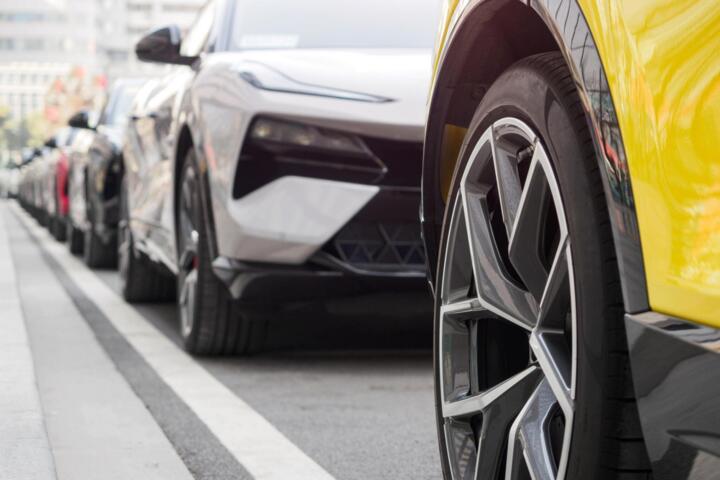
Electric vehicles present a unique engineering challenge that traditional internal combustion engine (ICE) tires were never designed to handle. The combination of instantaneous torque and massive battery packs creates an aggressive operating environment for rubber compounds. While a standard vehicle gradually builds torque as engine RPM rises, an electric motor delivers peak torque at zero RPM. This sudden mechanical stress deforms the tire tread element instantly upon acceleration.
According to data from Michelin, an electric vehicle can accelerate from 0 to 60 mph up to 30% faster than its ICE counterpart. This rapid velocity change generates immense shear stress within the tire contact patch. Furthermore, the structural weight of an EV battery pack—such as the 1,300-pound pack in a Tesla Model S—increases the vertical load on the carcass, amplifying the frictional forces that drive rubber degradation.
Data from Continental Tires indicates that these combined factors lead to a tire wear rate that is up to 20% faster on EVs if standard replacement tires are used. Understanding the physics behind this accelerated wear is essential for maximizing tire longevity and maintaining vehicle efficiency.
High-Torque Wear Mechanics
The primary driver of premature EV tire failure is a phenomenon known as micro-slip. When a high-torque electric motor applies rotational force to the wheel, the tire tread elements slip microscopically against the road surface before achieving full traction. This micro-slip occurs every time the driver presses the accelerator, even during mild urban driving, tearing away microscopic fragments of the rubber compound.
This localized stress alters the wear pattern across the tire face. Traditional tires often show wear in the center or shoulders due to inflation issues. EV tires, conversely, frequently exhibit "heel-and-toe" wear across the tread blocks. This irregular wear is caused by the high tangential forces lifting the leading edge of the tread block while forcing the trailing edge into the pavement with excessive pressure.
The consequences extend beyond financial costs. Irregular wear patterns disrupt the acoustic properties of the tire. As tread blocks wear unevenly, they generate high-frequency cabin noise, destroying the quiet ride experience that EV manufacturers spend millions of dollars trying to achieve through acoustic glass and sound-dampening foam.
Engineering the EV Tire
Asymmetric Tread Rigid Blocks
To combat high-torque deformation, tire manufacturers utilize highly rigid, asymmetric tread designs. By linking adjacent tread blocks with structural rubber bridges, engineers prevent the individual blocks from flexing excessively during acceleration and regenerative braking. This stabilizing architecture reduces micro-slip by keeping the maximum amount of rubber in flat contact with the road surface.
In practice, brands like Bridgestone utilize this architecture in their Turanza EV line. The outer shoulder features enlarged, continuous blocks that handle lateral cornering forces under heavy loads, while the center ribs remain stiff to transfer instantaneous longitudinal torque without squirming.
High-Loading Silica Compounds
The chemical composition of the tire must change to balance wear resistance with wet grip. Standard tires often use carbon black filler to reinforce the synthetic rubber matrix. EV tires utilize functionalized polymers embedded with highly dispersed, high-loading silica. This chemical matrix creates stronger molecular bonds that resist the tearing forces of instant torque delivery.
This compound engineering allows the tire to remain pliable enough to grip the road for safety while maintaining a high modulus of elasticity. The result is a rubber compound that resists abrasive wear under high loads without turning into a hard plastic that slides on wet surfaces.
Acoustic Resonance Dampening
Because EVs lack engine noise, tire cavity resonance becomes highly noticeable between 200 Hz and 250 Hz. To solve this, manufacturers glue an open-cell polyurethane foam cushion to the inner liner of the tire. This foam absorbs the airborne vibrations inside the tire cavity before they can travel through the suspension and into the passenger cabin.
Examples of this technology include Pirelli’s PNCS (Pirelli Noise Cancelling System) and Goodyear’s SoundComfort technology. Testing shows these foam inserts reduce internal cabin noise by up to 9 decibels, a massive perceptual difference for the vehicle occupants.
Reinforced Side-Wall Ply
To support the static mass of heavy battery packs without sacrificing handling precision, EV tires feature high-load capacity (HL) ratings. This designation allows the tire to carry higher loads at the same inflation pressure as a standard XL tire. Achieving this requires reinforcing the sidewall turn-up ply with high-tensile aramid or rayon cords.
This structural stiffening prevents the tire from sagging or flexing excessively under lateral load. When an EV corners, the reinforced sidewall resists the momentum of the heavy battery pack, maintaining a predictable steering response and preventing localized shoulder wear.
Low Rolling Resistance Architecture
Tire design directly impacts EV battery range. A 10% reduction in rolling resistance can increase overall driving range by roughly 1% to 2%. Engineers must design a tire that minimizes hysteretic energy loss—the energy lost as heat when the tire flexes at the bottom of its rotation—while still providing enough grip to handle high torque.
This is achieved by reducing the overall tread depth slightly compared to ICE tires and optimizing the belt architecture. By using thinner, stronger steel belts and a optimized under-tread rubber layer, manufacturers lower the rotational mass and energy dissipation of the tire assembly.
Fleet Analytics Insights
A regional delivery fleet operating 50 electric Ford E-Transit vans reported a severe drop in tire life, with original equipment tires wearing out at just 18,000 miles. The fleet was experiencing high operational costs and frequent downtime due to chunking and rapid shoulder wear on urban routes characterized by frequent stop-and-go acceleration.
The fleet manager transitioned the vehicles to a dedicated commercial EV tire compound featuring a high-silica matrix and reinforced casing plies. The fleet also implemented strict torque-limiting maps via the vehicle’s telematics system to soften the initial throttle tip-in during urban operations.
Within 12 months, average tire life extended to 31,000 miles, representing a 72% increase in longevity. The combination of specialized rubber chemistry and a minor digital calibration saved the company over $14,000 in annual maintenance costs while maintaining identical delivery schedules.
Performance Matrix
| Metric | Standard Tire | Dedicated EV Tire | Net Delta |
|---|---|---|---|
| Lifespan | 24,000 miles | 38,000 miles | +58% |
| Resistance | Baseline | 12% lower | +2% Range |
| Noise | 72 dB | 66 dB | -6 dB |
| Deflection | High flex | Minimal flex | Better grip |
Avoid Maintenance Pitfalls
The most severe error an EV owner can make is neglecting tire pressure inflation checks. Due to the high curb weight of electric platforms, running even 3 PSI below the manufacturer’s recommended cold inflation pressure causes excessive sidewall deflection. This generates extreme internal temperatures, accelerating tread rubber breakdown and increasing rolling resistance.
Another pitfall is ignoring the tire rotation schedule. Because the drive wheels on an EV experience the brunt of the longitudinal torque forces while the non-drive wheels experience mostly lateral forces, wear rates between axles are highly unequal. Failing to rotate tires every 5,000 miles will lead to a ruined drive pair long before the other pair shows significant wear.
Finally, avoid purchasing standard budget tires based solely on price. A cheap tire lacks the aramid sidewall reinforcements and specialized polymer chains required to handle heavy electric drivetrains. The money saved upfront is quickly lost when the tire wears down to the wear bars in less than 15,000 miles.
FAQ
Why do EV tires wear fast?
EV tires degrade quickly due to instantaneous electric motor torque and heavy vehicle weight. The instant power causes micro-slippage between the tread and the road, while the heavy battery pack increases the vertical load, accelerating mechanical friction and rubber abrasion during daily operation.
Can I use regular tires?
You can mechanically mount regular tires, but they will wear out significantly faster, increase cabin road noise, and reduce your battery driving range. Regular tires lack the reinforced internal casing plies and high-silica rubber compounds needed to handle electric drivetrain physics.
How often should I rotate?
You should rotate your EV tires every 5,000 miles. Because the driven axle handles intense torque loads from both acceleration and aggressive regenerative braking, rotating frequently is essential to balance the wear patterns across all four tire footprints.
Do they affect range?
Yes, tire choice dramatically impacts range. Dedicated EV tires are engineered with specific under-tread compounds and optimized belt packages designed to reduce rolling resistance. Switching from a low rolling resistance EV tire to a sticky, standard performance tire can reduce range by up to 10%.
What is the foam inside?
The internal foam is an open-cell polyurethane layer glued to the inner liner of the tire. Its sole purpose is sound absorption. It dampens the high-frequency tire cavity air resonance that becomes highly audible in quiet electric vehicles that lack traditional internal combustion engines.
Author's Insight
In my years testing automotive components, the sheer destructiveness of electric torque on standard rubber formulations never ceases to surprise me. I have seen standard grand touring tires completely stripped of their tread blocks in under 12,000 miles when mounted to high-performance dual-motor EVs. My definitive advice to owners is to check your door jamb placard weekly and keep your tires inflated to the exact cold pressure specification. When replacing your rubber, always verify the tire has an "HL" weight rating and explicit EV branding on the sidewall; skipping this step is a recipe for premature wear and diminished vehicle dynamics.
Summary
Managing the intersection of high torque and vehicle weight requires a specialized approach to tire science. Dedicated EV tires use reinforced internal plies, high-rigidity tread block configurations, and advanced silica-polymer chemistry to resist the abrasive forces of electric propulsion. By maintaining proper cold inflation pressures, sticking to a strict 5,000-mile rotation cadence, and selecting certified replacement models, drivers can protect their financial investment and optimize their vehicle’s efficiency for the long haul.