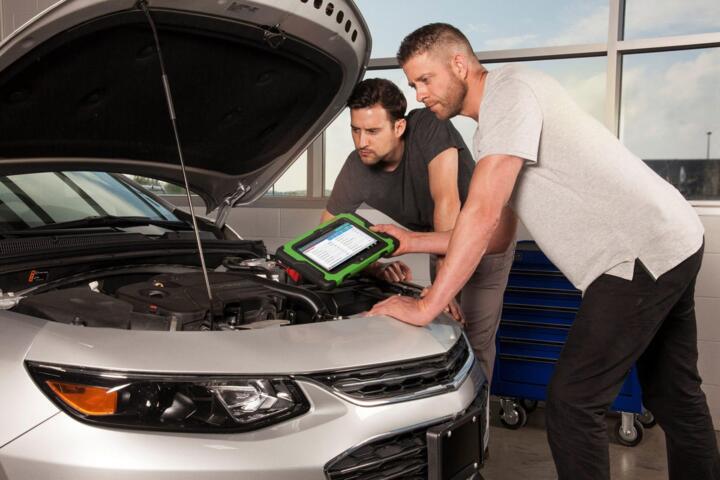
Diagnostic Evolution
The transition from OBD-I to OBD-II in 1996 was a legislative shift, but the real revolution occurred over the last decade with the introduction of high-speed Controller Area Network (CAN) protocols. Today, a professional-grade scanner does not just read a P0300 code; it provides live stream data on long-term fuel trims, oxygen sensor voltages, and ignition timing. For example, a standard reader might tell you your engine is misfiring, but a professional tool like the Autel MaxiCOM or Launch X431 can run a cylinder balance test to isolate the exact mechanical or electrical culprit.
Industry data shows that 70% of "Check Engine" lights are triggered by minor sensor discrepancies or vacuum leaks that can be diagnosed in under fifteen minutes. In a professional shop environment, a technician uses these tools to view "Freeze Frame" data, which captures the exact engine conditions at the moment a fault occurred. At home, having access to this data means you can see if a lean condition happens only at idle or under load, drastically narrowing the search for a solution.
Decoding Live Data Streams
The true power of a pro-sumer scanner lies in its sampling rate. Cheaper Bluetooth dongles may refresh data once per second, which is insufficient for catching a momentary voltage drop in a throttle position sensor. High-end tools provide millisecond-level resolution, allowing you to graph sensor outputs against each other to find correlations that are invisible to the naked eye.
The Rise of Bidirectional Control
Bidirectional control is the "secret sauce" of professional diagnostics. It allows the user to send commands to the vehicle's Engine Control Unit (ECU) to activate specific components. Want to know if a cooling fan is broken or if the relay is bad? You can manually command the fan to turn on via the scanner. This eliminates guesswork and manual probing with a multimeter in cramped engine bays.
ECU Coding and Adaptations
When you replace a component like a battery in a modern BMW or an injector in a diesel truck, the car needs to "learn" the new part. Professional tools facilitate "relearning" or "coding," which adjusts the ECU’s parameters to match the wear characteristics of the new hardware. Without this, the vehicle may continue to operate on old, inefficient logic maps.
Accessing Chassis and Body Modules
Standard scanners often only talk to the Powertrain Control Module (PCM). Professional units bridge the gap to the ABS (Anti-lock Braking), SRS (Airbag), and TPMS (Tire Pressure) modules. This is critical for performing tasks like ABS brake bleeding, which requires the scanner to cycle the internal pumps and valves to purge trapped air.
Advanced Graphing and Overlays
Visualizing data is often more helpful than reading numbers. Expert-level tools allow you to overlay the upstream and downstream O2 sensor graphs. If the graphs mirror each other too closely, it’s a definitive sign that the catalytic converter is no longer storing oxygen efficiently, confirming a replacement is needed before a failed emissions test.
Common Diagnostic Pitfalls
The most frequent error among DIYers is treating a trouble code as a direct replacement instruction. If the tool reports a "P0171 System Too Lean," many owners immediately buy a new Mass Air Flow (MAF) sensor. In reality, this code could be caused by a $5 vacuum hose, a clogged fuel filter, or even a leaking intake manifold gasket. Professional tools help avoid this by showing the "Short Term Fuel Trim" responding in real-time to a sprayed stimulant like brake cleaner.
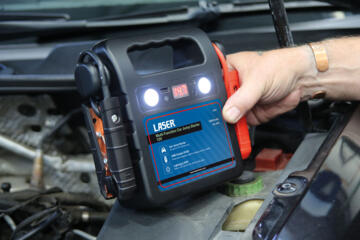
Neglecting the battery voltage during diagnostics is another critical mistake. Modern CAN bus systems are extremely sensitive to voltage fluctuations; a weak battery can throw "ghost codes" across multiple modules that have nothing to do with mechanical failure. Furthermore, ignoring the "Pending" codes—faults that haven't yet triggered a light—can lead to being stranded when a component finally reaches its failure threshold during a long trip.
Real-world consequences of poor diagnostics include "thermal runaway" in catalytic converters due to unburnt fuel from misfires or destroyed transmissions caused by ignored solenoid pressure codes. Using a tool that lacks the depth to see manufacturer-specific (Manufacturer Specific vs. Generic) codes means you are essentially flying blind through 40% of your vehicle's electronic architecture.
Pro Solutions and Methods
To move beyond basic code reading, you must adopt a systematic diagnostic process. Start by performing a "Global Health Report" or "All System Scan." This reveals if an engine issue is actually a symptom of a communication error in the Transmission Control Module or the Body Control Module. Professional tools from brands like Snap-on or Topdon excel here by providing a full topological map of the vehicle's network.
Once the codes are identified, use the "Live Data" function to verify the fault. For a suspected faulty sensor, check its "PID" (Parameter ID). If a coolant temperature sensor reads -40°F in the middle of summer, you’ve found an open circuit. This logical verification saves hundreds of dollars in unnecessary parts. For those working on European cars, tools like VCDS (Ross-Tech) for the Volkswagen Group provide dealership-level access for the price of a single hour of labor at a specialized shop.
Another high-value technique is the "Fuel Trim Analysis." By observing how Short Term Fuel Trim (STFT) and Long Term Fuel Trim (LTFT) behave at 2,500 RPM versus idle, you can differentiate between a vacuum leak (which improves at high RPM) and a fuel delivery issue (which worsens). This level of insight turns a weekend hobbyist into a precision technician, reducing repair times by 50-60% on average.
Diagnostic Case Studies
Case 1: The "Ghost" Misfire
A local delivery fleet was experiencing intermittent power loss on a 2018 Ford F-150. No permanent codes were stored. Using a Topdon Phoenix Plus, the technician performed a "Cylinder Contribution Test" while driving. The live graph showed Cylinder 4 dropping out only under high torque. This pointed to a hairline crack in the ignition coil boot, invisible to the eye but obvious in the data. The repair cost $40 instead of a $600 full ignition system overhaul.
Case 2: The Blocked DPF
A private owner of a Mercedes Sprinter van faced a "Limp Mode" situation. A basic scanner showed a generic DPF (Diesel Particulate Filter) error. By using an Autel MS906 Pro, the owner viewed the "Soot Mass" and "Exhaust Backpressure" PIDs. The data showed the sensor was reading a constant high voltage regardless of engine speed, indicating a melted pressure hose rather than a clogged $2,000 filter. Total savings: $1,900.
Scanner Selection Guide
| Feature | Basic Dongle | Mid-Range | Pro Tablet |
|---|---|---|---|
| Protocols | Generic OBD-II | OBD-II + ABS/SRS | Full + CAN-FD/DoIP |
| Control | None | Limited Resets | Full Bidirectional |
| ECU Jobs | No | No | Coding & Adaptation |
| Updates & Graphs | Rare / Laggy | Yearly / 2-PID | Monthly / High-Speed |
Avoiding Costly Mistakes
The most expensive mistake is buying a tool that doesn't support the specific protocol of your vehicle. For instance, newer GM and Ford models (2020+) often require CAN-FD support. If your scanner lacks this hardware, it simply won't talk to the car. Always verify hardware compatibility before purchase, especially if you own a vehicle manufactured within the last three years.
Another error is clearing codes before recording the "Freeze Frame" data. This is akin to a doctor deleting your medical history before a checkup. Always save the report first. Additionally, be wary of "Grey Market" tools sold on discount sites; these often lack valid licenses for software updates, rendering them useless for newer car models after just one year. Stick to authorized distributors for brands like Thinkcar or Innova.
FAQ
Can a scanner fix my car?
No, a scanner is a diagnostic tool, not a repair tool. It identifies where the problem is and allows you to reset the computer after the physical repair is completed. However, some "fixes" like DPF regeneration or throttle relearns are purely software-based and can be done via the tool.
What is the difference between OBD-II and EOBD?
They are essentially the same. OBD-II is the US standard, while EOBD is the European equivalent. Most modern scanners support both protocols automatically without requiring user intervention.
Do I have to pay for yearly subscriptions?
For basic functions, usually no. However, professional tablets often require a subscription (ranging from $150-$800/year) to access the latest vehicle software updates and online coding databases.
Can I use these tools to change mileage?
No. Odometer correction is a separate and highly regulated field. Diagnostic scanners are designed for maintenance and repair, not for altering protected vehicle history data.
Will using a scanner void my warranty?
Simply reading codes or viewing live data will not void your warranty. However, using advanced coding features to alter factory settings (like engine mapping) could potentially lead to warranty claims being denied if an issue arises.
Author’s Insight
In my fifteen years of automotive consulting, I’ve seen the "Check Engine" light go from a mystery to a manageable data point. The biggest hurdle for most enthusiasts isn't the cost of the tool—it's the fear of the data. My advice is to start by "baselining" your car: scan it when it’s running perfectly. Knowing what your fuel trims and sensor voltages look like when the car is healthy is the only way you'll recognize the subtle deviations that signal an impending failure. A $500 investment in a bidirectional tool pays for itself the very first time it prevents a "guess-and-check" repair at a dealership.
Summary
Investing in a professional-grade diagnostic tool is no longer an extravagance for the average car owner; it is a necessity for anyone looking to maintain a modern vehicle. By understanding the difference between generic codes and manufacturer-specific live data, you can take control of your vehicle's maintenance schedule and budget. Start by identifying the specific protocols your car uses, choose a tool with bidirectional capabilities, and always verify your findings with live data before turning a wrench. This systematic approach ensures your vehicle remains reliable and your repair costs remain under control.