Mobile Interface Shift
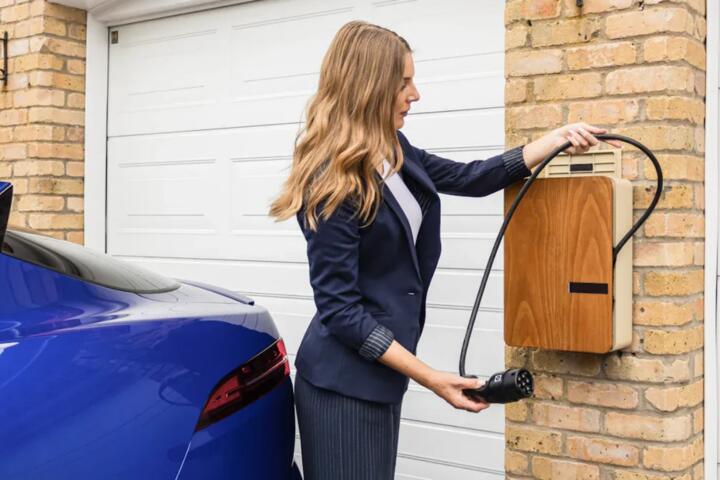
The shift from 120V Level 1 "trickle" charging to 240V Level 2 mobile solutions has transformed EV ownership, allowing for a full battery replenishment overnight without a permanent wallbox installation. A standard Level 2 portable charger typically operates at 32 or 40 amps, delivering between 7.7 kW and 9.6 kW of power. While the hardware looks like a simple cable, it is actually an Electric Vehicle Supply Equipment (EVSE) controller that manages communication with the car’s On-Board Charger (OBC).
In a practical scenario, a Tesla Model Y owner using a mobile connector at a campsite or a friend’s garage expects a consistent 28–30 miles of range per hour. However, the physical reality is that pushing 40 amps through a compact enclosure generates significant internal resistance. Real-world data shows that low-quality portable units can reach internal temperatures exceeding 80°C (176°F) within just 90 minutes of operation. High-tier units, such as the J+ Booster 2 or the Tesla Mobile Connector, utilize aerospace-grade aluminum or high-density polymers to ensure heat is shed faster than it accumulates.
Thermal Inefficiency
The most prevalent mistake in the portable EVSE market is prioritizing "advertised amps" over "thermal overhead." Many off-brand chargers sold on major marketplaces claim 40-amp capacity but lack the thermal mass or active monitoring to sustain it. When these units overheat, they don't always shut off; instead, they engage in "thermal throttling."
The EVSE sends a signal to the car to reduce the current draw, often dropping a 40-amp charge down to 16 or 20 amps without alerting the user via a notification. This results in a car that is only 50% charged by morning, a frustrating surprise for commuters. Furthermore, repeated heat cycles cause "creep" in the copper contacts of the NEMA 14-50 plug. Over time, this leads to increased resistance, even more heat, and eventually, the melting of the wall outlet itself—a primary cause of electrical fires in residential garages.
Engineering for Peak
Selecting Copper Gauge for Reduced Resistance
To maintain speed, the physical gauge of the cable is non-negotiable. While the NEC (National Electrical Code) might allow for thinner wire over short distances, high-performance portable chargers like those from Grizzl-E or ClipperCreek often use 6 AWG or 8 AWG wiring. Larger copper cross-sections have lower internal resistance, meaning less energy is converted into waste heat. This ensures that the voltage drop remains under 3%, maintaining the velocity of the charge even in summer temperatures.
Advanced Thermal Sensor Integration
A reliable portable charger must feature dual or triple thermistors. One sensor should be located within the main EVSE control box, and critically, another should be embedded directly inside the NEMA 14-50 or 6-50 wall plug. Brands like the Ford Mobile Charger use this "plug-side" sensing to detect if a wall outlet is wearing out. If the plug hits 65°C, the system automatically dials back the amperage to prevent a fire, prioritizing safety without sacrificing the entire charging session.
Enclosure Material and Heat Dissipation
The choice of housing affects how long a charger can run at 40 amps. Polycarbonate housings are common, but they act as insulators, trapping heat inside with the relays. Professional-grade mobile units often employ heat-sync fins or use specialized thermal potting compounds—a resin that surrounds the internal electronics to conduct heat away from the circuit board to the outer shell. This allows the unit to maintain a continuous 9.6 kW output even in a 40°C (104°F) garage.
Component Rating and the 80% Rule
Continuous loads, defined as any load running for more than three hours, must not exceed 80% of the circuit breaker's rating. An expert-level portable charger is designed with this headroom in mind. For a 50-amp circuit, a 40-amp charger is the limit. However, the internal relays should ideally be rated for 50 or 60 amps. Using over-specced components ensures that the "heart" of the charger isn't working at its absolute physical limit, which significantly extends the lifespan of the device.
Smart Firmware and Adaptive Charging
The best modern chargers, such as the Wallbox Pulsar Plus (in its plug-in variant) or the Lectron V-Box, utilize firmware that monitors voltage stability. If the firmware detects "voltage sag"—a sign that the wiring is struggling with the current—it will preemptively lower the amperage. This intelligent adaptation protects the home's infrastructure and the vehicle's sensitive OBC from power surges or brownout conditions that often occur during peak grid demand.
Performance Analysis
Case Study 1: The Fleet Logistics Shift
A boutique delivery company in Seattle transitioned a portion of their van fleet to electric but had not yet installed permanent DC fast chargers. They deployed ten 40-amp portable Level 2 units for overnight charging. Initially, they used budget-tier units. Within three months, 30% of the units showed signs of "discoloration" at the plug interface, and drivers reported inconsistent range in the morning. After switching to the heavy-duty J+ Booster 2, which features a solid aluminum housing and military-grade connectors, the "morning-empty" rate dropped to zero. The thermal stability of the aluminum casing allowed the vans to pull a steady 9.6 kW for 8 hours straight without a single thermal throttle event.
Case Study 2: High-Ambient Temperature Resilience
An EV owner in Phoenix, Arizona, struggled with mobile charging during the summer months when garage temperatures reached 46°C (115°F). Their standard OEM mobile connector would frequently "red light" and stop charging entirely. By upgrading to a portable unit with a higher thermal threshold and a thicker 6 AWG cable, the owner was able to maintain a 32-amp charge. The thicker cable acted as a heat sink, and the more robust internal relays handled the ambient heat without triggering a safety shutdown, ensuring the vehicle was ready for the morning commute.
Hardware Checklist
| Feature | Performance Specs | Safety Rating |
|---|---|---|
| Cable Gauge | Min 8 AWG (32A) / 6 AWG (40A). Reduces heat. | High Overhead |
| Enclosure | IP66/67 rating. Dust and water resistant. | Weatherproof |
| Plug Sensing | Integrated Thermistor. Detects outlet wear. | Fire Prevention |
| Relay / Logic | 50A+ Rated relays. UL/ETL Certified. | Industrial Grade |
Mobile Charging Pitfalls
Many users rely on "dryer outlet" adapters to connect their Level 2 chargers. This is a significant risk. Most dryer outlets (NEMA 10-30) are not designed for the continuous, high-current draw of an EV. Using an adapter that doesn't communicate the lower 24-amp limit to the car can lead to a 32-amp charger trying to pull from a 30-amp circuit, eventually tripping the breaker or melting the wire insulation behind the wall.
Another error is the use of extension cords. If a portable L2 charger cannot reach the outlet, the only safe solution is a specialized, heavy-duty EV extension cord (like those from Lectron) rated for the specific amperage. Standard "outdoor" extension cords will overheat almost instantly at 32 amps. Always ensure the "ground" connection is solid; many portable units will refuse to initiate a charge if they detect a "floating ground," which is a vital safety feature to prevent the car's chassis from becoming electrified.
FAQ
Why does my charger feel hot to the touch?
It is normal for a charger to feel warm (up to 45-50°C), but it should never be too hot to hold. If the plastic is deforming or smells like "sweet" burning chemicals, stop immediately. This indicates a failing internal relay or an undersized cable for the current being pulled.
Can I leave my portable charger plugged in 24/7?
Yes, provided it is UL-listed and the outlet is in good condition. However, "vampire drain" from the EVSE’s internal LEDs and logic board is usually minimal (under 2W). The main concern is the physical tension on the outlet; use a bracket to support the weight of the EVSE box.
Does charging speed decrease as the battery gets full?
Yes, but that is controlled by the car, not the portable charger. As the battery reaches 80-90%, the On-Board Charger (OBC) reduces the intake to protect the battery chemistry. The portable charger simply provides whatever the car asks for, up to its maximum limit.
Is a 40-amp portable charger better than a 32-amp one?
Only if your car can accept it and your circuit can handle it. Many Plug-in Hybrids (PHEVs) are limited to 16 or 32 amps. Buying a 40-amp charger for a car that only takes 16 amps won't make it charge faster, but it will run "cooler" because the components are under-stressed.
How do I know if my wall outlet is safe for Level 2 charging?
Look for "Industrial Grade" outlets like those from Hubbell or Bryant. Standard "residential grade" NEMA 14-50 outlets (often costing $10 at hardware stores) are designed for ranges that cycle on and off, not for the 8-hour continuous draw of an EV.
Author’s Insight
In my years testing various EVSE units, I’ve found that the "weight" of a portable charger is often a great informal proxy for quality. A heavy cable and a dense control box usually indicate more copper and better thermal potting. I always tell clients: "Don't save $100 on a charger only to risk a $1,000 electrical repair." I personally recommend keeping a high-quality portable unit in the trunk even if you have a home station—it is the ultimate "safety net" for road trips, but only if it’s a unit that can handle the heat of a desert charging session without cutting your speed in half.
Summary
Thermal stability is the silent partner of charging speed. When selecting a portable Level 2 charger, focus on UL-certified units with thick-gauge cabling (6-8 AWG) and integrated plug-head thermistors. By avoiding cheap, uncertified hardware and ensuring your home’s NEMA 14-50 outlet is industrial-grade, you can maintain maximum charging velocity without compromising safety. For those living in extreme climates or charging daily, investing in a unit with an aluminum housing and over-specced internal relays is the most effective way to ensure long-term reliability and consistent overnight range.