Why the Light Appears
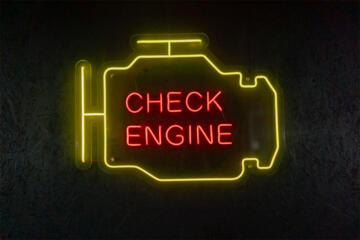
A check-engine light is a dashboard signal tied to the car’s onboard diagnostics. It usually means the powertrain control module detected a fault in emissions, fueling, ignition, or sensor readings. In many vehicles, the system stores a diagnostic trouble code even if the car feels normal.
Skip the “it runs fine” logic. The reason is that emissions faults can worsen while you drive. In the U.S., the OBD-II system monitors key components and can flag issues that affect drivability and tailpipe output. A flashing light often indicates a misfire that can damage the catalytic converter.
Vehicle type changes the stakes. A turbocharged 2.0L engine with direct injection can react to boost leaks and misfires differently than a naturally aspirated 3.5L V6. Fuel economy also shifts: a mild misfire can drop real-world MPG by several miles per gallon, especially on steady highway cruising.
Industry data backs the “don’t ignore it” part. In a 2023 U.S. survey by AAA, 1 in 5 drivers reported they had driven with a check-engine light on at least once. That behavior matters because OBD-II faults can progress from minor to costly repairs. The light is not a warning label for one single problem; it’s a prompt to read codes.
One more fact: many cars use two states. A steady check-engine light typically indicates a stored code, while flashing often indicates an active misfire. The car may still drive, but the damage risk rises quickly.
What People Get Wrong
People treat the light like a single diagnosis. The car’s computer can log dozens of different codes, and the same light can appear for unrelated causes. A loose gas cap can trigger an evaporative system code, while a failing oxygen sensor can trigger a different one.
Skip the reset button. The reason is that clearing codes erases history, not the underlying fault. Many scanners show “pending” codes first, then confirm them after repeated trips. If you clear everything, you lose the pattern that helps a technician separate intermittent wiring from a sensor that fails under heat.
Real-world situations show up fast. A commuter might see the light after a cold start and ignore it for a week. A towing driver might notice reduced power after long grades, then keep pulling anyway. A delivery van might log the light during stop-and-go traffic, where misfires and fuel trims can look different than on open-road driving.
Consequences show up in two buckets: drivability and money. A misfire can raise fuel consumption and contaminate the catalytic converter. A lean or rich condition can overwork oxygen sensors and affect long-term emissions performance. If the car fails an emissions test, you may pay for repairs plus retesting fees.
Ownership costs can jump even when the repair seems small. A common example is an oxygen sensor replacement, which can cost hundreds of dollars depending on location and labor time. Another example is an EVAP purge valve or vent solenoid, often less expensive than a catalytic converter but still disruptive if it keeps triggering the light.
How to Respond, Step by Step
First: note steady vs flash
Check the light behavior before you do anything else. A flashing check-engine light usually signals an active misfire, and you should reduce load and avoid high-speed driving. The reason is that misfires can send unburned fuel into the exhaust. In practice, you may feel roughness, smell fuel, or see RPM fluctuations.
Use a quick scan tool. Many $30–$80 OBD-II Bluetooth readers show code numbers, but they may not show freeze-frame data. If you have access to a shop scanner, it can display misfire counters per cylinder, which helps confirm the risk level. If the light flashes, prioritize getting the car diagnosed today.
Skip the “drive it until it dies” plan. The reason is that catalytic converter damage can turn a $150 sensor job into a $1,000+ exhaust repair. Costs vary by vehicle and region, but the direction is consistent.
Second: read the exact code
Pull the diagnostic trouble code(s) and write them down. Codes like P0300 (random misfire) or P0171 (system too lean) point to different diagnostic paths. The car’s computer also records freeze-frame data, such as engine RPM and coolant temperature at the moment the fault triggered.
In practice, you’ll see multiple codes at once. A single root cause can trigger downstream codes, like a vacuum leak causing lean conditions and misfire codes. A technician uses the code list plus live data to avoid chasing the wrong part. If you only read one code and guess, you can waste money.
For a quick aside, I’ve seen owners on a basic app report “P0420” after a long highway trip. That code often relates to catalyst efficiency, but it can also appear after misfires or fuel quality issues. The code alone rarely tells the full story.
Third: inspect the easy items
Start with checks that cost little and prevent repeat faults. Verify the gas cap is the correct type and fully seated; EVAP leaks can trigger codes after refueling. Look for obvious intake hose cracks, loose clamps, and damaged wiring near the engine bay.
Why this works: many check-engine triggers come from simple leaks or poor connections. In practice, a cracked vacuum line can create a lean condition that shows up as P0171 and sometimes P0301–P0304. A loose electrical connector can cause sensor dropouts that look like “intermittent” failures.
Skip the parts cannon. The reason is that replacing components without confirming airflow, fuel trims, or sensor signals often repeats the same code. A $20 hose can fix what a $400 sensor replacement cannot.
Fourth: watch live data, not guesses
Live data helps you connect the code to what the engine is doing. Look at short-term fuel trim (STFT), long-term fuel trim (LTFT), and oxygen sensor switching behavior. If STFT and LTFT stay strongly positive or negative, the engine is compensating for a real mixture problem.
For example, a persistent lean condition often pairs with unmetered air. If trims swing widely during acceleration, a vacuum leak or failing mass airflow sensor may be involved. If trims stay near zero but misfire codes appear, ignition components or injector issues move higher on the list.
Use the right test conditions. Many sensors behave differently at idle versus 2,500–3,000 rpm under load. A shop scanner can log data while you drive, which is where the pattern becomes obvious. A basic reader may not support that logging, which limits what you can conclude.
Fifth: understand readiness monitors
Emissions systems use readiness monitors to confirm repairs before an inspection. After clearing codes, monitors reset and may take multiple drive cycles to complete. That can delay an emissions test even if the underlying issue is fixed.
In practice, you’ll see “not ready” status for EVAP, catalyst, or O2 monitors. The reason this matters is that some inspection programs require a minimum number of monitors to be ready. If you clear codes right before a test, you can end up paying for another visit.
If you’re planning a test, ask the shop to check monitor status first. Many scanners show it clearly, and it can save a trip. I’ve seen owners lose a whole week because they cleared codes after a minor repair.
Sixth: decide whether to stop driving
Use symptoms and light behavior to decide urgency. Stop driving and arrange towing if you have flashing misfire, severe power loss, overheating, or a strong fuel smell. The reason is that ongoing misfire can overheat the catalyst and cause secondary damage.
If the light is steady and the car drives normally, you still should schedule diagnosis soon. A steady EVAP code might not affect performance, but it can still fail emissions. A steady oxygen sensor code can gradually worsen fuel economy and emissions output.
For a concrete example, a 2018–2022 compact with a 2.0L turbo may show reduced boost when a boost control solenoid fails. The car can still move, but repeated driving can worsen fuel trims and trigger additional codes.
Seventh: choose the right diagnostic path
Ask for a diagnosis based on code meaning plus test results. A good shop will explain which measurements they checked, not just which parts they replaced. Look for compression and leak-down tests when misfire codes point to mechanical issues.
For fuel and air problems, technicians often check fuel pressure, injector balance, and intake leaks. For ignition-related codes, they may test coil packs and spark plugs. For EVAP codes, they may perform a smoke test to find small leaks that don’t show up visually.
Costs vary widely by labor rates and parts availability. A basic scan might cost $50–$150, while a deeper diagnostic can run $150–$300 before parts. If a shop quotes a repair without discussing the diagnostic steps, ask for the measurements they plan to verify.
Eighth: consider warranty and recall angles
Some check-engine causes fall under emissions warranties. In the U.S., federal emissions coverage often extends to 8 years/80,000 miles for certain components, though exact coverage depends on the part and state rules. Many manufacturers also cover additional powertrain items longer.
In practice, a misfire-related catalyst issue may be covered if it falls under the emissions warranty terms. A failed oxygen sensor can also be covered depending on mileage and model. Before paying, check the VIN on the manufacturer site or ask the dealer to confirm coverage.
Skip the assumption that “warranty ended” means “nothing is covered.” The reason is that emissions warranties can outlast basic powertrain coverage. A quick VIN check can change the repair bill by hundreds.
Mini Case Examples
Case 1: A small logistics company ran a 2017 Ford Transit with a 3.5L V6 and 92,000 miles. The check-engine light came on with P0171 and P0301 after a route change that increased idling time. They inspected intake hoses, found a cracked vacuum line near the throttle body, and replaced it. Live data showed LTFT dropping from about +18% to near +3% after repair. The light stayed off after two drive cycles, and fuel economy improved by roughly 1–2 MPG on mixed routes, saving an estimated $120–$200 per month depending on diesel or gasoline pricing.
Case 2: A homeowner with a 2019 Toyota RAV4 using a 2.5L engine saw a steady P0420 after 68,000 miles. The shop initially suspected the catalytic converter, but the technician checked misfire history and found intermittent ignition coil weakness under heat. After replacing one coil and the spark plugs, the catalyst efficiency readings stabilized and the code did not return after 1,000 miles. The repair cost was about $450 instead of an estimated $1,600 catalytic replacement, though exact pricing depends on parts and labor in your area.
Checklist for Next Steps
| Step | What to do | What you learn | When to stop |
|---|---|---|---|
| 1. Observe light | Note steady vs flashing and any symptoms. | Flashing suggests active misfire risk. | Flashing + rough running or fuel smell. |
| 2. Read codes | Record all codes and freeze-frame data. | Shows likely system and conditions. | If overheating or severe power loss. |
| 3. Inspect basics | Check gas cap, intake hoses, connectors. | Rules out common low-cost causes. | If you find a major fuel leak. |
| 4. Review live data | Check fuel trims and sensor behavior. | Confirms lean/rich or misfire pattern. | If drivability worsens quickly. |
| 5. Plan diagnosis | Ask for tests tied to the code. | Reduces parts guessing. | If you need emissions test soon. |
Common Mistakes to Avoid
Clearing codes before diagnosis is the most common mistake. It erases freeze-frame data and can reset readiness monitors, delaying emissions testing. Avoid it unless you’re verifying a repair and you have the code list saved.
Another mistake is replacing parts based on one code. P0420 can relate to catalyst efficiency, but it can also appear after misfires or fuel quality issues. The impact is wasted money and repeat visits. Avoid it by checking misfire counters, fuel trims, and oxygen sensor switching before buying a catalytic converter.
Skip ignoring fuel quality. Low-quality fuel or water contamination can trigger misfire and mixture codes, especially after refueling on a long trip. The impact is repeat faults that look like sensor failures. Avoid it by using reputable stations and, if you suspect contamination, letting the shop test for fuel pressure and injector performance rather than swapping sensors.
Many owners also misread the light as “engine only.” EVAP leaks, EGR faults, and even some transmission-related signals can trigger powertrain codes. The impact is chasing the wrong system. Avoid it by reading all codes and checking which modules reported them, then matching them to the vehicle’s known systems.
Finally, don’t wait for a “perfect day” to get it fixed. Intermittent faults can disappear when you bring the car in, which makes diagnosis harder. The impact is higher labor time and more uncertainty. Avoid it by noting when the light appears, what the weather is like, and whether it happens after cold starts or highway driving.
FAQ
Can I drive with a steady light?
Often you can drive short distances with a steady check-engine light if the car runs normally and the temperature gauge stays normal. The risk is that the fault may worsen, especially if it involves misfire, catalyst overheating, or a major fuel trim problem. If you notice rough idle, reduced power, or a fuel smell, limit driving and schedule diagnosis. If the light flashes, treat it as urgent and avoid sustained high load until the misfire cause is identified.
What OBD-II codes mean most?
Code meaning depends on the exact number and the vehicle’s system design. Misfire codes like P0300–P030x point toward ignition, fuel delivery, or mechanical issues. Lean/rich codes like P0171 or P0172 often relate to unmetered air, fuel pressure, or sensor readings. EVAP codes often relate to purge/vent components or leaks. The practical step is to record all codes and ask for live-data checks tied to the code list.
Will resetting the light fix the problem?
Resetting clears stored codes, but it does not repair the underlying fault. If the cause remains, the light returns after the computer confirms the issue through its monitoring logic. Clearing codes also removes freeze-frame context, which slows diagnosis. If you already repaired something and want to verify, clear codes only after the repair and keep the old code list. For emissions testing, clearing codes can reset readiness monitors and delay inspection.
How much does diagnosis usually cost?
A basic scan at many independent shops can cost around $50–$150, depending on location and whether they charge a diagnostic fee. Deeper diagnostics that include fuel pressure checks, smoke testing, or live-data logging can run $150–$300 before parts. Dealer diagnostic fees can be higher. The practical approach is to ask what tests they will perform and how they’ll decide between likely causes, then request an estimate after the measurements.
Does the light affect emissions tests?
Yes. Many inspection programs fail vehicles with active check-engine lights or with readiness monitors that are not complete. Even if the car drives fine, an EVAP or catalyst-related code can prevent passing. After repairs, monitors may take multiple drive cycles to complete, depending on the system. If you have a test scheduled, ask the shop to check readiness status before you clear codes or attempt the inspection.
Author's Insight
A check-engine light is a symptom of a diagnostic decision, not a single mechanical failure. The most useful information comes from the exact code set, freeze-frame conditions, and live data like fuel trims and misfire counters. Resetting the light removes context, which often increases repair time and cost. If you’re shopping for a used car, a pre-purchase scan that captures stored and pending codes can reveal problems that won’t show up in a quick test drive.
Skip the assumption that “no codes” means “no issues.” Some faults require specific conditions to trigger monitors, and readiness status matters. A careful scan plus a short road test under load can surface more than a static inspection. I’ve seen this play out on vehicles with 2.0L turbo engines where boost-related faults only appear during sustained acceleration.
Key Takeaways
Observe the light behavior first, then read and record the exact codes. A flashing light with misfire symptoms is a stop-driving situation; a steady light still deserves prompt diagnosis. Avoid clearing codes until you’ve saved the code list and freeze-frame data, especially if emissions testing is near.
Next steps: check gas cap and visible intake connections, then schedule a diagnostic that ties tests to the code meaning. Ask for live-data review and, when relevant, fuel pressure, smoke testing, or ignition checks. Limits exist: a $20–$80 scanner may show codes but not the full monitoring context.
Seek professional help immediately if the car overheats, loses power severely, or the light flashes. If you’re under an emissions warranty, confirm coverage using the VIN before authorizing expensive repairs. That one step can change the outcome when the fault involves catalyst or EVAP components.