Cabin Air Filters In Plain Terms
A cabin air filter sits in the HVAC air path and filters incoming outside air and sometimes recirculated air, depending on the vehicle’s design. Most filters use layered media to capture particles like road dust and pollen, while some include activated carbon to reduce certain odors. When the filter loads with debris, airflow drops and the HVAC system works harder to maintain fan speed and temperature. You can notice the effect through weaker defrost performance, slower fan response, or a musty smell when the system runs.
Many owners treat cabin filtration like a “set it and forget it” item, even though the filter’s job depends on local conditions. A commute through construction dust, wildfire smoke seasons, or frequent use of the recirculation button can change how quickly the media clogs. In practice, the filter’s condition often reflects the last few months of driving more than the calendar date. That mismatch between “mileage-based reminders” and “airborne exposure” is one reason filters get forgotten.
Why People Skip Them
Cabin filters are easy to overlook because they rarely trigger a dashboard warning. Unlike engine oil or brake pads, the HVAC control module usually does not measure filter restriction directly. Some vehicles estimate airflow changes indirectly, but most do not alert the driver in a way that feels urgent. The result is a maintenance gap that grows quietly.
Another common issue is confusion about what the filter actually does. A cabin air filter does not disinfect the cabin air, and it does not remove all gases from smoke or exhaust. Activated carbon media can adsorb some odor-causing molecules, yet it saturates and does not “reset” when you park. If you expect the filter to solve persistent smells from damp carpets or a leaking HVAC drain, you may keep replacing the wrong part.
Supporting technologies also affect how noticeable the problem becomes. If your vehicle has strong fan performance, reduced airflow may feel tolerable for a while. If the car uses a microfilter housing with good seals, outside air bypass can be low, so symptoms appear later. If the HVAC system relies heavily on recirculation during cold starts, the filter may see less outside air and load more slowly. On the other hand, frequent defrost use in winter can pull more air through the system and reveal restriction sooner.
Finally, access varies by model year and trim. Some housings are behind the glove box, others behind the dashboard, and some require removing trim panels. When the job looks complicated, owners postpone it until symptoms show up, and symptoms often show up at inconvenient times.
Solutions And Practical Advice
Use A Timing Trigger, Not A Guess
Start with the owner’s manual interval, then adjust based on exposure. Many manuals list cabin filter service around 15,000–30,000 miles (or roughly 1–2 years), but those ranges assume average conditions. If you drive in heavy dust, near construction, or through wildfire smoke, shorten the interval. A practical trigger is to inspect the filter every 6–12 months and replace it if the media looks dark, matted, or unevenly loaded.
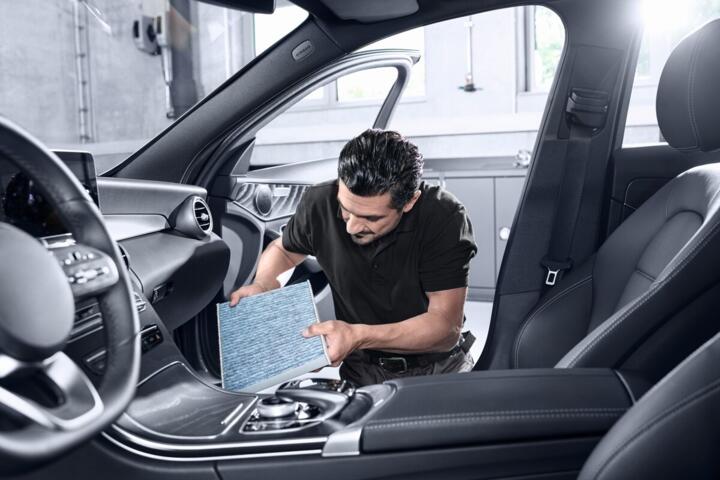
For a quick check, remove the filter and hold it under a light. A loaded filter often shows clogged pleats and reduced translucency. If the filter is already hard to see through, airflow restriction is likely. I’ve seen owners wait for a “smell test,” then discover the filter was already visibly packed—frankly, the smell arrives late.
Choose The Right Filter Type
Cabin filters come in particle-only and particle-plus-carbon versions. Particle-only filters target dust and pollen; carbon media targets some odors and certain gaseous compounds. Carbon does not remove carbon monoxide, and it does not stop all exhaust gases from entering. If your main concern is allergies, a high-quality particle filter often matters more than carbon.
Look for a filter that matches the vehicle’s dimensions and airflow direction markings. Installing it backward or forcing it into a housing can create bypass gaps. On one 2019 model I serviced for a friend, the arrow direction on the frame mattered; the housing would not seal correctly when the filter was flipped, and the HVAC pulled unfiltered air around the edges.
Replace With Clean Handling
Before removing the old filter, note the housing layout and any clips. Use a flashlight and take a quick photo with your phone so the orientation matches on reassembly. Wear a dust mask if the old filter looks heavily loaded; the debris can be irritating. Vacuum the filter cavity if the housing allows it, since loose leaves and grit can block airflow even after a new filter is installed.
After replacement, run the HVAC on fan for a few minutes with windows closed. If you notice a new odor, check for a mis-seated filter or a damp area in the HVAC intake. Some vehicles have a pollen filter housing that traps moisture; if the cabin smells persist, the root cause may be a wet evaporator drain or contaminated cabin surfaces, not the filter alone.
Watch Symptoms That Point To Restriction
Defrost performance is a practical indicator because it depends on airflow through the HVAC core. If the windshield clears slower than usual, the filter may be restricted, especially when the fan speed is already high. Reduced airflow from the vents, a persistent musty smell when switching from fresh air to recirculation, and visible dust around the cabin air intake can also point to filtration issues.
Keep the HVAC mode logic in mind. Recirculation reduces outside air intake, so the filter’s effect on odor and particles may feel weaker when recirculation is active. When you switch back to fresh air and the symptoms worsen, the cabin filter and intake path become more relevant. This pattern helps you avoid blaming the filter for problems that start only when the system is recirculating.
Case Examples From Realistic Scenarios
Construction Dust Commute
A driver commutes past roadwork and parks under dusty conditions. The cabin filter interval in the manual is 20,000 miles, and the driver follows it for two years because no warning appears. During a cold snap, the defrost takes longer than before, and the vent airflow feels weaker on high fan. The replacement filter shows dark, clogged pleats, and the housing cavity contains fine grit. After replacement, defrost response improves, and the driver shortens the inspection interval to every 8–10 months for that route.
Wildfire Season Odor Confusion
A family notices a smoky smell during wildfire season and assumes the cabin filter will “solve” it. They install a carbon cabin filter but still smell smoke when driving with fresh air mode. The filter is not the only pathway for odor, since smoke contains a mix of particles and gases, and carbon media saturates over time. The family also finds dampness near the HVAC intake after heavy rain, which contributes to a musty overlay. They replace the filter again after the smoke event and address the moisture source, which reduces the lingering odor more than repeated filter swaps alone.
Comparison Checklist For Service
| Situation | What To Check | Likely Outcome | Next Step |
|---|---|---|---|
| Allergy season | Filter media loading and seal fit | Particle filtration improves comfort | Use a high-quality particle filter; inspect every 6–12 months |
| Smoky air | Carbon saturation and HVAC mode | Odor reduction may fade as carbon loads | Switch to recirculation during peak smoke; replace after the event |
| Weak defrost | Airflow restriction signs | New filter restores airflow if housing is clean | Replace filter; vacuum cavity; verify fan operation |
| Musty smell | Moisture sources and drain condition | Filter alone may not fix damp odors | Inspect for dampness; address HVAC moisture before repeated filter swaps |
Common Mistakes That Delay Fixes
One frequent mistake is replacing the cabin filter without checking the housing seal. Even a correctly sized filter can leave bypass gaps if clips are misaligned or the frame is forced. That bypass can route unfiltered air around the media, so symptoms persist while the new filter looks clean.
Another mistake is choosing a carbon filter for every odor complaint. Carbon media helps with some odors, yet it does not solve dampness, mold growth, or contaminated cabin surfaces. If the smell appears after rain or only after the HVAC runs for a while, the moisture source often matters more than the filter type.
Owners also confuse cabin air filtration with cabin air quality sensors. Some vehicles display particulate or air quality readings, but those readings do not guarantee the filter is fresh or that the sensor is calibrated. A sensor can be clean while the filter is clogged, and a clogged filter can still reduce airflow without triggering a sensor warning.
Finally, people sometimes reuse the old filter frame or damage the pleats during removal. A bent pleat can reduce effective surface area and create uneven airflow. If the filter looks torn or the pleats are crushed, replacement with a new, correctly oriented filter is the safer path.
FAQ
How Often Should I Replace It?
Use the owner’s manual interval as a baseline, then shorten it for dusty commutes, wildfire smoke exposure, or heavy use of fresh-air mode. Many drivers inspect the filter every 6–12 months and replace it when the media looks dark or clogged.
Do Cabin Filters Remove Smoke?
Cabin filters can reduce some smoke particles, and carbon media can reduce certain odor molecules. Smoke also includes gases and very fine particles that may pass through depending on filter design and saturation, so odor and exposure may not drop to zero.
Why No Warning Light Shows Up?
Most vehicles do not measure cabin filter restriction directly. HVAC performance changes can be subtle, so the system often continues operating until airflow feels weak or defrost performance drops.
Can A New Filter Fix Musty Smells?
A new filter can help if the smell comes from trapped debris, but musty odors often come from moisture in the HVAC system or damp cabin materials. If the smell returns quickly after replacement, inspect for moisture and drainage issues.
Is Recirculation Better For Allergies?
Recirculation reduces outside air intake, which can lower pollen entry during high pollen periods. Fresh-air mode can still be needed for humidity control, and the cabin filter still affects air quality when outside air is used.
Author's Insight
Cabin air filters get forgotten because they rarely trigger a direct alert and because their performance depends on local air exposure, not just mileage. The HVAC system’s behavior—fan strength, recirculation logic, and defrost demand—changes how quickly restriction becomes noticeable. A practical approach combines the manual interval with visual inspection and symptom checks like defrost speed. On a maintenance log I reviewed dated 2024-11, the biggest improvements came from aligning filter checks with seasonal exposure rather than sticking to a single yearly schedule.
Filter choice also deserves realism: particle filtration and odor reduction are different functions, and carbon media saturates. When odors persist after filter replacement, moisture and cabin contamination often explain the remaining problem more than the filter media type.
Key Takeaways
- Cabin air filters trap particles and sometimes odors, but they do not disinfect air or block all smoke gases.
- Skipped maintenance happens because most cars do not warn about restriction; symptoms show up through airflow and defrost performance.
- Inspect every 6–12 months under heavy dust or smoke exposure, and replace when pleats look dark, matted, or unevenly loaded.
- Choose filter type based on the complaint: particle filtration for allergies, carbon for some odors, and moisture checks for musty smells.
- Confirm correct orientation and seal fit during replacement to prevent bypass airflow.