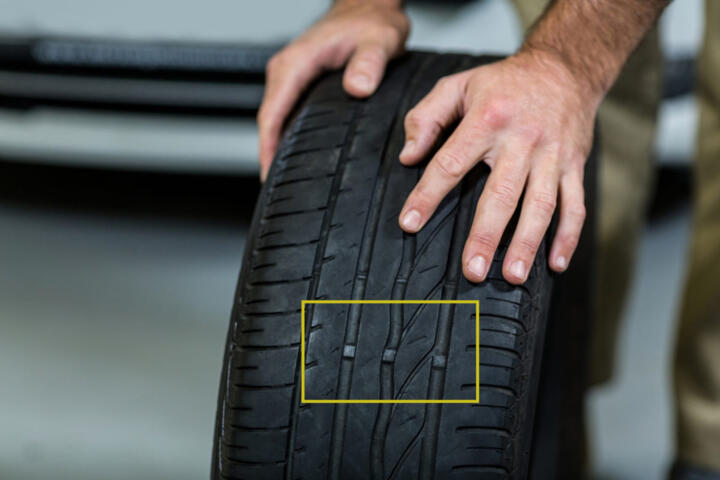
Uneven wear: what it means
Uneven tire wear is a symptom, not a mystery. It usually points to alignment, suspension, braking, or tire-pressure issues that change how the tread contacts the road.
In the U.S., the National Highway Traffic Safety Administration reports tire-related crashes are a persistent problem, and underinflation is a frequent contributor. Separately, the U.S. Department of Energy notes that tire pressure that is 20% low can cut fuel economy by about 10%—a reminder that pressure mistakes affect more than tread life.
Vehicle type changes the wear story. A loaded minivan with a rear beam axle behaves differently than a lifted pickup with a live axle, and a front-wheel-drive sedan wears the driven tires differently than an all-wheel-drive crossover.
Start with a quick fact check: measure tread depth in 3–5 spots per tire, not just the “worst” area. If you see a 3 mm difference across the same tire, treat it as a real pattern and inspect the cause.
Skip the “eyeballing” habit. It hides the difference between normal shoulder wear and a misalignment that keeps getting worse.
Common causes and costs
People often misread uneven wear as “bad tires” instead of a setup issue. Tires can be blamed when the real culprit is toe drift, worn control-arm bushings, or a brake caliper that drags only after heat-soak.
Consequences show up fast. A tire with worn shoulders can lose steering response, and a tire with cupping can create a vibration that feels like a wheel-balance problem.
Real-world example: a commuter drives 18,000 miles per year and rotates tires every 10,000 miles. If the alignment is off by a small amount, the front tires can still develop a noticeable inside-edge wear pattern by 12,000–15,000 miles, even with rotation.
Skip the “it’ll wear evenly later” idea. The tread geometry keeps following the same contact patch until you fix the underlying cause.
Financially, the math is blunt. Replacing a set of four tires early can cost hundreds of dollars, and if the wear is uneven, you can’t safely extend life by replacing only one pair.
Warranty coverage varies by brand and tread-wear policy. Many warranties require proof of correct inflation, rotation, and alignment checks, so ignoring the pattern can turn a warranty claim into a denial.
Spot patterns, then fix them
Measure tread depth correctly
What to do: use a tread depth gauge and record measurements at the inside shoulder, center, and outside shoulder. Take readings at two points around the tire, then average them.
Why it works: tread depth differences map to the contact patch. Center wear usually points to overinflation or highway-only driving; shoulder wear points to underinflation or alignment.
What it looks like: a tire that is 6/32 in the center and 3/32 on the inside shoulder is not “normal road wear.” On many passenger tires, 2/32 to 3/32 changes can appear within 20,000 miles if the cause persists.
Tools: a simple gauge is enough; a phone photo with a ruler can help track changes between visits. I keep a small notebook in the glovebox—version 2.1 of my template is still the same, just fewer columns.
Numbers to watch: if any tire differs by 3 mm (about 4/32) from its own opposite shoulder, inspect alignment and pressure history.
Check for feathering and direction
What to do: run your hand across the tread blocks. Use light pressure and feel for a “catch” on one side of the block edge.
Why it works: feathering often indicates toe misalignment. Toe changes scrub the tread laterally, creating a saw-tooth feel.
What it looks like: inside-edge feathering on a front tire is common after an impact, pothole, or curb strike. The wear can start as a subtle texture change before it becomes a visible bald strip.
Tools/services: a shop alignment check is the next step. Ask for toe and camber readings, not just a pass/fail printout.
Outcome target: after correction, the new wear pattern should slow within 1–2 rotation intervals, often around 5,000–10,000 miles depending on driving.
Identify cupping and vibration
What to do: look for scallops (high-low repeating dips) across the tread. Then note whether the steering wheel or seat vibrates at 55–75 mph.
Why it works: cupping frequently ties to worn shocks/struts, bent wheels, or a tire with a damaged belt. The tread face bounces against the road, creating a repeating pattern.
What it looks like: you may see “waves” on the tread blocks, not just a worn edge. The tire can still have decent depth while feeling rough.
Tools: a straightedge and a visual inspection for sidewall bulges help. If you have access, check wheel runout; bent rims can cause a repeating vibration that balance weights can’t fix.
Numbers to consider: if the pattern appears within 15,000–25,000 miles and suspension components are near their service interval, suspect damping first.
Use pressure and temperature data
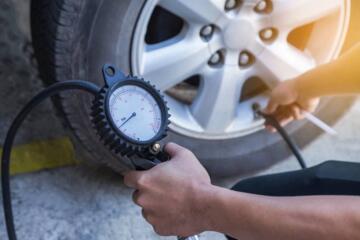
What to do: measure tire pressure when tires are cold, then compare to the door-jamb placard. Record the date and mileage.
Why it works: underinflation increases shoulder wear; overinflation increases center wear. Temperature swings also change pressure, so “hot” readings mislead.
What it looks like: a tire that wears the outer shoulders faster often correlates with chronic low pressure or heavy cornering loads.
Tools: a calibrated gauge matters. Many cheap gauges drift; I check mine against a shop gauge once per year.
Numbers to watch: a 20% underinflation can reduce fuel economy by about 10% per the U.S. Department of Energy, and it accelerates tread wear.
Inspect camber and suspension wear
What to do: check for uneven shoulder wear that stays on the same side over time. Then inspect suspension components for play at the ball joints, tie rods, and control-arm bushings.
Why it works: camber changes how the tire stands on the road. Worn bushings can let the wheel tilt under load, creating inside or outside wear that rotation can’t fix.
What it looks like: persistent inside shoulder wear on both front tires can point to negative camber beyond spec. On some vehicles, like a 2.0L turbo compact with a MacPherson strut front, small geometry changes can show up quickly.
Tools/services: a suspension inspection with a pry bar and torque check. Alignment should follow any suspension replacement.
Outcome target: after correcting camber and replacing worn joints, tread depth should stop diverging across shoulders within about 10,000 miles.
Look for brake-related patterns
What to do: inspect tread for localized wear near the same circumferential spots. Then check for brake pull, steering drift, or a caliper that runs hot after driving.
Why it works: dragging brakes can create patchy wear and sometimes a “flat spot” feel. Heat can also damage tire belts.
What it looks like: one tire with a repeating pattern around the circumference can indicate a sticking caliper or uneven pad material transfer.
Tools/services: an infrared thermometer helps after a short drive. Shops can measure rotor thickness variation and caliper slide movement.
Numbers to consider: if you see rotor thickness variation beyond spec or pad wear that differs side-to-side, expect faster tire wear on the affected corner.
Rotate with a plan, not a guess
What to do: follow the vehicle’s rotation pattern and interval. Directional and staggered-width setups often limit rotation options.
Why it works: rotation spreads wear from driven positions. It does not correct alignment or pressure problems, but it can slow overall tread loss.
What it looks like: if only the front tires show inside-edge wear, rotation may move the problem to the rear only if the cause is vehicle-wide; if it stays front-only, the issue is likely front geometry or brakes.
Tools: a tire log with dates and mileage. I still use a spreadsheet because it tracks left/right positions when tires are swapped.
Outcome target: with correct rotation, tread depth spread across the set should shrink over 2–3 intervals, assuming the underlying cause is fixed.
Confirm with alignment specs
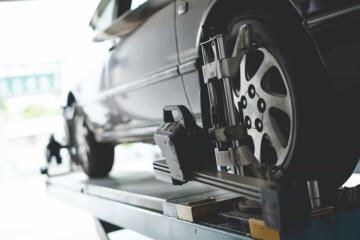
What to do: after any curb hit, pothole impact, or steering vibration, schedule an alignment check. Request the actual numbers for toe and camber.
Why it works: toe changes can scrub tread quickly. Camber affects shoulder wear, especially on vehicles with wider front tracks.
What it looks like: toe-out on the front axle often creates outside-edge wear on one side and inside-edge wear on the other, depending on the direction of the error.
Tools/services: a modern alignment rack with printouts. If you drive a 3.5L V6 crossover or a 2.0L four-cylinder sedan, the specs differ by trim, so use the vehicle’s alignment sheet.
Numbers to watch: even small toe errors can show up as measurable tread differences within 10,000 miles.
Mini case studies
Fleet sedan: inside wear
Company: a small delivery fleet using a 2.0L turbo front-wheel-drive sedan. Problem: two front tires developed inside-edge wear after 14,000 miles, with a 4/32 tread-depth difference between inside and center.
What they did: they stopped rotating on schedule and instead measured cold pressures weekly, then ordered an alignment after a curb strike report. They also replaced a worn inner tie-rod end.
Result: after alignment and tie-rod replacement, the tread-depth spread dropped to about 1/32 over the next 10,000 miles. Tire replacement was delayed by roughly 8,000 miles, saving an estimated $450–$700 per vehicle depending on tire price.
Skip the “rotation only” response. It spreads wear but doesn’t fix toe scrub.
Family SUV: cupping and heat
Company: a family SUV with a 3.5L V6 and all-wheel drive, driven on mixed highway and winter roads. Problem: the front tires showed cupping and the steering wheel vibrated around 65 mph.
What they did: they checked wheel runout, replaced both front struts, and balanced with a road-force machine. They also verified tire age and removed a tire with a belt defect.
Result: vibration dropped noticeably after the strut replacement, and tread wear became more even. The family avoided a second set of tires within 20,000 miles, which can mean $600–$1,000 in avoided tire cost depending on size.
Outcome depends on the cause. If the belt is damaged, no alignment fix will restore the tread pattern.
Checklist for quick diagnosis
| Wear pattern | Most likely cause | What to check next | Typical fix |
|---|---|---|---|
| Inside shoulder worn | Camber or toe-in | Alignment numbers, suspension play | Alignment correction, worn joints |
| Outside shoulder worn | Toe-out or low pressure | Cold pressure, toe spec | Set pressure, alignment |
| Center worn | Overinflation | Door-jamb pressure vs measured | Adjust pressure, recheck weekly |
| Feathering | Toe misalignment | Hand test, alignment rack | Toe correction, tie-rod parts |
| Cupping | Suspension/belt issue | Strut/shock condition, runout | Replace damping, road-force balance |
Skip the “rotate and hope” step. Use the pattern to decide whether you need alignment, suspension work, or a pressure reset.
Common mistakes and fixes
Ignoring tread depth numbers
Why it happens: people check tread with a quick glance, then forget the baseline. A tire can look “fine” while the inside shoulder drops faster.
Impact: you lose the chance to correct alignment early, and the tire may reach replacement sooner. That also raises ownership costs because you often replace in pairs.
How to avoid it: measure 3–5 points per tire and record dates. If you drive a 1.8L hybrid or a 2.5L four-cylinder, the wear rate still varies by axle load and driving style.
Setting pressure from a hot gauge
Why it happens: many drivers check pressure right after driving, then adjust based on a warm reading. Temperature changes pressure by a noticeable amount.
Impact: you can overinflate or underinflate, which shifts the wear pattern. Over time, the center or shoulders wear faster.
How to avoid it: check cold pressure, then recheck after 1 week. If your gauge reads differently than a shop gauge, calibrate or replace it.
Rotating the wrong way
Why it happens: staggered tire sizes and directional tread patterns restrict rotation. Some owners rotate in a way that violates the tire’s design.
Impact: you can worsen uneven wear or create noise. Directional tires also have a specific rotation direction.
How to avoid it: follow the vehicle owner’s manual rotation pattern. If you have a 19-inch setup on a crossover, confirm whether the tires are same size front and rear.
Replacing tires before alignment
Why it happens: tires are the visible part, so they get replaced first. Shops sometimes recommend alignment after tire replacement, but waiting costs tread life.
Impact: new tires can develop the same inside-edge wear within weeks if toe or camber remains off. That shortens tread life and raises depreciation risk because the vehicle’s tire condition affects resale.
How to avoid it: if you see inside/outside shoulder wear, schedule alignment before buying a second set. After suspension work, alignment should follow.
Chasing vibration with balance only
Why it happens: vibration feels like a wheel-balance issue, so people start there. Balance helps, but it doesn’t fix worn struts or a cupped tread pattern.
Impact: you pay for repeated balancing while the real cause continues. Cupping can also create road noise that gets worse as tread blocks degrade.
How to avoid it: if cupping exists, inspect damping and wheel runout. A road-force balance can reveal a tire with a belt defect, which is common on tires that were hit or stored poorly.
FAQ
How many tread measurements matter?
Measure at least three points per tire: inside shoulder, center, and outside shoulder. If you want a stronger diagnosis, measure two locations around the circumference and average them. A difference of about 3 mm (roughly 4/32) across shoulders on the same tire is a strong signal that the contact patch is changing. If the difference is smaller, you may still have a developing issue, especially on vehicles with frequent turns or heavy loads. Record the numbers so you can see whether the pattern worsens between rotations.
Can uneven wear happen with correct pressure?
Yes. Pressure affects wear, but alignment and suspension geometry also control how the tread sits on the road. A tire can wear on one shoulder even when pressure matches the door placard, especially with toe misalignment or worn control-arm bushings. Brake issues can create localized wear that pressure cannot fix. If you measure cold pressure and it matches spec, the next step is an alignment check and a suspension inspection. If you feel vibration, inspect for cupping and wheel runout too, because damping problems can mimic balance issues.
Does tire rotation fix alignment problems?
Rotation spreads wear across positions, but it does not correct the underlying geometry. If toe or camber is off, the tire will still scrub in the same direction relative to the vehicle. Rotation can reduce the rate at which the set reaches replacement, but it cannot stop the pattern from returning. A practical approach is to rotate on schedule only after you correct alignment and pressure. If uneven wear returns in the same axle or corner, suspect a persistent suspension or brake component issue.
What wear pattern points to toe issues?
Toe issues often show up as feathering or a saw-tooth feel across tread blocks. You may also see inside-edge wear on one side and outside-edge wear on the other, depending on whether the axle is toe-in or toe-out. The hand test is useful: run your fingers across the tread block edges and feel for a catch. Toe problems can come from impacts, potholes, or worn tie-rod ends. The confirmation step is an alignment printout showing toe values against the vehicle’s target range.
When should I stop driving and inspect immediately?
Inspect immediately if you see a bulge, exposed cords, or a tread separation, because those are safety-critical tire failures. Also inspect soon if you feel steering pull, strong vibration, or braking that causes the car to drift. If uneven wear is paired with a hot brake smell or a caliper that runs hot after a short drive, stop and check the brake system. If tread depth drops quickly—such as a noticeable shoulder loss within a few thousand miles—schedule alignment and suspension checks rather than waiting for the next rotation interval.
Author's Insight
Uneven tire wear usually comes from a repeatable cause: toe drift, camber change, pressure mismatch, or a damping/brake problem. The fastest way to narrow it down is to combine measurements with a pattern read, not just a visual glance.
Alignment printouts matter because “within spec” can still be off enough to scrub tread on certain vehicles, especially wider-track crossovers and loaded-duty setups.
When cupping shows up, suspension condition often explains it more than wheel balance. A road-force balance can help, but it rarely fixes worn struts or a belt defect.
On a 2.5L four-cylinder sedan or a 3.5L V6 SUV, the wear rate still depends on how the car is driven and loaded, so tracking tread depth over 10,000-mile intervals gives better answers than one-off checks.
Key takeaways
Measure tread depth in multiple spots and cold-check tire pressure against the door-jamb placard. Use the wear pattern—inside shoulder, outside shoulder, center, feathering, or cupping—to decide whether you need alignment, suspension work, or brake inspection.
Next steps: record your readings, then schedule an alignment if toe or camber patterns appear. If you see cupping or vibration, inspect struts/shocks and wheel runout before buying another set of tires.
Limits: rotation helps spread wear, but it does not correct geometry errors. Warranty coverage often requires proof of correct inflation and rotation, so keep your notes.
Seek professional inspection promptly if you find bulges, cords, or rapid tread loss. If the vehicle pulls under braking or vibrates strongly, stop driving and have the tires and brakes checked first.