Portable jump starters, basics
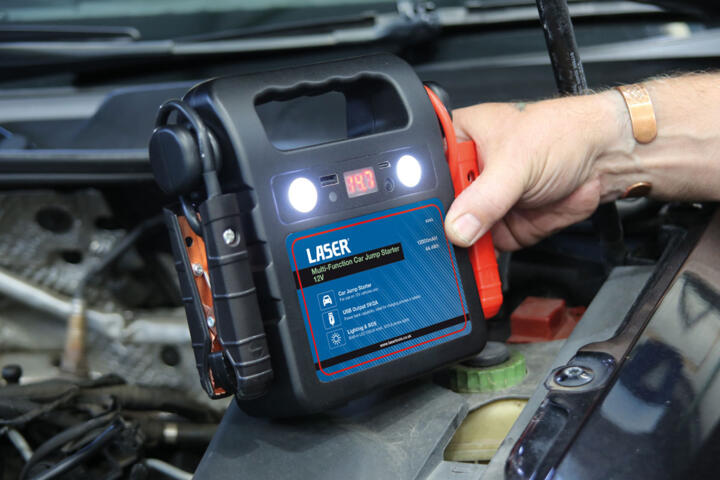
A portable jump starter is a battery with thick cables and clamps that can crank an engine without a second vehicle. The key numbers are starting current and battery capacity; many units advertise “peak amps,” but cranking depends on sustained output. Most passenger cars use 12-volt systems, and a typical starter motor draws several hundred amps for short bursts.
Vehicle type changes the demand. A 2.0L turbo engine may crank differently than a 5.3L V8, and cold weather multiplies the load. In practice, a weak battery plus cold soak can turn a routine start into a 10–20 second cranking attempt, then a rest, then another attempt.
Skip the “peak-only” listings. They inflate the number you see, while the real test is how long the unit holds current. For reference, many consumer jump starters target around 400–1,000 peak amps, yet the better units also publish a usable cranking spec or at least a battery capacity in amp-hours.
Battery chemistry matters too. Lithium-ion packs generally weigh less than older lead-acid units, but they also need correct charging and storage temperatures. If you store the pack in a garage that drops below freezing, expect reduced output until the pack warms up.
Ownership costs show up fast. A $60–$120 unit that fails after a season costs more than a $200–$300 unit that still cranks after a year, especially when you factor towing fees and lost time. If you buy for a family, plan for one pack per vehicle or per household parking spot, because sharing across cars often turns into “who has the cables” on a bad day.
Common pain points buyers hit
People buy by brand name or by the biggest “peak amps” number on the box. They also assume every clamp fits every battery post, which breaks down on modern cars with recessed terminals or plastic covers. Another frequent miss is cable length; a short lead forces you to position the pack awkwardly near hot exhaust manifolds.
Consequences show up as repeated failed starts. A jump starter that can’t deliver enough current may still show lights or a battery meter, then stall during cranking. That wastes time and can leave you stranded while the pack cools and the engine control module resets.
Skip the “one-size-fits-all” assumption. It fails when you jump a diesel or a large displacement gasoline engine. Diesel glow systems and higher compression loads can require more sustained current, and some jump starters that work on a 2.5L sedan struggle on a 3.0L diesel.
Financial impact is real. A local tow can cost roughly $100–$300 depending on distance and region, and that cost repeats if the starter pack is underpowered. If the car is a work vehicle, downtime can add another layer of cost, even when the repair is minor.
Real-world situations are predictable. A grocery run ends with a click-no-crank, a delivery van sits overnight with a parasitic draw, or a winter road trip starts with a battery that already lost capacity. In each case, the jump starter must deliver the first crank reliably, not just “power on” the accessories.
Features to look for, with numbers
Cranking output you can trust
Look for a stated cranking current that matches your engine size and climate. Many listings show “peak amps,” but cranking is a short, high-draw event, so sustained output matters. For a typical 12V gasoline engine, a unit rated around 600–1,000 peak amps often covers many 2.0L–3.5L applications, but cold weather and older batteries can push the requirement higher.
Skip the marketing-only spec. It sounds precise, yet it may not reflect the current the pack can hold for the full crank. In practice, choose a unit that publishes battery capacity (often in Wh or amp-hours) and includes a recommended engine size range.
What it looks like in practice: the pack starts the engine on the first or second attempt, then you disconnect without the unit shutting down. If the unit’s display drops to zero during cranking, it’s underpowered for your use case.
Battery capacity and chemistry
Battery capacity affects how many attempts you get before the pack needs charging. Lithium-ion packs often list watt-hours (Wh), which helps compare energy content across models. A higher Wh rating usually translates to more jump cycles, especially when you repeat starts after short drives.
Skip the “fully charged” label. It ignores how quickly capacity drops in cold storage, which is where jump starters get tested. Store the pack indoors when possible, and warm it to near room temperature before use if it’s been in a freezing garage.
Maintenance consideration: lithium packs have fewer routine maintenance tasks than lead-acid, but they still need correct charging and periodic checks. Some units include a low-voltage protection mode that stops charging if the pack is stored too long at low charge.
Clamp design and cable reach
Clamps should grip securely on battery posts without slipping. Look for insulated, thick cables and clamps that can reach from the pack location to the battery terminals without stretching. Cable length matters on cars where the battery sits behind trim panels or in the trunk.
Skip short leads. They force you to place the pack dangerously close to moving parts or hot surfaces. In practice, a 2–3 meter cable length is more forgiving than the 1 meter leads found on some compact units.
What it looks like: you can open the hood, set the pack on a stable surface, and connect red to positive and black to negative without crossing cables over the engine bay. If the clamps are too bulky, they may not fit on smaller posts.
Safety protections that matter
Good jump starters include reverse-polarity protection and short-circuit protection. Many also use spark-reduction circuitry, which reduces the chance of a visible arc when connecting. These features matter because battery terminals can be hard to access, and a mis-connection happens under stress.
Skip units that only list “protection” without naming what it protects against. Vague claims make it hard to judge risk. In practice, a unit with proper protection should still work after a correct connection, and it should not heat excessively during a crank attempt.
Safety detail: avoid connecting the black clamp to a random metal point unless the manual specifies a ground location. Some vehicles route ground through modules, and the wrong point can create a fault.
Charging options and limitations
Check how the jump starter recharges and how long it takes. Many units charge from a wall outlet, and some include a 12V car charger lead, but the latter may charge slowly. If you rely on a vehicle outlet, confirm the input voltage range and charging current in the manual.
Skip “fast charge” promises without a time estimate. Charging time affects whether the pack is ready for the next trip. For example, a pack that takes 8–12 hours from a wall outlet may be fine for home storage but not for a same-day road trip.
Charging limitation to watch: some packs stop charging when the internal temperature is out of range. That can happen after repeated use or if the pack sits in a hot trunk.
Voltage compatibility and battery types
Most portable jump starters are for 12V vehicles only. Confirm the unit supports 12V systems and does not claim compatibility with 24V trucks unless it explicitly states it. A 24V system needs a different output strategy, and using a 12V-only pack can damage the unit or the vehicle electronics.
Skip the assumption that “it starts cars” means it starts everything. A 24V diesel bus or a heavy-duty truck requires a dedicated 24V jump solution. For family use, stick to 12V passenger cars and light trucks unless the manual clearly covers your vehicle.
What it looks like: the unit’s label and manual list supported voltages and battery chemistries, and it includes a clear warning for 24V systems.
Extra outputs: USB and AC, with realism
USB ports can help run a phone or small device, but they don’t replace the jump function. If a unit includes an AC inverter, check the wattage and continuous rating, because cheap inverters often struggle with motor loads. A small 10–20W USB charger is common, while AC outputs vary widely.
Skip the “power station” pitch. A jump starter’s main job is cranking current, and extra features can reduce the energy budget. In practice, if you need to run a compressor or a laptop for hours, plan on a separate power source.
Cabin practicality note: a compact unit with a built-in flashlight and USB is easier to store in a door pocket or trunk bin, but bulky units can become “garage-only” gear.
Warranty, cycle life, and replacement policy
Warranty terms affect ownership cost more than the color of the casing. Look for a stated warranty length and whether it covers battery degradation or only defects. Some manufacturers offer 1–2 years, while others extend coverage, and the difference can matter if you use the pack seasonally.
Skip units with no clear warranty. A pack that loses capacity after 12 months can still show lights, then fail under load. In practice, a warranty that includes battery replacement or repair reduces the risk of buying a unit that becomes a dead weight.
Maintenance consideration: follow the manual’s storage charge guidance. Many lithium packs prefer being stored around a mid-level charge rather than fully empty for long periods.
Mini case studies with numbers
Fleet van winter no-start
A small delivery company had a 3.0L diesel van that failed to start after overnight parking in sub-freezing temperatures. The first jump attempt used a compact unit with only a peak-amp headline, and the pack’s meter dropped during cranking. The company switched to a higher-capacity 12V lithium jump starter rated for larger engines and added a routine: keep the pack in the heated office, not the van.
Result: the van started on the first crank in most mornings, and the number of tow calls fell from about 2 per month to about 0–1 per month. The company estimated towing and labor costs dropped by roughly $150–$300 monthly during the cold season. The pack still needed recharging weekly, which the dispatcher scheduled after route planning.
Family sedan battery drain
A household with a 2.5L gasoline sedan faced repeated no-start events after short trips. The original jump starter worked once, then failed on the next incident because it had been stored nearly empty for months. The family replaced it with a unit that had a clear battery capacity rating and a wall charger, then set a reminder to check charge every 30–45 days.
Result: the sedan started reliably after the first connection, and the family stopped paying for “service call” jump assistance. They estimated savings of about $60–$120 per year compared with repeated roadside help. The remaining risk was cold-weather performance, so they warmed the pack briefly before use, which reduced failed attempts.
Checklist and comparison points
| What to check | Why it matters | Target for typical use | Red flag |
|---|---|---|---|
| Cranking output spec | Determines whether it can crank under load | 12V units rated for your engine size | Peak amps only, no capacity or guidance |
| Battery capacity (Wh/amp-hours) | Affects number of attempts before recharge | Higher capacity for repeated starts | No capacity figure listed |
| Cable length | Reduces awkward positioning in the bay | Enough reach for your car layout | Very short leads on compact units |
| Safety protections | Limits damage from mis-connection | Reverse polarity and short-circuit protection | Protection described without specifics |
| Charging method | Controls readiness between events | Wall charging plus clear time estimate | Only slow 12V charging, no timing |
| Warranty terms | Reduces risk of early battery failure | At least 1 year, clear coverage | No warranty or unclear battery coverage |
Common mistakes and fixes
Buyers often test the jump starter by turning on the flashlight, then assume it’s ready. That checks the battery’s surface charge, not the ability to deliver hundreds of amps. Skip that test. Do a quick self-check using the unit’s indicator and follow the manual’s charge verification steps.
People also connect clamps in the wrong order. Reverse polarity can trigger protection, but repeated mis-connections can still stress electronics. Impact is usually a failed start and sometimes a tripped protection mode that requires a reset. Avoid it by practicing the clamp order with the hood open and the engine off, then keep the clamps clipped to the unit when not in use.
Another mistake is using the pack on a 24V vehicle. This happens when someone tries to jump a heavy-duty truck with a 12V unit. The impact can be damage to the jump starter and vehicle systems. Avoid it by checking the vehicle’s system voltage in the owner’s manual before buying, and by reading the jump starter’s voltage rating label.
Skip repeated long cranking attempts. They overheat the starter motor and drain the jump starter faster than expected. If the engine doesn’t start within a short crank window, stop and wait, then check battery condition and connections. The manual’s recommended rest time matters, even if it feels slow.
Some buyers ignore storage temperature. A pack left in a cold trunk can lose output, then fail during the first crank. Impact is a “dead” pack that still shows lights. Avoid it by storing indoors when possible, or by keeping the pack in the cabin area where temperatures track less extreme swings.
FAQ
What amps rating should I buy?
Use the engine size and climate as your starting point, not the largest “peak amps” number. Many 12V gasoline cars fall into the range where a mid-to-high rated unit can crank, but cold weather and an already-dead battery raise the demand. Look for battery capacity in Wh or amp-hours and any guidance tied to engine size. If the listing only shows peak amps with no capacity figure, treat it as a weaker signal and plan for more failed attempts in winter.
Can a jump starter damage my car?
Damage risk is tied to mis-connection, wrong voltage, and poor clamp contact. Reverse polarity protection reduces risk, but it does not make repeated mistakes harmless. Using a 12V jump starter on a 24V system is a different category of risk and can damage both the pack and vehicle electronics. Follow the manual’s connection order and ground-point instructions, and avoid clamping to thin sheet metal or moving parts.
How many jump attempts should it handle?
Expect fewer attempts in cold weather and when the battery is deeply discharged. Battery capacity (Wh/amp-hours) is the best clue to how many cranks you can get before recharging. Some units advertise “up to X jumps,” but those numbers assume ideal conditions and a specific crank duration. Plan for at least one reliable start when you need it, then treat additional attempts as a bonus rather than a guarantee.
Do I need an AC inverter output?
An AC inverter is useful for specific loads like charging a laptop, but it is not required for jump starting. Inverter wattage and continuous rating matter; small inverters may trip under motor loads like compressors. If you already carry a separate power bank or have a vehicle outlet charger, you may not need AC at all. Prioritize cranking output, clamp quality, and charging time first, because those determine whether the car starts when it matters.
How should I store it between uses?
Store the jump starter indoors when temperatures drop below freezing, because output can fall when the pack is cold. Follow the manual’s recommended state of charge for long-term storage; many lithium packs prefer not being left fully empty. Check the indicator every 30–45 days if it sits for months, and recharge when the unit indicates low charge. If the pack gets hot in a trunk, let it cool before charging, since some units block charging outside temperature limits.
Author's Insight
Portable jump starters succeed or fail based on sustained current under load, not the biggest “peak” number. Battery capacity in Wh and clear charging time often predict whether the pack is ready after weeks of storage. Clamp fit and cable length decide whether you can connect safely on recessed terminals, which is where people rush and make mistakes.
Warranty terms and stated voltage compatibility also matter for ownership cost. A pack that cranks once but loses capacity after a season turns into a recurring tow expense, and that pattern shows up in real household and fleet behavior.
Key takeaways
Buy a 12V jump starter sized to your engine and climate, with a stated battery capacity and safety protections that match real connection risks. Verify cable reach for your vehicle’s battery location, and check charging time so the pack stays ready between trips.
Next step: match the unit to your car’s battery access and your typical weather. If you drive a 3.0L diesel or a large V8, choose a higher-capacity model and plan for indoor storage in winter.
Limits exist. A jump starter cannot fix a failing alternator, a parasitic drain, or a worn starter; it only bridges the gap. If you see repeated no-starts, dim lights, or a battery that won’t hold charge, schedule diagnosis with a qualified shop.
Seek professional help if you smell burning, see melted wiring at the battery, or notice repeated fuse failures after jump attempts. Those signs point to a deeper electrical issue, not a “weak jump pack” problem.