The Decarbonization Paradox: Rethinking the Internal Combustion Engine
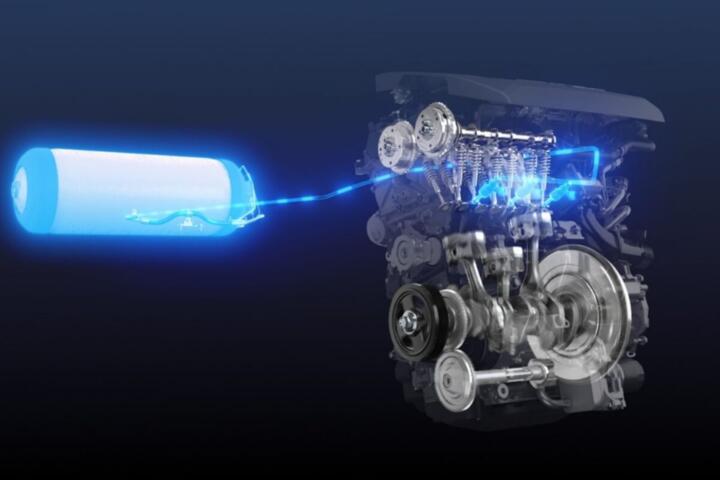
For years, the narrative has been binary: either we stick with gasoline or we switch to batteries. However, a middle path is emerging that utilizes the hardware we already understand. Hydrogen combustion involves taking a high-compression internal combustion engine and modifying the fuel delivery system to inject hydrogen instead of gasoline. Unlike Fuel Cell Electric Vehicles (FCEVs) which use hydrogen to create electricity to power a motor, this technology burns hydrogen to create mechanical force.
A key practical example is the development of the GR Corolla H2 Concept, which has been tested extensively in endurance racing like the Super Taikyu Series. This isn't just a lab experiment; it’s a high-stress environment where the engine must survive 24 hours of constant vibration and heat. Data from these races shows that hydrogen-powered ICEs can achieve power density comparable to gasoline engines, provided the cooling and injection systems are optimized.
One striking figure is the thermal efficiency potential. While traditional gasoline engines hover around 35% to 40% efficiency, specialized hydrogen ICEs are targeting 45% or higher. This is because hydrogen has a wide flammability limit and a high auto-ignition temperature, allowing for ultra-lean burn cycles that are difficult to achieve with petroleum-based fuels.
Pain Points: The Barriers to Mainstream Adoption
The Volumetric Density Dilemma
Hydrogen’s primary weakness is its physical size. Even when compressed to 700 bar (approx. 10,000 psi), it contains only about a quarter of the energy by volume compared to gasoline. For a standard passenger car, this means the fuel tanks take up a massive amount of space, often compromising trunk room or rear-seat comfort. If engineers cannot solve the packaging issue, hydrogen cars will remain niche curiosities or be limited to large commercial trucks.
The NOx Emissions Hurdle
A common misconception is that hydrogen combustion is 100% zero-emission. While it produces zero CO2, the high temperatures inside the combustion chamber cause nitrogen and oxygen from the intake air to react, forming Nitrogen Oxides (NOx). If left untreated, this contributes to smog and respiratory issues. Ignoring NOx management is a critical error that would lead to the same regulatory roadblocks currently facing diesel engines.
Infrastructure and "Chicken or Egg" Logistics
The lack of a refueling network is the most cited failure point. In the United States, hydrogen stations are almost exclusively located in California, with roughly 60 active retail stations. For a fleet manager or a private owner, the "refueling anxiety" is far greater than "range anxiety." Without a synchronized rollout of vehicles and fueling hubs, the hardware becomes a stranded asset.
Strategic Solutions for a Hydrogen-Powered Future
Precision Direct Injection and Lean-Burn Calibration
To maximize the potential of hydrogen, manufacturers are moving away from port injection toward high-pressure direct injection. This prevents "backfire," a common issue where hydrogen ignites in the intake manifold. By injecting hydrogen directly into the combustion chamber after the intake valves have closed, the engine can run with an excess of air.
This "lean burn" strategy reduces combustion temperatures, which naturally inhibits the formation of NOx. Brands like Bosch and Cummins are already developing specialized injectors that can handle the dry, non-lubricating nature of hydrogen gas. In practice, this results in a cleaner burn that requires smaller, lighter Selective Catalytic Reduction (SCR) systems to reach near-zero emissions.
Advanced Carbon Fiber Tank Integration
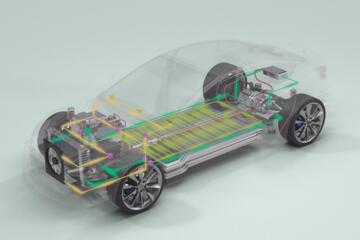
The solution to the density problem lies in 700-bar Type IV pressure vessels. These tanks use a plastic liner wrapped in high-strength carbon fiber. By integrating these tanks into the chassis—similar to how battery packs are placed in a "skateboard" platform—engineers can maintain a low center of gravity. For example, the Mirai uses three tanks positioned in a "T" shape to balance weight distribution.
Leveraging Existing Global Manufacturing Chains
One of the most powerful arguments for this technology is economic. Converting an existing engine factory to produce hydrogen-burning variants is significantly cheaper than building a multi-billion dollar "Gigafactory" for batteries. This protects millions of jobs in the precision machining and casting sectors. For countries like Japan or Germany, this isn't just about carbon; it's about industrial survival.
Dual-Fuel Retrofit Kits for Commercial Fleets
For heavy-duty applications, companies like Keyou or JCB are looking at conversion kits. These allow existing diesel trucks to run on a mix of hydrogen and diesel or pure hydrogen. This works because the heavy-duty cycle is predictable, and central hub refueling makes the lack of a public network irrelevant.
Cryogenic Liquid Hydrogen Storage
While 700-bar gas is the current standard, liquid hydrogen (LH2) offers significantly higher energy density. Recent tests with the GR Corolla transitioned from gaseous to liquid hydrogen, doubling the range without increasing tank size. This requires vacuum-insulated tanks that keep the fuel at -253°C. This is the "gold standard" for long-haul trucking, where every kilogram of saved weight translates to more cargo capacity.
Case Examples: Real-World Implementation
The 24-Hour Endurance Test
A major Japanese automaker entered a hydrogen-burning race car into the Fuji 24-Hour Race.
- Problem: Early versions suffered from slow refueling times and limited range.
- Action: The team switched to high-speed refueling nozzles and optimized the combustion timing to handle the rapid expansion of hydrogen.
- Result: Refueling time was slashed from five minutes to under 90 seconds, and the car completed the grueling race with zero mechanical failures related to the fuel system. This proved that hydrogen combustion can handle extreme thermal stress.
Heavy Equipment Decarbonization (JCB)
JCB, the UK-based construction giant, invested £100 million into hydrogen engines.
- Problem: Batteries are too heavy for excavators and take too long to charge on remote construction sites.
- Action: They developed a 4.8-liter hydrogen engine based on their existing diesel architecture.
- Result: The machines perform exactly like their diesel counterparts, with the same torque curves, but emit only steam from the tailpipe. This allows contractors to meet "Green Zone" city requirements without changing their workflow.
Comparison: Hydrogen ICE vs. Battery Electric (BEV)
| Feature | Hydrogen Combustion (ICE) | Battery Electric (BEV) |
|---|---|---|
| Refueling/Charging Time | 3–5 Minutes | 20–60 Minutes (Fast Charge) |
| Weight Impact | Minimal (Tanks are light) | High (Batteries are heavy) |
| Towing/Payload | Excellent (No range drop-off) | Poor (Significant range loss) |
| Cold Weather Performance | Consistent | Reduced range/efficiency |
| Infrastructure Maturity | Low (Needs stations) | High (Home/Grid charging) |
| Driving Experience | Traditional sound/vibration | Silent/Instant torque |
Common Implementation Mistakes
Using Standard Gasoline Internals
Hydrogen is prone to "hydrogen embrittlement," where the small molecules penetrate the structure of the metal, making it brittle. Using standard steel valves and pistons will lead to catastrophic engine failure within a few thousand miles. You must use specific alloys and hardened valve seats designed for dry combustion.
Ignoring the Lubrication Challenge
Hydrogen doesn't provide the lubricating properties that gasoline or diesel fuels do. This leads to increased wear on the cylinder walls. Expert engineers use specialized synthetic oils with low ash content to prevent deposits that could cause "pre-ignition" (the fuel igniting before the spark plug fires).
Over-complicating the Injection System
Many early adopters tried to use complex, expensive systems. The "lesson learned" from industry experts is that simplicity wins. Using a modified common-rail system with seals rated for gaseous fuel is more reliable than inventing entirely new fuel delivery architectures.
FAQ
Does a hydrogen engine sound like a normal car?
Yes. Because it uses the same four-stroke cycle, it retains the mechanical sound and vibration that enthusiasts love. It provides a familiar auditory experience that is completely missing from electric vehicles.
Is hydrogen combustion safer than gasoline?
Hydrogen is highly flammable but it is also the lightest element. In an accident, hydrogen escapes upward and dissipates at 20 meters per second, whereas gasoline pools under the car and creates a prolonged fire hazard. The 700-bar tanks are designed to survive high-speed impacts and even gunfire tests.
Can I convert my current car to run on hydrogen?
Technically yes, but practically no. While conversion kits exist, the high-pressure tanks are difficult to package in a car not designed for them. Furthermore, the ECU (engine control unit) requires a complete rewrite to handle hydrogen’s unique combustion properties.
What is the range of a hydrogen combustion car?
Current prototypes offer between 200 and 300 miles. However, as liquid hydrogen technology matures, we expect ranges to exceed 500 miles, making them superior to BEVs for long-distance travel.
How much does hydrogen fuel cost?
Currently, hydrogen is more expensive than gasoline, often priced around $13 to $16 per kilogram in California. However, as "Green Hydrogen" production scales via electrolysis, prices are projected to drop below $5 per kilogram by 2030, making it competitive with fossil fuels.
Author’s Insight
Having followed the development of alternative powertrains for over a decade, I’ve seen the pendulum swing from "hydrogen is a joke" to "hydrogen is essential." My takeaway is that we shouldn't be looking for a single winner. BEVs are perfect for city commuting, but the hydrogen ICE is the "soul" of the future for those who need to tow a boat, drive across a continent, or simply feel the vibration of a machine. My advice to fleet operators: start looking at hydrogen for your heavy-duty assets now, because the tax incentives for zero-emission combustion are coming sooner than you think.
Conclusion
The development of hydrogen combustion engines represents a pragmatic evolution rather than a forced revolution. By utilizing the existing strengths of internal combustion and marrying them with the clean-burning properties of hydrogen, manufacturers like Toyota are providing a vital alternative to full electrification. For the consumer, this means faster refueling and familiar performance; for the industry, it means a preserved supply chain and a faster path to true carbon neutrality. To stay ahead, focus on the development of "Green Hydrogen" infrastructure and the refinement of NOx-reduction technologies. The future of the car is not just electric—it is diverse.