The Evolution of Hands-Off Vehicular Control
Level 3 (L3) autonomy, as defined by the SAE (Society of Automotive Engineers), represents the "Conditional Automation" phase. Unlike Level 2 systems such as Tesla’s Autopilot or GM’s Super Cruise, which require constant driver supervision, L3 allows the person in the driver’s seat to disengage from the primary driving task under specific conditions. This means you can legally watch a movie or answer emails while the car manages steering, braking, and acceleration without a "nag" on the steering wheel.
A primary example of this is the Mercedes-Benz DRIVE PILOT system. Currently operational on specific stretches of highway in Germany and states like Nevada and California, it functions at speeds up to 60 km/h (37 mph) in heavy traffic density. The vehicle assumes full legal liability while the system is active—a massive shift in the automotive insurance paradigm. In 2024, data showed that L3 systems could potentially reduce rear-end collisions in congestion by over 40% due to the 0.1-millisecond reaction times of LiDAR sensors.
Critical Hurdles in Conditional Automation
The most dangerous element of L3 autonomy is the "Transfer of Control" (ToC). When the system encounters a scenario it cannot handle—such as faded lane markings or sudden construction—it gives the driver a window (usually 10 seconds) to take back the wheel. If the driver is deep in a book or a nap, those 10 seconds are fraught with risk. Many early testers fail to re-engage situational awareness quickly enough, leading to "automation surprise."
Another pain point is the legal "gray zone" of liability. In a Level 2 crash, the driver is always at fault. In Level 3, if the car is in control, the manufacturer is technically the "driver." This creates a massive litigation risk for brands like Audi, which famously pulled back its "Traffic Jam Pilot" due to global regulatory inconsistencies. Without a unified legal framework like the UN Regulation No. 157, manufacturers face a patchwork of local laws that make global deployment nearly impossible.
Strategic Implementation of Automated Systems
Redundant Sensor Fusion and LiDAR Integration
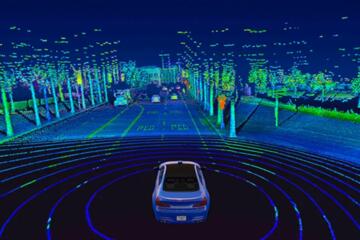
To achieve L3, a car cannot rely on cameras alone. It requires a "triple-threat" sensor suite: LiDAR, Radar, and High-Resolution Cameras. LiDAR provides a 3D point cloud of the environment that is unaffected by lighting conditions. For instance, the Luminar Iris sensor allows vehicles to see up to 250 meters ahead, identifying dark objects on a pitch-black highway that a camera-only system might miss.
High-Definition Mapping and Localization
L3 systems require HD maps with centimeter-level accuracy. Standard GPS (accurate to 3–5 meters) is insufficient. Systems must use services like HERE HD Live Map, which provides real-time updates on lane closures and speed limit changes. This allows the vehicle to "see" around corners or through hills, planning the handover process long before the driver is required to intervene.
Robust Driver Monitoring Systems (DMS)
An effective L3 system must watch the driver as closely as it watches the road. Using infrared cameras (like those from Seeing Machines), the car tracks eye movement and head position. If the DMS detects the driver has fallen asleep or is unresponsive during a handover request, the vehicle must be programmed to perform a "Minimum Risk Maneuver"—bringing the car to a controlled stop in its lane or on the shoulder and activating hazard lights.
Cybersecurity and Over-the-Air (OTA) Integrity
As cars become software-defined, they become targets. Compliance with ISO/SAE 21434 is mandatory for L3. This involves end-to-end encryption for all OTA updates. Companies like Blackberry QNX provide the foundational operating systems that ensure a hack on the infotainment system cannot bleed into the braking or steering controls.
Legal Compliance and Type Approval
Manufacturers must navigate the 1968 Vienna Convention on Road Traffic, which originally required a driver to be in control at all times. Recent amendments now allow for automated driving if the system can be overridden or switched off. To launch an L3 car, brands must secure "Type Approval" in each jurisdiction, proving their system meets rigorous safety benchmarks through millions of miles of simulated and real-world testing.
Real-World Implementation Cases
Case Study: The German Highway Pioneer
A major German luxury automaker became the first to receive sovereign approval for an L3 system. They integrated a "Drive Pilot" module using a combination of LiDAR, moisture sensors in wheel wells (to detect hydroplaning risks), and a redundant steering actuator.
- Problem: High liability risk in high-speed environments.
- Action: Restricted use to 60 km/h in heavy traffic and assumed all legal responsibility for the vehicle's actions during activation.
- Result: Zero reported at-fault accidents over 1 million kilometers of consumer use in the first 18 months of deployment.
Case Study: Sensor Integration in the Asian Market
A leading electric vehicle manufacturer in China utilized a dual-Orin NVIDIA chip setup to process 500+ TOPS (Tera Operations Per Second). They focused on "Urban L3," navigating complex city intersections rather than just highways.
- Problem: Excessive "phantom braking" in dense urban environments.
- Action: Implemented a transformer-based AI model that predicts pedestrian behavior 3 seconds into the future.
- Result: A 30% increase in system "uptime" (the duration the system stays active without a handover request) compared to their previous L2+ iteration.
Level 2 vs. Level 3 Comparison Framework
| Feature | Level 2 (Partial) | Level 3 (Conditional) |
|---|---|---|
| Monitoring | Driver must stay focused | Driver can perform secondary tasks |
| Liability | Driver is always responsible | Manufacturer may be responsible |
| Hands-on | Required (or frequent nags) | Hands-off for extended periods |
| Environmental | Driver must handle all objects | System handles most objects |
| Handover | Immediate intervention | Delayed (up to 10-15 seconds) |
| Hardware | Basic Radar/Cameras | LiDAR, HD Maps, Redundant Power |
Common Implementation Mistakes
One frequent error is overestimating the capability of vision-only systems. While cheaper to produce, they struggle with "edge cases" like heavy fog or direct sunlight "blinding" the lens. Always insist on multi-modal sensing. Another mistake is poor UI/UX design regarding the handover. If the alert is too subtle (a small beep), the driver may not react. Use a combination of haptic (seat vibration), auditory (loud alerts), and visual (LED strips on the dashboard) signals.
Many developers also neglect the "Minimum Risk Maneuver." If the driver doesn't take over, the car shouldn't just stop in the middle of a high-speed lane. It needs the logic and sensor range to safely navigate to a breakdown lane, which requires rear-facing long-range radar to ensure no one is approaching at high speed from behind.
FAQ
Can I sleep in a Level 3 autonomous car?
No. While you can take your eyes off the road to use a phone or watch a screen, you must be capable of taking control within a few seconds. Sleeping is currently only permitted in theoretical Level 4 or Level 5 vehicles.
Is Level 3 legal in the United States?
It is legal in specific states like Nevada and California, provided the manufacturer has certified the vehicle with the local DMV. There is currently no federal law prohibiting it, but it is regulated on a state-by-state basis.
What happens if a Level 3 car gets a speeding ticket?
If the system is engaged and functioning correctly, the manufacturer is generally responsible for the vehicle's behavior. However, most L3 systems are hard-coded to never exceed the posted speed limit detected via sign recognition and HD maps.
Does weather affect Level 3 performance?
Significantly. Most L3 systems will refuse to engage or will initiate a handover if they detect heavy rain, snow, or thick fog, as these conditions can degrade LiDAR and camera performance.
Which cars currently have Level 3 technology?
The Mercedes-Benz S-Class and EQS (equipped with DRIVE PILOT) are the primary consumers models available. BMW has also introduced similar capabilities in the 7 Series for specific markets like Germany.
Author’s Insight
In my years tracking automotive tech, the jump from L2 to L3 is less about software and more about trust. When I first tested a conditional system on the Autobahn, the "uncanny valley" feeling was intense—it takes about 20 minutes for the human brain to stop hovering its foot over the brake. My advice for manufacturers: focus on the "transparency" of the AI. If the car tells the driver why it’s asking for a handover (e.g., "Camera blocked by debris"), the user's trust remains intact even when the system fails.
Conclusion
The rise of Level 3 autonomy is a milestone that redefines our relationship with transportation. By combining LiDAR-heavy sensor suites, HD mapping, and clear legal liability frameworks, the industry is moving toward a future where "driving" is an optional hobby rather than a daily chore. To succeed, stakeholders must prioritize the safety of the handover process and advocate for harmonized global regulations. The tech is ready; the next step is ensuring the legal and human elements are equally synchronized.