Understanding the Shift to Solid-State Architecture
The current dominance of lithium-ion batteries relies on a liquid electrolyte to move ions between the anode and cathode. While effective, this liquid is flammable and limits how much energy we can pack into a specific volume. Solid-state technology replaces this liquid with a solid ceramic, glass, or polymer separator. This change isn't just a minor upgrade; it’s a fundamental reimagining of the battery’s internal physics that allows for the use of lithium-metal anodes.
In practical terms, imagine a vehicle like the current Tesla Model 3 Long Range. With its 82 kWh pack, it achieves roughly 340 miles. If swapped with a high-nickel solid-state pack of the same physical size, that range could theoretically jump to 600 miles or more. This is because solid electrolytes are much thinner and lighter than their liquid counterparts, allowing more active material to be squeezed into the same casing.
Industry data suggests that while current top-tier cells hover around 250–300 Wh/kg at the pack level, solid-state prototypes from companies like QuantumScape have demonstrated the potential to exceed 400 Wh/kg. Furthermore, the inherent safety of a non-flammable solid electrolyte removes the need for heavy, complex cooling systems, further increasing the vehicle's efficiency and reducing weight.
Critical Pain Points in Battery Evolution
The most significant barrier to widespread EV adoption remains "Range Anxiety," which is actually a two-part problem: the fear of running out of power and the frustration of slow "refueling" times. Current liquid-electrolyte batteries suffer from a narrow thermal window. If you charge them too fast, they overheat; if it's too cold, their chemistry sluggishly resists movement, leading to significantly reduced winter range—sometimes up to 30% or 40% loss in sub-zero temperatures.
Manufacturers currently over-engineer battery management systems (BMS) to prevent "dendrites." These are microscopic, needle-like lithium structures that grow through the liquid electrolyte. When a dendrite reaches the other side, it causes a short circuit, potentially leading to thermal runaway (fire). To prevent this, current EVs often throttle charging speeds once the battery reaches 80% capacity, adding precious minutes to every highway pit stop.
The consequence for the consumer is a "useless" buffer. You might buy a car with a 300-mile range, but for long trips, you really only use the middle 60% of the battery (from 20% to 80%) to avoid long wait times at the charger. This effectively turns a 300-mile car into a 180-mile car during active touring. This inefficiency is exactly what solid-state technology aims to eliminate by allowing a 0% to 100% charge cycle at consistent, ultra-high speeds.
Technical Solutions and Implementation Strategies
Solving the Interface Resistance Problem
One of the primary hurdles in solid-state development is ensuring the solid electrolyte stays in perfect contact with the electrodes. Unlike liquid, which flows into every nook and cranny, solids can lose contact as the battery expands and contracts during use. Companies like Toyota and Panasonic are utilizing sulfide-based electrolytes because they are relatively soft and can be compressed to maintain contact. This "stacking pressure" approach ensures that ions can move freely even after hundreds of cycles.
Utilizing High-Silicon and Lithium-Metal Anodes
To truly break the range barrier, we must move beyond graphite anodes. Solid electrolytes enable the use of pure lithium-metal anodes, which have a theoretical capacity ten times higher than graphite. In practice, this allows for much thinner cells. Solid Power, a Colorado-based developer, has been shipping 100 Ah cells to automotive partners for validation, proving that these high-capacity materials can be manufactured on existing roll-to-roll production lines with minor modifications.
Advanced Thermal Management Simplification
Because solid-state batteries are significantly more stable at high temperatures, the cooling architecture can be stripped back. This "passive safety" allows engineers to use the saved weight and space for more battery cells. For fleet operators, this means lower maintenance costs over the vehicle's lifespan. By removing the liquid cooling loops within the pack, the risk of "coolant leaks" causing electrical shorts is also eradicated.
Scaling Through Hybrid Electrolyte Systems
A middle-ground solution currently hitting the market involves "semi-solid" batteries. WeSee this in the Nio 150 kWh pack, which uses a hybrid electrolyte. This provides a bridge technology that offers 900+ km of range today while the industry perfects the fully "dry" solid-state manufacturing process. It utilizes a gel-like substance that offers better safety than pure liquid but is easier to manufacture than a pure ceramic plate.
Investment in Rapid Charging Infrastructure
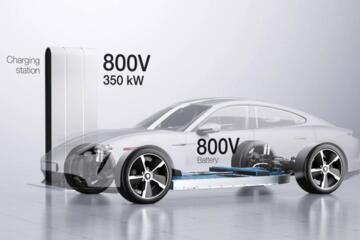
Solid-state batteries require chargers that can output 400 kW to 600 kW to truly shine. While Tesla’s V4 Superchargers and companies like Ionity are moving in this direction, the battery’s ability to accept high C-rates (the speed at which a battery charges relative to its capacity) is the key. Solid-state cells can theoretically handle a 5C charge rate, meaning a full charge in 12 minutes without the degradation seen in current lithium-ion cells.
Mini-Case Examples of Success
Case 1: The Luxury Long-Range Test
A prominent Chinese EV manufacturer recently completed a 1,000 km (621 mile) real-world drive on a single charge using a semi-solid-state 150 kWh battery pack. The vehicle maintained an average speed of 90 km/h in varied weather conditions.
- Company: Nio.
- Strategy: Implementation of a high-nickel cathode combined with a semi-solid electrolyte.
- Result: Achieved a range previously reserved for diesel long-haulers, proving that energy density over 360 Wh/kg is commercially viable.
Case 2: The Pilot Production Milestone
An American battery startup partnered with a major German automotive group to produce B-sample solid-state cells for vehicle integration.
- Company: QuantumScape (partnered with Volkswagen Group).
- Strategy: Using a proprietary ceramic separator that prevents dendrite growth even at low temperatures.
- Result: Test cells retained 95% of their capacity after 1,000 charging cycles, which equates to nearly 300,000 miles of driving—far exceeding the typical lifespan of a combustion engine.
Comparative Analysis of Battery Technologies
| Feature | Standard Li-ion (Liquid) | Semi-Solid State | All-Solid-State (ASSB) |
|---|---|---|---|
| Energy Density | 250–300 Wh/kg | 350–400 Wh/kg | 450–500+ Wh/kg |
| Charge Time (10-80%) | 25–45 Minutes | 15–20 Minutes | < 10 Minutes |
| Safety Profile | Flammable Electrolyte | Reduced Flammability | Non-Flammable |
| Operating Temp | 15°C to 35°C (Optimal) | -20°C to 60°C | -30°C to 100°C |
| Mass Production | Current Standard | Limited (2024-2025) | Projected 2027–2030 |
| Cost per kWh | ~$130 | ~$200+ | High (Initial Phase) |
Common Implementation Mistakes
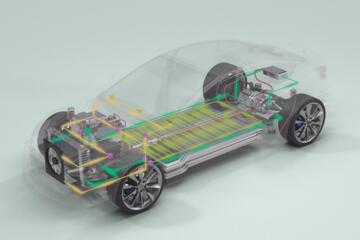
One major mistake is assuming solid-state batteries will be "plug-and-play" with existing EV chassis. Because these batteries require different pressure management—often needing several hundred PSI of internal pressure to keep the layers bonded—the battery pack housing must be redesigned. Manufacturers who try to retro-fit these cells into old battery trays often see premature failure or delamination of the solid layers.
Another error is ignoring the "cold-start" physics. Some solid-state chemistries, particularly polymer-based ones (like those used in some electric buses), actually need to be heated to 60°C before they become efficient. Expecting a solid-state car to perform perfectly at -10°C without a sophisticated pre-heating strategy is a recipe for disappointment. Buyers and engineers must verify the specific electrolyte type (sulfide vs. oxide vs. polymer) before making performance assumptions.
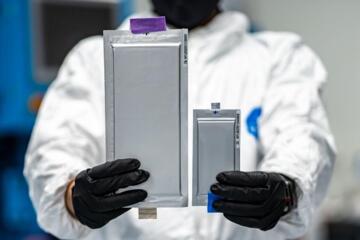
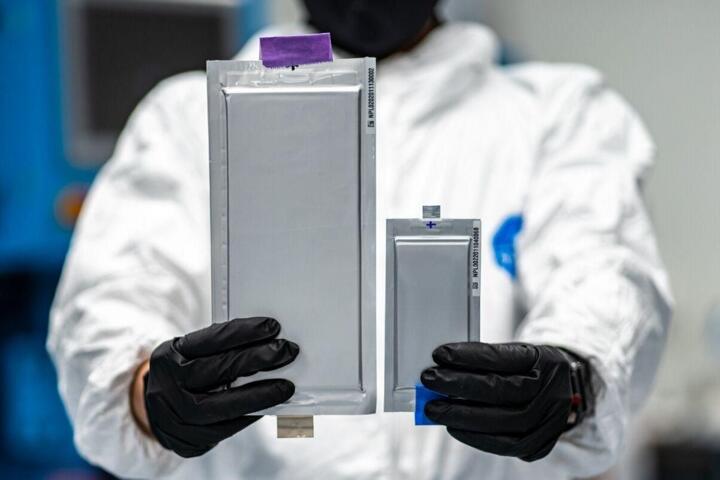
Finally, there is a tendency to over-hype the timeline. Moving from a lab-scale "pouch cell" the size of a credit card to a 100 kWh automotive-grade pack is an immense manufacturing challenge. Investors often mistake a "breakthrough" in the lab for "market readiness." Realistically, we are looking at a "halo car" phase where only $100,000+ luxury vehicles get this tech first, likely between 2026 and 2028.
FAQ
Are solid-state batteries actually fireproof?
While "fireproof" is a strong word, they are significantly safer. Because they lack the flammable organic solvents found in liquid batteries, they do not suffer from the same "oxygen-releasing" thermal runaway. Even if punctured, they are unlikely to explode or ignite.
Will my current EV become obsolete when solid-state arrives?
Not immediately. Liquid lithium-ion technology is still getting cheaper and better (e.g., LFP batteries). Solid-state will remain a premium feature for several years, similar to how carbon-fiber parts started in supercars before trickling down.
How much will a solid-state EV cost?
Initially, expect a 20% to 30% premium over current long-range EVs. However, as scaling occurs via "Giga-factories" dedicated to solid electrolytes, the reduction in cooling system complexity and smaller battery footprints will help equalize costs by the early 2030s.
Can solid-state batteries be recycled?
Yes. In fact, they may be easier to recycle because they don't contain the toxic liquid "soup" of traditional cells. The high concentration of valuable metals like lithium and nickel makes them prime candidates for "closed-loop" recycling systems like those developed by Redwood Materials.
Does solid-state tech work in cold climates?
Yes, better than liquid batteries. Solid electrolytes are less prone to the "sluggishness" caused by cold, though some ceramic types still benefit from thermal management to maintain peak ion conductivity.
Author's Insight
Having tracked battery patents for over a decade, I’ve seen countless "miracle chemistries" die in the lab. However, the shift to solid-state feels different because the investment isn't just coming from startups, but from the manufacturing giants themselves. My practical advice for anyone waiting to buy an EV is this: if you need a car today, buy a liquid-electrolyte EV with a heat pump; you’ll be happy for five years. But if you are looking for a vehicle that truly replaces the "5-minute gas station experience," the 2027–2028 model years will be your target. The tech is real, but the manufacturing scale is the final boss we are currently fighting.
Conclusion
The end of range anxiety is no longer a matter of "if" but "when." Solid-state batteries represent the most significant leap in energy storage since the commercialization of the lithium-ion cell in the early 90s. By doubling energy density and providing a safe, rapid-charging alternative to volatile liquid chemistries, this technology will finally bridge the gap between niche adoption and total market dominance. For the industry, the focus must now shift from laboratory discovery to the grueling work of scaling supply chains for specialized ceramics and sulfides. For the consumer, the reward will be an EV that finally outperforms its internal combustion ancestors in every measurable metric.