Popular Articles
 What’s new
27.05.2026
What’s new
27.05.2026
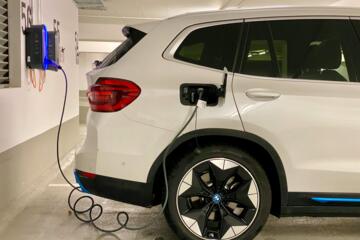
Electric Cars in 2026: What's Changed for Buyers
Electric cars in 2026 are expected to be more attainable and practical than ever, with noticeable gains in upfront affordability, battery range and durability, and the speed and availability of charging networks. This expert-led article reviews the most important technology and market developments, explains what’s improved (and what still needs work), and clarifies how incentives, total cost of ownership, and charging options may affect real-world value. It also provides hands-on guidance for prospective buyers comparing models, planning home or public charging, and making a confident purchase in a fast-changing EV landscape.
 What’s new
15.05.2026
What’s new
15.05.2026
Euro 7 Standards: Impact on Hybrid Powertrains
This technical analysis examines the specific implications of Euro 7 emission standards on the engineering, cost, and architecture of hybrid electric vehicles. It is tailored for automotive engineers, powertrain developers, and regulatory compliance officers navigating the transition to stricter real-driving emissions testing. The article provides concrete data regarding colder catalyst light-off requirements, brake and tire particulate limits, and on-board monitoring integration. By detailing the necessary hardware upgrades and software adaptations, it provides actionable strategies for maintaining hybrid fleet compliance under the updated European Union framework.
 What’s new
13.05.2026
What’s new
13.05.2026
What Connected-Car Data Is Used For
Modern connected vehicles have evolved from simple mechanical machines into sophisticated data centers on wheels. This article explores how cars continuously collect and transmit vast amounts of data regarding driver habits, vehicle health, and safety metrics. While this digital ecosystem enhances safety and convenience, it also raises critical questions about driver privacy, transparency, and data sharing with manufacturers and insurers.
 What’s new
03.05.2026
What’s new
03.05.2026
Solid-State Battery Roadmap 2026: Market Leaders
Track where solid-state batteries are headed with a forward-looking 2026 roadmap that maps the most important technical milestones and commercialization timelines. This article profiles leading companies and research teams, explains the core breakthroughs they’re pursuing (electrolytes, interfaces, manufacturing scale-up), and evaluates what’s actually working in prototypes and pilot lines. Built for industry leaders and investors, it also covers cost, safety, supply-chain, and reliability hurdles—plus practical examples and signals to watch when making energy-storage strategy and capital-allocation decisions.
 What’s new
26.04.2026
What’s new
26.04.2026
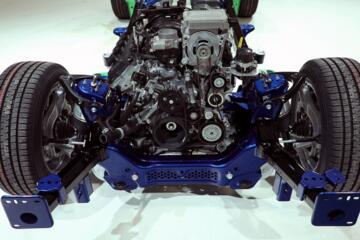
Zonal Vehicle Architecture: The End of Traditional ECUs
Zonal Vehicle Architecture is revolutionizing automotive electronics by replacing traditional ECUs with centralized, domain-based control units. This shift is critical for automakers and suppliers aiming to manage rising software complexity, improve vehicle scalability, and reduce costs. Understanding how zonal architectures streamline wiring and centralized computing offers valuable insights for engineers and industry leaders facing the challenges of modern vehicle design.
 What’s new
20.04.2026
What’s new
20.04.2026
48V Mild Hybrid Systems: Why Automakers Are Doubling Down
The global automotive industry is undergoing a silent transformation where traditional 12V architectures are no longer sufficient to power the data-heavy, sensor-rich vehicles of tomorrow. As emissions regulations like Euro 7 and CAFE standards tighten, manufacturers are turning to 48V electrification as a cost-effective middle ground between internal combustion and full battery electric vehicles (BEVs). This guide explores the engineering logic, fuel efficiency gains, and integration strategies that make these systems the new industry standard for the current decade.
 What’s new
18.04.2026
What’s new
18.04.2026
EV Charging Speed Curves: 2024 vs 2026 Data
EV charging speed curves show how fast an electric car charges across the full battery window, not just the advertised peak kW. This expert guide compares 2024 and 2026 data, explains why 10–80% average power matters, reviews brands such as Porsche, Hyundai, Kia, Lucid, Tesla, BYD and Audi, and gives practical recommendations for drivers, fleet managers and buyers using Tesla Supercharger, IONITY, Fastned, Electrify America, EVgo, PlugShare and ABRP. It focuses on real stop time, charger choice, battery preconditioning and common mistakes that waste money and minutes.
 What’s new
14.04.2026
What’s new
14.04.2026
Sodium-Ion Batteries: The Real Alternative to Lithium?
The global transition toward electrification faces a critical bottleneck: the supply chain and environmental cost of traditional mineral-based cells. Sodium-ion technology emerges as a scalable solution for stationary storage and budget-friendly mobility, utilizing earth-abundant materials to bypass the volatile pricing of rare metals. This guide analyzes whether salt-based chemistry can truly displace current industry standards or if it will remain a specialized niche for specific industrial applications.
 What’s new
02.04.2026
What’s new
02.04.2026
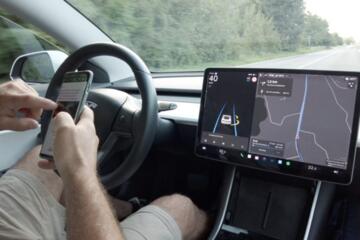
The Rise of Level 3 Autonomous Driving: Legal and Technical Milestones
The transition from driver assistance to conditional automation marks the most significant shift in automotive engineering since the invention of the internal combustion engine. This guide explores the technical architecture and regulatory hurdles of eyes-off-the-road technology, specifically for manufacturers and tech-forward consumers. We address the "handover" problem—the critical seconds where a machine must return control to a human—and provide a roadmap for navigating the current legal landscape.
 What’s new
01.04.2026
What’s new
01.04.2026
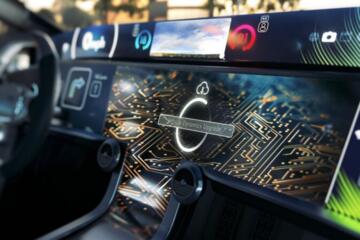
Software-Defined Vehicles (SDV): How Over-the-Air Updates Change Ownership
The transition toward programmable transportation architectures is redefining the relationship between drivers and their vehicles by decoupling hardware lifecycles from software functionality. This evolution addresses the rapid obsolescence of traditional automotive electronics through cloud-native integration and seamless wireless data transfers. For owners, this means a shift from a static depreciating asset to a dynamic platform that improves over time through continuous feature deployment and remote diagnostics.