Vehicle Power Loss
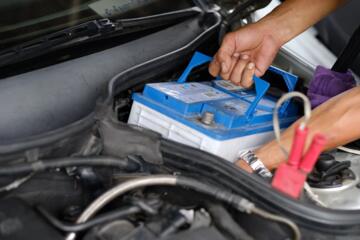
While many car owners view a battery swap as a simple mechanical task, the digital reality is far more complex. Modern cars use a process called "Adaptive Learning." The ECU constantly adjusts parameters like fuel trim, idle speed, and transmission shift points to compensate for engine wear and atmospheric conditions. When power is cut, these refined settings often revert to "base maps."
In a BMW 5-Series (G30), for instance, the Intelligent Battery Sensor (IBS) must be notified of a new battery through a "registration" process. Without this, the alternator will continue to charge the new battery as if it were the old, degraded one, significantly shortening its lifespan. Data from groups like Interstate Batteries suggests that failing to register a new battery in smart-charging systems can reduce its service life by up to 30%.
Improper Power Management
The most common mistake is assuming that if the car starts, the job is done. This "plug-and-play" mentality leads to ghost codes—faults that appear in the system even if no mechanical part is broken.
One major pain point is the loss of steering angle sensor calibration. In vehicles equipped with Electronic Power Steering (EPS), a loss of power can cause the system to lose its "center" position. This can lead to the unintended deactivation of Electronic Stability Control (ESC), as the car no longer knows exactly which way the wheels are pointed relative to the steering wheel input.
Another risk involves the Anti-Pinch algorithm in power windows and sunroofs. Without power, the module forgets the physical limits of the window glass. This isn't just a glitch; it’s a safety hazard. If a child's hand is in the way and the anti-pinch isn't calibrated, the motor won't stop as intended.
Post-Swap Stabilization
Battery Management System (BMS) Registration
For vehicles by Audi, VW, BMW, and Mazda, the BMS needs to know the capacity and cold cranking amps (CCA) of the new unit. This is done using an OBD-II diagnostic tool like Autel MaxiSYS or an enthusiast-level tool like Ross-Tech VCDS. Registering the battery resets the charging histograms, ensuring the alternator output matches the new cell's internal resistance.
Idle Relearn Procedures
After a power loss, a car might stall at stoplights. This happens because the throttle body "learned" to stay open a fraction of a millimeter wider to compensate for carbon buildup. When the memory is wiped, it returns to the factory-clean position. To fix this without a scanner, most Japanese manufacturers recommend an "idle relearn": start the engine, let it reach operating temperature with all accessories off, and let it idle for 10 minutes.
ADAS and Sensor Synchronization
Modern safety suites, including Lane Keep Assist and Adaptive Cruise Control, are sensitive to voltage drops. If a battery swap causes a momentary spike or dip, these sensors may enter a "fail-safe" mode. Professional shops use tools like the Bosch ADS 625 to run a full system scan post-replacement to clear "low voltage" historical codes that can prevent these systems from engaging.
Transmission Adaptive Reset
The Transmission Control Module (TCM) learns your driving style to smooth out shifts. After a battery swap, you might notice "harsh" shifting. Using a scan tool to reset the "Adaptive Values" allows the TCM to start a new learning cycle, typically requiring 20 to 50 miles of varied driving to optimize clutch engagement timing.
HVAC and Comfort Modules
Climate control flaps often need to be "homed" after power loss. In many Ford and GM vehicles, this involves turning the ignition to 'On' without starting the engine and waiting 60 seconds while the actuators move to their limit switches. This ensures that the dual-zone climate control actually delivers different temperatures as requested.
From Glitch to Resolution
Case Study 1: The Luxury Sedan Charging Issue
A 2019 Mercedes-Benz S-Class had its battery replaced at a general repair shop. Two weeks later, the owner reported a "Battery Protection: Functions Temporarily Unavailable" message.
- The Problem: The new AGM battery was installed, but the vehicle’s Sam (Signal Acquisition Module) was still programmed for the old battery's high internal resistance.
- The Fix: A technician at an authorized center used the XENTRY Diagnostic system to perform the "Battery Exchange" confirmation.
- Result: The alternator voltage dropped from a stressful 14.9V to a healthy 14.2V, and the error message cleared immediately.
Case Study 2: The Stalling SUV
A 2017 Honda CR-V owner replaced their battery at home and immediately experienced rough idling and stalling at intersections.
- The Problem: The Electronic Throttle Control (ETC) lost its learned idle position.
- The Fix: A specialized "Idle Relearn" was performed, which involved holding the engine at 3,000 RPM until the radiator fan kicked in, then idling for 5 minutes.
- Result: Idle stabilized at 750 RPM, and fuel economy improved by 12% compared to the week of "glitchy" driving.
Post-Replacement Checklist
| System | Action Required | Tool Needed |
|---|---|---|
| Engine ECU | Idle Relearn / Fuel Trim Reset | Drive Cycle or Scan Tool |
| BMS/IBS | Battery Registration | OBD-II Diagnostic Tablet |
| Power Windows | End-stop Initialization | Manual Switch Sequence |
| Steering (EPS) | Steering Angle Calibration | Scan Tool / Full Lock Turn |
| Sunroof | Normalization | Manual Hold Sequence |
| ADAS | System Health Check | Diagnostic Scan |
Navigating Common Pitfalls
One of the most frequent errors is using a "memory saver" that is poor quality. While these devices plug into the cigarette lighter to keep the modules powered, they often fail to provide enough amperage if a door is opened, causing a partial memory wipe. This "half-erased" state is actually worse than a total power loss, as it can lead to corrupted data bits in the EEPROM.
Another mistake is ignoring the "Transport Mode." Some vehicles enter a low-power state if the battery voltage stays low for too long. Even with a new battery, the radio or interior lights might not work until a technician toggles the software out of this mode using factory-level software.
Finally, never skip the "Post-Installation Health Check." Even if the car seems fine, modern CAN-bus systems can store "U-series" (Communication) codes during a battery swap. These won't always trigger a check engine light but can prevent the car from passing an emissions test or disable the Start-Stop system.
FAQ
Why is my radio asking for a code after a battery change?
This is an anti-theft measure. The Head Unit lost its handshake with the VIN stored in the ECU. You will need the original code provided in the owner's manual or retrieved via the dealer using your VIN.
Do I really need to register a battery if it’s the same specs as the old one?
Yes. The registration isn't just about specs; it’s about the age of the battery. The car's computer increases the charging rate as a battery ages to overcome internal resistance. You must tell the car the battery is "young" again to prevent overcharging.
Why won't my "Auto" up/down windows work anymore?
The window module has lost its "pinch" calibration. Usually, holding the window switch in the "up" position for 5 seconds after the window is closed will reset this function.
Can a battery swap affect my car's transmission?
Yes, indirectly. If the TCM loses its adaptive shift data, the timing of fluid pressure changes may be slightly off, leading to "hunting" for gears or firm shifts until it relearns your habits.
What is a "Drive Cycle," and why do I need one?
A drive cycle is a specific set of driving conditions (e.g., 10 minutes of highway, 5 minutes of city) that allows the ECU to run "monitors" on emissions components. This is necessary to clear the "Permanent" codes that a battery swap can trigger.
Author’s Insight
In my fifteen years of automotive diagnostics, I’ve seen more "mechanical" problems solved with a laptop than a wrench. The transition from lead-acid to AGM batteries has made software registration non-negotiable. My best advice for the DIYer: if you are going to change your own battery on any car made after 2015, invest $100 in a decent OBD-II Bluetooth dongle and an app specifically designed for your car brand. It pays for itself the very first time you avoid a trip to the dealership just to clear a ghost code.
Summary
Successfully replacing a modern vehicle battery requires a shift in perspective: you are rebooting a computer, not just swapping a part. By following the necessary recalibration steps—from BMS registration to idle relearn procedures—you protect your vehicle's electronics and ensure all safety systems function as designed. Always perform a final diagnostic scan to clear latent fault codes, ensuring your car's digital and physical components are back in perfect sync.