Why inspections matter
A fact: most major failures start as small defects. A loose belt, a slow coolant leak, or a worn tire can look minor until mileage stacks up. Many shops follow a 10,000–15,000 mile rhythm for basic checks, then go deeper at longer intervals. That cadence matters because wear rates change with driving style and climate.
Brake pads and rotors show the pattern clearly. A typical pad set lasts roughly 30,000–70,000 miles depending on vehicle weight and driving, and rotor damage often begins when pads run low. Tire tread depth also tells a story: many regions use 2/32 in (1.6 mm) as the legal minimum, but traction drops well before that for wet braking. Vehicle type changes the risk profile, because towing, stop-and-go traffic, and curbside parking all stress different systems.
Skip the “one-size” schedule. It ignores how a 3.5L V6 under load heats brakes and transmission fluid faster than the same engine in light commuting. EVs add their own early warnings, like coolant pump noise and battery thermal management faults, which can surface before range drops. Diesel owners see different early signs too, such as soot loading and EGR performance changes.
Ownership costs follow the same logic. A $200–$400 repair today can prevent a $1,000+ job later when a small leak damages a sensor, wiring, or a cooling component. Resale value also reacts to maintenance history; buyers often discount cars with missing service records, even when the car runs well.
Common problems people miss
People get wrong the idea that “no warning light” means “no wear.” Many issues progress quietly: a slow power steering fluid loss, a failing wheel bearing, or a clogged cabin filter that strains the blower motor. Another mistake is waiting for a symptom that arrives late, like brake squeal that already means uneven pad wear.
Consequences show up as time loss and higher labor bills. A misaligned front end can chew tires in 10,000 miles, then require an alignment reset plus new tires. A coolant leak can trigger overheating, and overheating can warp cylinder heads on some engines. That’s not theory; it’s the reason shops pressure-test cooling systems during routine visits.
Real-world situations are predictable. A family minivan used for school runs in winter salt often sees corrosion on brake hardware and seized caliper slides. A pickup used for occasional towing can overheat the transmission if the cooler is partially blocked. A commuter EV parked outdoors can develop battery coolant service needs earlier than a garage-kept car, depending on climate and charging habits.
Skip the “it’ll last” mindset. It turns a controllable wear item into a failure that strands the car. The financial hit is rarely just parts; it’s also towing, rental time, and labor booked at the worst moment.
Inspections that catch early
Brakes: measure, don’t guess
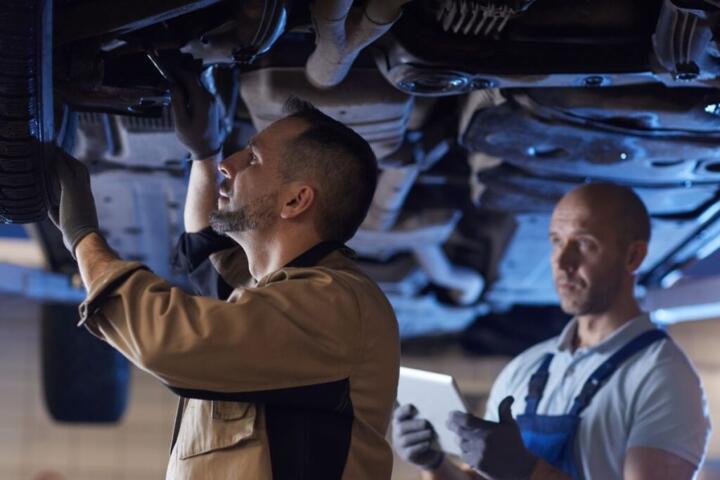
What to do: check pad thickness and rotor condition with a gauge, not by sound alone. Why it works: pad wear changes braking torque and can score rotors when friction material runs thin. What it looks like: uneven inner/outer pad wear often points to a sticking caliper slide. Tools/services: a brake thickness gauge and a visual rotor micrometer check; many shops include this in a multi-point inspection. Numbers: if pads are near 3 mm remaining, plan replacement soon to avoid rotor resurfacing or replacement.
Skip the “squeal means new pads” rule. Squeal can happen after uneven wear already started, and rotor damage can be the real cost.
Tires: tread depth and wear pattern
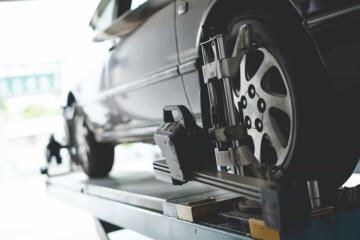
What to do: measure tread depth across the tire and inspect wear patterns at each rotation. Why it works: alignment and suspension issues show up as feathering, cupping, or shoulder wear. What it looks like: inside-edge wear on a front axle often tracks to toe misalignment. Tools/services: tread depth gauge, tire pressure check, and an alignment printout if wear is abnormal. Numbers: keep pressures within the door-jamb spec; a 6–8 psi drop can increase rolling resistance and accelerate wear.
Real-world aside: I’ve seen tires “look fine” until you measure tread at the center and shoulders with a cheap gauge from Harbor Freight—then the difference jumps out.
Fluids: test for contamination
What to do: inspect engine oil level and condition, check coolant level and color, and verify brake fluid level. Why it works: contamination changes viscosity and heat transfer, which accelerates wear. What it looks like: milky oil on a cold start can indicate coolant intrusion, while dark brake fluid can mean moisture absorption. Tools/services: oil analysis kits for DIY sampling, or a shop’s drain-and-fill service with filter replacement. Numbers: many manufacturers target oil changes around 5,000–10,000 miles depending on oil type and duty cycle; coolant service intervals vary widely by brand and coolant chemistry.
Skip the “top-off only” habit. Repeated topping can hide a leak that keeps returning after the level drops again.
Cooling system pressure test
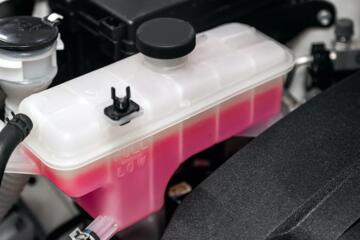
What to do: request a cooling system pressure test during inspections, especially before hot seasons. Why it works: small leaks often appear only under pressure and heat cycling. What it looks like: dampness around the radiator end tanks, seepage at hose clamps, or bubbles in the reservoir after a cold soak. Tools/services: cooling pressure tester and infrared thermometer for hose temperature differences. Numbers: a pressure test that holds steady for the specified time reduces the odds of a roadside overheating event, which can quickly turn into a $2,000+ repair if head gaskets or warped components get involved.
Battery and charging checks
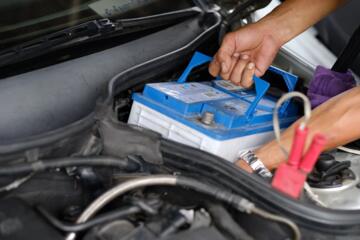
What to do: test the 12V battery load and inspect battery terminals for corrosion; for EVs, check the high-voltage system diagnostics during service visits. Why it works: weak batteries cause slow starts, erratic sensor behavior, and intermittent faults that disappear when the car is restarted. What it looks like: crusty terminal buildup, a cracked battery case, or warning messages tied to charging. Tools/services: a conductance tester for 12V batteries; for EVs, scan tools that read battery management system codes. Numbers: many 12V batteries last 3–5 years in cold climates, and charging system issues can drain the battery in weeks.
Charging limitations matter too. If you routinely charge at high power in extreme heat, thermal management cycles can increase wear on cooling components over time, and some EVs throttle charging speed when temperatures rise.
Suspension and steering play
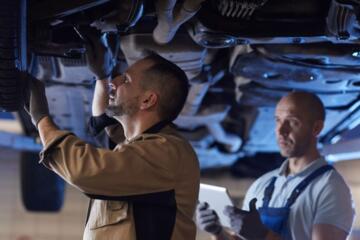
What to do: check for play at tie rods, ball joints, and wheel bearings; inspect bushings for cracking. Why it works: worn joints change tire wear and steering response before they trigger a hard failure. What it looks like: clunks over bumps, vibration at highway speed, or steering wheel wander. Tools/services: pry-bar inspection and a road test with a technician; alignment checks after suspension work. Numbers: wheel bearings can fail gradually, but once they produce a growl, replacement is usually the fix, not adjustment.
Skip the “it’s just a noise” excuse. A small clunk can mean a joint with enough play to affect braking stability.
Engine air intake and emissions
What to do: inspect the air filter, check intake hose condition, and verify that the check-engine light history is cleared only after diagnosing the root cause. Why it works: restricted airflow and vacuum leaks raise fuel consumption and can trigger misfires. What it looks like: oil residue in intake tubing, torn filter media, or smoke under load. Tools/services: scan tool live data for fuel trims and misfire counts; smoke testing for vacuum leaks. Numbers: a clogged air filter can reduce airflow enough to worsen fuel economy by a few percent on some engines, and misfires can damage catalytic converters if driven long enough.
EV-specific: brakes, coolant, and range
What to do: inspect brake pads and rotors even on EVs, because regen reduces wear but does not eliminate it. Why it works: friction brakes still handle low-speed stops and emergency braking. What it looks like: rust on rotors after long storage, uneven pad deposits, or squeal that returns after wet weather. Tools/services: brake inspection and a scan for battery thermal system codes; verify coolant level if the service manual calls for it. Numbers: range estimates can swing with temperature; a 20–30% drop in cold weather is common on many EVs, so inspection should focus on system health rather than only the displayed range.
Road-trip comfort matters here. Cabin heat sources and battery conditioning can change energy use, so a “healthy” EV still needs realistic expectations for winter charging stops.
Mini case examples
Fleet van cooling leak
Company: a service fleet running a 2018 Ford Transit with a 3.5L EcoBoost. Problem: recurring coolant top-offs and a sweet smell after long routes, with no immediate overheating. What they did: added a pressure test and hose/clamp replacement during scheduled inspections at 12,000-mile intervals, then tracked coolant consumption. Result: coolant loss stopped, and they avoided a head-gasket job that can exceed $3,000 in parts and labor depending on labor rates and damage. Ownership cost dropped because the repair stayed in the “hose and clamp” category instead of escalating.
Skip the “we’ll watch it” approach. Coolant leaks tend to worsen once corrosion spreads under clamps.
EV battery warning codes
Company: a small delivery business using a 2021 Hyundai Ioniq 5 (battery-electric). Problem: intermittent charging errors and reduced fast-charge speed, with no immediate total failure. What they did: scheduled a diagnostic scan for battery management system codes and inspected the cooling loop components during the next service window. Result: the issue resolved after replacing a failed coolant-related component, and the business avoided repeated tow calls. The cost stayed under $1,000 for the repair and diagnostic time, while a tow plus extended downtime often costs more than the part.
Battery range estimates improved after the system fault cleared, but the displayed range still followed seasonal temperature swings.
Checklist for early detection
| Check | How often | What to look for | Early fix target |
|---|---|---|---|
| Tire pressure | Monthly | Door-jamb spec, uneven wear | Correct pressure before wear accelerates |
| Brake pad thickness | Every 5,000–10,000 miles | Uneven wear, rotor scoring | Replace pads before rotors need work |
| Coolant level | Every 1–2 months | Low level, residue at hoses | Pressure test if it drops |
| 12V battery health | Every 6–12 months | Slow starts, terminal corrosion | Replace before it fails under load |
| Suspension play | Every 10,000–15,000 miles | Clunks, vibration, alignment drift | Fix joints before tires wear out |
| EV brakes and coolant | Every service interval | Pad wear, thermal system codes | Scan and inspect when charging changes |
Skip the checklist that only says “inspect.” Ask for measurements: tread depth, pad thickness, and scan results. A report with numbers beats a report with impressions.
Common mistakes and fixes
Ignoring wear patterns
Why it happens: people focus on tread depth and miss how the tire wears across the face. Impact: toe or camber issues can destroy tires in 15,000 miles even when tread depth looks acceptable. How to avoid it: photograph tire wear at rotation time and compare left vs right; ask for an alignment check if wear is asymmetric. If the car is a 2.0L turbo compact used for highway commuting, alignment drift still shows up, just slower than on a heavy SUV.
Skip the “rotate and hope” plan. Rotation helps, but it does not correct the cause.
Overlooking coolant behavior
Why it happens: coolant level checks get skipped between services, and leaks can be intermittent. Impact: overheating can warp components and turn a $150 hose job into a $2,000+ engine repair. How to avoid it: check the reservoir monthly and request a pressure test when the level drops or when you smell sweet vapor. If you drive a 3.5L V6 or 2.4L four-cylinder in hot weather, heat cycling stresses plastic tanks and clamps.
Replacing parts without diagnosis
Why it happens: a scan tool shows a code, then parts get swapped without confirming the root cause. Impact: repeat failures and wasted labor, especially with sensors tied to multiple systems. How to avoid it: ask what data changed before the code set—fuel trims, misfire counts, battery voltage under load, or EV charging logs. A shop that can show live data and freeze-frame details is usually more reliable than one that only quotes parts.
Skip the “we’ll try this” approach. It often turns one problem into two.
Assuming EVs need less service
Why it happens: regen reduces brake wear, so owners delay brake inspections. Impact: rusted rotors, stuck caliper slides, and uneven pad deposits can appear after long storage. How to avoid it: inspect friction brakes at the same interval as other vehicles, and scan for thermal system faults when charging behavior changes. Range drops in winter can be normal, but repeated fast-charge throttling is a clue that the thermal system needs attention.
Skipping documentation
Why it happens: receipts get lost, and service history becomes a vague timeline. Impact: resale value drops because buyers and insurers treat missing records as higher risk. How to avoid it: keep digital copies of invoices and scan reports, and record mileage at each service. For a family SUV, that paper trail matters when you trade in after 60,000–80,000 miles.
FAQ
How often should I inspect brakes?
Check brake pad thickness and rotor condition at least every 5,000–10,000 miles or at each tire rotation. If you drive a heavier vehicle, tow, or brake hard in traffic, shorten that interval. A shop inspection should include a measurement, not just a visual. If the pads show uneven wear, ask for caliper slide inspection and a brake hardware check. If you hear squeal after rain, inspect pad material condition and rotor surface rust, because that can return quickly if the caliper sticks.
What coolant checks catch leaks early?
Start with a monthly reservoir level check when the engine is cold. Look for residue around hose connections, radiator end tanks, and the thermostat housing area. If the level drops more than a small amount between checks, request a cooling system pressure test rather than topping off. Pressure testing finds leaks that only appear under heat and pressure. For vehicles with long-life coolant, follow the manufacturer’s chemistry and interval guidance; mixing coolant types can create corrosion issues.
Do tire rotations prevent all tire wear?
Rotations help equalize wear, but they do not correct alignment or suspension problems. If you see inside-edge wear, cupping, or feathering, ask for an alignment check and suspension inspection. Measure tread depth across the tire face, not only at the center. Keep tire pressure within the door-jamb spec; a small pressure error can change wear rate. If you drive a crossover with a 2.5L or 3.5L engine and carry passengers often, suspension loads change, so wear patterns can shift even without obvious steering pull.
What should an EV inspection include?
An EV inspection should cover friction brakes, suspension components, and the battery thermal system diagnostics. Regen reduces pad wear, but it does not eliminate brake service needs. Ask for a scan of battery management system codes and charging-related logs if charging speed changes or warning messages appear. Also inspect 12V battery health, since many EVs still rely on a 12V system for control modules. Charging limitations can be normal in cold weather, but repeated throttling under moderate temperatures suggests a thermal or charging fault.
Can regular inspections lower insurance costs?
Insurance pricing depends on your location, vehicle, driving record, and coverage choices, not directly on inspection frequency. Still, documented maintenance can reduce the chance of claims caused by preventable failures, like a tire blowout or a brake-related incident. Some insurers may request service records for certain claims, and a clean maintenance history can help when you need to explain repairs. If you tow or drive a high-mileage vehicle, ask your insurer whether they consider mechanical condition or claim history in underwriting. Keep receipts and scan reports to support your maintenance timeline.
Author's Insight
Regular inspections catch early failures because they measure wear and system behavior before parts reach the point of secondary damage. The pattern shows up across powertrains: brake wear becomes rotor damage, coolant seepage becomes overheating, and battery weakness becomes intermittent electrical faults. I’ve seen shop reports that list “OK” without measurements; those reports miss the trends that matter at 30,000–60,000 miles. A practical approach is to ask for numbers—tread depth, pad thickness, scan results—and to track them over time, even if you only do it during major service visits.
Key takeaways
Schedule inspections around measurable wear: brake thickness, tire tread depth, coolant level behavior, and battery test results. Ask for pressure tests and scan data when symptoms appear, because replacing parts without diagnosis wastes money. Regular checks reduce the odds of expensive secondary damage, but they do not prevent every failure, especially sudden electrical or manufacturing defects. Next step: pick a cadence that matches your vehicle type and driving load, then keep a simple log of measurements and receipts. Seek professional help immediately if you see overheating, brake warning indicators, coolant loss, or repeated EV charging faults, since those can escalate quickly.