Vehicle-To-Load Basics
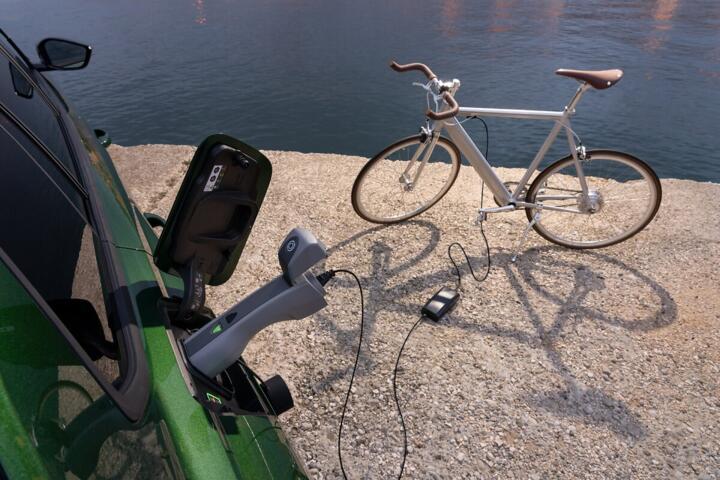
Vehicle-to-Load (V2L) is a feature that turns a vehicle’s traction battery into usable electricity for external devices. The vehicle’s power electronics convert high-voltage DC from the battery into AC power at household-like voltages, then route it through an outlet or connector.
In practice, V2L behaves like a portable generator with a built-in inverter, except the “fuel tank” is your battery. Many systems provide a standard outlet (often 120 V in North America, 230 V in many other regions) and a maximum continuous output rating that the manufacturer publishes in the owner’s manual.
Common use cases include running a refrigerator during an outage, powering a laptop and router for remote work, or operating power tools at a campsite. A key detail: the vehicle does not “create” energy, so runtime depends on battery capacity, battery state of charge, and the total load you draw.
Some vehicles also support Vehicle-to-Home (V2H) or bidirectional charging, which is a different capability than V2L. V2L typically focuses on supplying power to loads outside the vehicle, not exporting power to the grid.
Main Pain Points And Myths
People often treat V2L as a guaranteed backup power source, then get surprised by runtime limits. The inverter rating sets a ceiling for continuous power, but battery management and thermal limits can reduce usable output under certain conditions.
Another frequent misunderstanding involves surge loads. Motors, compressors, and some heating elements draw a short high inrush current when they start. Even if your device’s label says “rated watts,” the startup surge can trip the inverter’s protection or cause the vehicle to shut down the output.
Battery drain is also more complex than “watts in equals watts out.” Conversion losses exist in the inverter and power electronics, and the vehicle may consume extra energy for cooling, battery heating, or control systems. On a cold morning, the vehicle may spend more energy maintaining battery temperature, and that reduces the time you get from the same starting charge.
Supporting technologies matter. V2L depends on an inverter with a specific continuous rating, a contactor and protection circuitry that disconnects on faults, and a battery management system that monitors cell temperatures and limits discharge. If the vehicle’s software version changes, the behavior of output limits can change too; I’ve seen owners report differences after updates (for example, a 2023 firmware revision noted in a forum thread, though those reports are not official documentation).
Solutions And How To Use Them
Check Output Rating First
Start with the vehicle’s published V2L output limits: continuous watts, maximum surge watts (if listed), and the outlet voltage and frequency. If the manual states 1,500 W continuous, plugging in a 1,800 W space heater can trigger a shutdown even if the heater “usually runs” at a lower setting.
Use a plug-in power meter for reality checks. A meter such as a basic Kill A Watt–style device (or a smart plug with metering) can show actual draw for electronics and small appliances. For larger loads, you may need a clamp meter or a dedicated appliance tester; cheap meters can be inaccurate with some waveforms, so treat readings as approximate.
For planning, convert device ratings to watts: multiply volts by amps for devices that list both, or use the watt rating on the nameplate. Then leave headroom for surge and losses. A practical rule is to keep continuous loads well below the vehicle’s maximum, because the inverter protection logic often reacts to peaks, not averages.
Plan For Surge And Startup
Look at the device’s starting behavior. Refrigerators, freezers, and air conditioners often list a “running watts” figure and sometimes an “inrush” or “starting” note. If the manufacturer does not publish surge data, you can still reduce risk by starting the highest-surge device last, after other loads are stable.
Use staged loading: run the refrigerator first, then add smaller electronics. Avoid starting a compressor and a microwave at the same time; the microwave’s heating element draws a steady high power while the compressor adds a surge.
If your vehicle supports a “power saving” or “eco” mode for V2L, test it with a low-risk load first. I once watched a user report that a “low power” setting reduced output stability for a sensitive charger, which is consistent with tighter inverter control—annoying, but it highlights why you should test.
Estimate Runtime With Real Loads
Runtime depends on battery state of charge, battery temperature, and the vehicle’s discharge limits. A simple watt-based estimate can mislead because the vehicle may limit discharge current to protect the battery, especially when the battery is cold or nearly full.
Use a conservative approach: measure your typical load draw, then track how many minutes the vehicle runs before the battery management system reduces output. For example, if a refrigerator plus router averages 120 W, you can often get many hours, while a 1,200 W kettle-style load will drain the battery much faster.
When you test, record starting charge percentage and ambient temperature. Even a small difference in temperature can change battery heating demand, and that shows up as extra energy use that your device meter will not attribute to the load.
Follow Safety And Grounding Rules
V2L output is designed for external loads, but safety still depends on correct grounding and compatible equipment. Use grounded appliances where required, and avoid extension cords that are undersized for the load current.
Check the outlet type and the vehicle’s guidance on maximum cord length. Long, thin cords increase voltage drop and heat, which can cause nuisance shutdowns or damage to cords. If the vehicle manual specifies a cord gauge, follow it; if it does not, size the cord for the expected current and keep it short.
Do not open the vehicle’s connectors or bypass interlocks. If the vehicle detects an unsafe condition, it will cut output; repeated attempts to “make it work” can stress the protection system and waste battery.
Case Examples For Everyday Use
Outage With Mixed Loads
An anonymized household uses V2L during a short outage. They connect a refrigerator (about 100–200 W average), a Wi‑Fi router (around 10–20 W), and a laptop charger (often 30–90 W depending on settings). They avoid starting a microwave while the refrigerator compressor cycles, and they start with only the refrigerator for a few minutes.
They notice the vehicle’s output remains stable when the total continuous draw stays well under the published limit. When they later add a space heater on a lower setting, the vehicle still runs but the battery drains much faster than expected, which matches the heater’s high wattage.
Campsite Power Tool Planning
An anonymized camper uses V2L to run a battery charger and a small work light. The charger draws a moderate steady load, so the vehicle runs for a long session without tripping protection. When they try to power a corded circular saw, the inverter shuts down during startup due to surge and high current draw.
They switch to charging the saw’s battery pack instead. That change reduces surge risk because the charger’s input draw is smoother, and the saw’s motor starts from the saw battery rather than the vehicle inverter.
Comparison Table And Checklist
| Scenario | What You Plug In | Main Constraint | Practical Approach |
|---|---|---|---|
| Router + laptop | Low steady loads | Runtime from battery drain | Measure watts with a meter; keep total under inverter rating |
| Refrigerator backup | Motor/compressor surge | Inrush trips protection | Start refrigerator first; avoid adding high-surge loads at the same time |
| Space heater | High continuous wattage | Continuous inverter limit | Use lower settings; verify heater wattage; leave headroom |
| Corded power tools | Very high surge and current | Startup current + thermal limits | Prefer charging tool batteries; if using tools, test with a low-load start |
Quick checklist before you plug in:
- Confirm the vehicle’s V2L output voltage, frequency, and continuous watt rating in the owner’s manual.
- List each device’s watt draw from the nameplate; include any “running” and “starting” notes.
- Sum continuous watts and keep a margin for surge; if you cannot find surge data, treat the device as higher risk.
- Use a grounded cord and correct gauge extension cord; keep the cord short.
- Start with the lowest-risk load, then add others one at a time while watching for output cutoff.
- Record starting battery percentage and time; stop when the vehicle reduces output or you see repeated trips.
Common Mistakes That Break It
One mistake involves assuming that a device’s “rated watts” equals what the inverter must handle at startup. Compressors and some LED drivers can draw brief peaks that exceed the inverter’s surge tolerance.
Another mistake is using an extension cord that matches the plug shape but not the current. A cord that runs warm can cause voltage drop and heat buildup, and the vehicle may respond by limiting output.
People also forget that battery temperature management consumes energy. If you test V2L in summer heat and then expect the same runtime in winter, the difference often comes from battery heating or reduced discharge limits.
Some owners leave V2L running without monitoring the vehicle’s behavior. If the vehicle shows warnings or reduces output, continuing to load it can lead to repeated shutdowns and wasted battery cycles.
Finally, some users rely on online anecdotes without checking the vehicle’s manual. V2L ratings vary widely by model year and inverter design, and a “works for me” post rarely includes the surge conditions that matter.
FAQ
How many watts can V2L output?
V2L output depends on the vehicle’s inverter rating listed in the owner’s manual, usually given as a continuous watt limit and sometimes a surge limit. Treat any device above that continuous rating as a shutdown risk.
Does V2L drain the battery faster than driving?
V2L drains the traction battery at a rate tied to your load watts plus inverter losses and battery thermal management. A high-watt heater can drain the battery in a way that feels faster than normal driving, while low-watt electronics may last much longer.
Can I run a refrigerator with V2L?
Many people can run a refrigerator, but compressor startup surge can trip protection. Start the refrigerator first, avoid adding other high-surge appliances at the same time, and keep total load under the vehicle’s published limits.
Will V2L work with any extension cord?
Not automatically. Cord gauge, length, and grounding matter, and the vehicle manual may specify limits. Undersized cords can overheat and cause voltage drop that triggers shutdowns.
Is V2L the same as bidirectional charging?
No. V2L typically supplies power from the vehicle to external loads, while bidirectional charging can involve exporting power to a home or grid under specific standards and equipment. The capabilities and safety controls differ by vehicle and region.
Author's Insight
V2L works because the vehicle’s inverter converts battery DC into AC and then enforces protection limits based on current, temperature, and fault detection. The practical constraints show up as surge sensitivity, runtime variability from battery thermal management, and strict continuous watt ceilings.
Because V2L ratings differ by model and software revision, the most reliable source is the owner’s manual for your exact trim and model year. If the manual lacks surge guidance, treat motor loads as higher risk and test with staged startup.
For decision-making, measure your real device draw with a power meter and plan for headroom rather than aiming at the inverter’s maximum.
Key Takeaways
- V2L converts traction battery energy into AC for external loads, so runtime depends on battery state, temperature, and load watts.
- Surge loads like compressors and power tools can trip inverter protection even when nameplate watts look acceptable.
- Use the vehicle’s published continuous watt rating, correct cord sizing, and staged startup to reduce shutdowns.
- Measure real power draw and track runtime during a calm test before relying on V2L during an outage.