Tire Pressure And Mileage
Tire pressure changes fuel economy mainly through rolling resistance and aerodynamic drag at the tire’s contact patch. Rolling resistance rises when tires run soft because the sidewall flexes more and the tread deforms more each rotation. When tires run too hard, the contact patch flattens less and the ride becomes harsher, which can increase losses from impacts and reduce traction, especially on rough roads.
In practice, the fuel-economy effect depends on tire construction, vehicle weight, speed, road surface, and how far the pressure deviates from the vehicle’s recommended cold value. A pressure gauge reading taken after driving often shows higher pressure than the cold spec, so the comparison must use the same temperature basis. I keep a note on my phone for the date and the “cold” reading time—after a long commute, the numbers stop being comparable, which is annoying but real.
Most vehicles list a target pressure on the driver’s door jamb or in the owner’s manual. That placard value assumes cold tires, typically after the car sits for several hours. If you inflate to a warm reading, you can overshoot the cold spec and end up running overinflated for the rest of the day.
Common Misreads And Tradeoffs
People often treat tire pressure as a single number that stays correct all day, but pressure changes with temperature and driving. A short drive can raise tire pressure enough to make a “fix” based on a warm gauge backfire later. Another frequent mistake is using a generic target from a tire brand or an old habit rather than the vehicle’s placard.
Underinflation increases rolling resistance, which raises fuel consumption. The effect shows up more clearly at steady highway speeds because rolling losses dominate there. Overinflation can reduce rolling resistance slightly on smooth pavement, but it can also increase impact losses on broken asphalt and reduce grip, which can lead to more throttle use in real driving. The dependency on road roughness matters; on coarse surfaces, the “too hard” tire can cost more than it saves.
Supporting technologies also shape the outcome. Anti-lock braking systems and traction control do not directly change fuel economy from pressure, but they react to grip changes, and a driver who feels less confidence may adjust throttle and steering inputs. Tire design matters too: low rolling resistance tires use different rubber compounds and tread patterns, so the same pressure error can produce a different fuel-economy change than it would on a conventional tire.
Even the vehicle’s tire pressure monitoring system (TPMS) affects behavior. Indirect TPMS estimates pressure from wheel-speed sensors, so it may not flag a small deviation, while direct TPMS sensors measure pressure more directly. If your TPMS only triggers at a threshold, you can still run meaningfully underinflated without a warning light.
How To Fix Pressure For Mileage
Check Cold, Then Compare
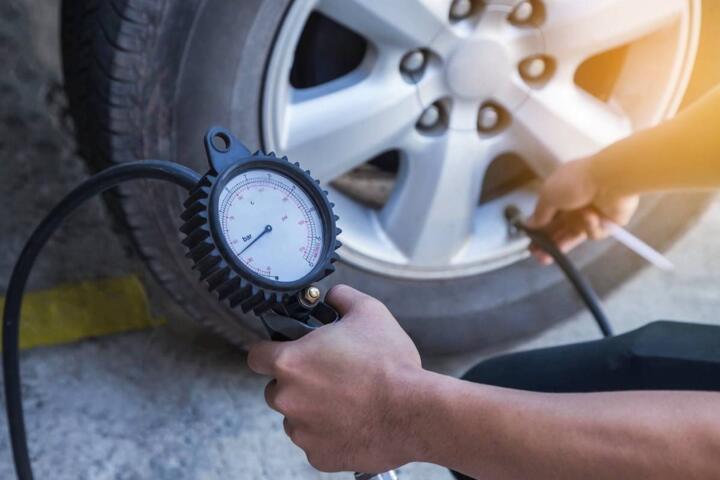
Measure tire pressure when the tires are cold: after the car has been parked for at least a few hours and before you drive. Compare the gauge reading to the door-jamb placard for your specific load condition (often “normal” and “full load”). If you use a digital gauge, verify it against a known reference if you can; cheap gauges can drift, and I’ve seen readings vary by a few psi between two tools on the same tire.
When you add air, recheck after a short wait. Air hoses and compressors can warm the valve area, and the tire pressure can settle. A practical method is to inflate, wait 1–2 minutes, then recheck; that avoids chasing a moving target.
Expect Small Gains, Not Miracles
Fuel-economy changes from pressure corrections are usually modest for a properly maintained vehicle. Many drivers notice improvements when tires were meaningfully underinflated, such as several psi below spec. A common rule of thumb from tire and vehicle guidance is that underinflation can raise fuel use, while correct inflation improves it, but the exact percentage varies by vehicle and tire.
As a realistic planning number, treat pressure correction as a “single-digit percent” lever at most, with larger effects when the tires were far from spec. If your tires are only 1 psi off, the change may be within normal trip-to-trip variation. If you want evidence, track the same route, similar speed, and similar outside temperature, then average multiple tanks.
Use The Right Inflation Targets
Follow the vehicle placard, not the tire sidewall maximum. The sidewall number is a maximum pressure rating, not the recommended operating pressure for fuel economy and ride. If you carry passengers or cargo, use the placard’s load-specific values; running the “normal” value with a heavy load can increase rolling resistance and tire wear.
For winter and summer temperature swings, adjust pressure seasonally. A temperature drop can lower tire pressure, and a temperature rise can increase it. If you live where winter mornings are much colder, schedule a cold check after the first sustained cold week rather than waiting for a warning light.
Track Results Without Overfitting
To connect pressure to fuel economy, control variables. Use a consistent driving pattern for at least a few trips, and avoid comparing a hilly winter commute to a flat summer errand. Record: cold tire pressure, outside temperature, average speed, and whether you used cruise control.
If your car has a fuel-economy display, note that it can smooth data and may lag behind changes. I once compared two “instant” readings and got confused because the display averaged over a different time window—so I switched to tank-to-tank calculations. Tank-to-tank is slower, but it reduces the chance you chase noise.
Educational Case Examples
Scenario 1: Underinflation after a cold snap. A commuter checks tires on a Monday morning and finds both front tires 5 psi below the door-jamb cold spec. After inflating to the placard value, the driver repeats the same weekday route for three tanks, keeping average speed similar. The driver sees a small improvement in fuel economy, with the biggest difference on highway segments where rolling resistance dominates. The driver also notices steadier steering feel, which aligns with better contact patch behavior.
Scenario 2: Overinflation from a warm gauge. A driver tops up at a gas station right after a short drive and sets pressure to match the placard using a warm reading. Two days later, after the car sits overnight, the cold check shows the tires now sit above the placard. The driver corrects back to the cold spec and observes less harshness on rough roads and no loss in fuel economy compared with the earlier “overinflated” period. The lesson is that temperature and measurement timing can flip the outcome.
Pressure Checklist And Tradeoffs
| Condition | Likely Effect On Rolling Loss | Fuel Economy Trend | What To Do |
|---|---|---|---|
| Underinflated (below placard cold spec) | More sidewall flex and tread deformation | Usually worse fuel economy, especially at steady speed | Inflate to placard cold value; recheck after settling |
| Correct (at placard cold spec) | Lower rolling resistance for that tire/vehicle setup | Baseline fuel economy for your current tires and driving | Check monthly and after big temperature changes |
| Overinflated (above placard cold spec) | Less contact patch compliance; more impact losses on rough roads | Can be neutral or worse depending on road roughness and grip needs | Bleed to placard cold value; avoid topping up from warm readings |
Step-by-step checklist:
- Find the door-jamb placard and note the cold pressure for your tire size and load condition.
- Park for several hours so the tires cool; then measure each tire with the same gauge.
- Inflate or bleed to match the placard cold value.
- Wait 1–2 minutes and recheck to confirm the reading settled.
- Repeat after major temperature changes and before long trips.
- Track fuel economy using tank-to-tank averages over multiple tanks on a consistent route.
Common Mistakes That Skew Mileage
One mistake is chasing the TPMS light. TPMS thresholds vary, so a light may not trigger until pressure drops enough to matter for safety and wear, while fuel economy can drift earlier. Another mistake is ignoring the spare tire. Many vehicles specify a different pressure for the spare, and leaving it underinflated can affect emergency readiness more than mileage, but it still reflects poor pressure habits.
Drivers also confuse tire size and pressure. If you switch to a different tire size or load rating, the placard values may change. Using the old pressure numbers from a previous tire setup can create a mismatch between the tire’s design and the vehicle’s intended operating point.
Measurement technique matters. A gauge that is not seated on the valve stem can underread, and a valve stem cap that is missing can lead to slow leaks over time. I keep a small tool kit with a valve cap and a gauge; the gauge model matters less than consistent technique, and I learned that after a “mystery” 2 psi difference between two tires.
Finally, people compare fuel economy without controlling speed and route. Rolling resistance changes with speed, and so does engine efficiency. If you compare a cold-start-heavy trip to a warm highway trip, the pressure effect gets buried under other losses.
FAQ
How much does low pressure affect MPG?
The effect varies with how far the tires are below the placard, tire type, speed, and road surface. Underinflation generally increases rolling resistance, so MPG usually drops more when the deviation is larger and when driving includes steady highway speeds.
Should I inflate to the tire sidewall number?
No. The sidewall maximum is a rating, not the recommended cold pressure for your vehicle. Use the door-jamb placard or owner’s manual values for your tire size and load condition.
Does checking pressure after driving change the result?
Yes. Tire pressure rises with temperature from driving, so a warm reading can look higher than the cold spec. Compare using cold tires so you can judge whether you are under or over the placard.
Can overinflation improve fuel economy?
Sometimes it can reduce rolling resistance on smooth roads, but it can also increase impact losses and reduce traction on rough surfaces. The net effect depends on your roads and driving style, so the safest approach stays at the placard cold pressure.
How often should I check tire pressure?
A practical schedule is at least monthly and after major temperature swings. Check before long trips and after you notice uneven tread wear or changes in ride comfort.
Author's Insight
Tire pressure affects fuel economy through mechanical losses in the tire’s deformation cycle, which changes rolling resistance and how the tire absorbs road impacts. The direction of the effect is consistent—underinflation increases losses—while the size of the MPG change depends on vehicle, tire design, and road roughness. Because pressure changes with temperature, measurement timing determines whether your “correction” actually moves you toward the placard cold spec. For evidence, tank-to-tank averages on a consistent route usually beat short-term dashboard readouts, which can average over different intervals.
Key Takeaways
- Use the door-jamb placard cold pressure, not the tire sidewall maximum.
- Measure when tires are cold; warm readings can mislead you into overinflating.
- Underinflation typically worsens fuel economy by increasing rolling resistance.
- Overinflation can be neutral or worse depending on road roughness and grip needs.
- Track results with tank-to-tank averages over multiple trips to separate pressure effects from normal variation.